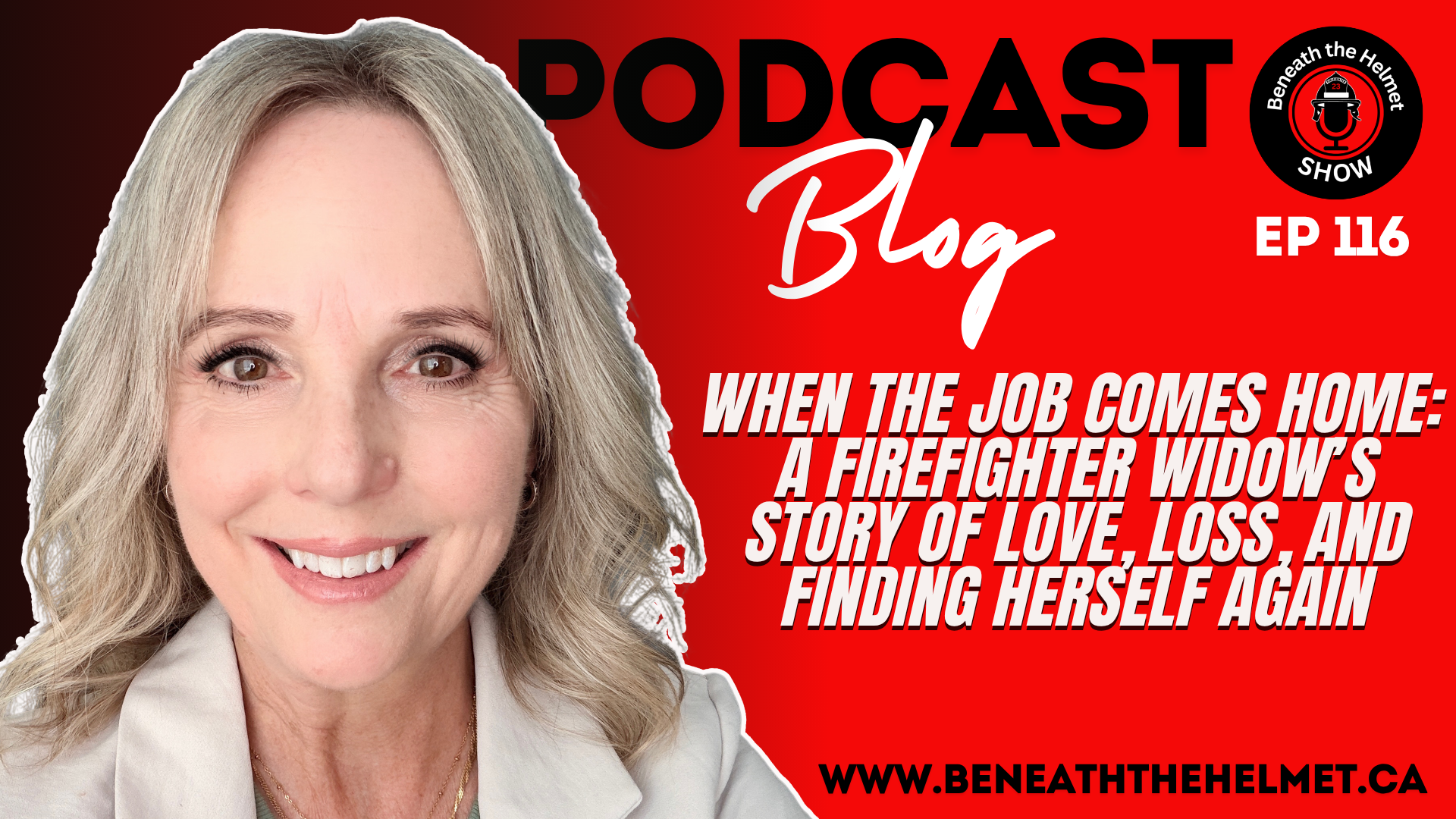
When the Job Comes Home: A Firefighter Widow’s Story of Love, Loss, and Finding Herself Again
Some of the most significant changes in a firefighter's life are not as loud and obvious as lights and sirens.
They arrive quietly.
A little more irritability.
Another poor night's sleep.
Less interest in going places you once enjoyed together.
A partner wondering why something feels different while struggling to identify exactly what has changed.
For Shelley Hegedus, that was part of the story of life with her husband, Ron.
Ron was a Vancouver firefighter, a father, husband, neighbour, talented cook, dog lover and, in Shelley's words, a deeply compassionate man with an extraordinary capacity to love and cherish the people around him.
Shelley remembers feeling physically and emotionally protected by him.
Years later, protection would become one of the themes she revisited as she tried to understand what happened inside their home.
When Small Changes Begin Adding Up
Shelley describes the changes in Ron as silent.
They crept in.
He became increasingly watchful of their neighbourhood. He wanted the blinds open so he could see outside. He became more irritable about things around the house.
His sleep was also suffering far more than Shelley initially understood.
Rarely was there a dramatic moment that clearly announced something was wrong.
That may be one of the most important lessons from Shelley's story.
Human beings are remarkably good at explaining individual events.
Someone is irritable because they are tired.
Their back hurts because of work.
Their stomach is upset because they ate too much.
They do not want to go out because they had a long shift.
Any one explanation can make sense.
Shelley's experience raises a more important question: What happens when we stop looking at each indicator separately and begin looking at the whole picture?
The Call That Followed Ron Home
One incident stayed with Shelley.
After a cooked chicken carcass was accidentally left in an indoor compost bin, maggots appeared.
Ron's reaction was intense.
Much later, Shelley learned why.
The scene had reminded him of a call involving a deceased person inside a motor home during hot weather.
The call had ended.
The response inside Ron had not.
Shelley would later recognize other patterns, including hypervigilance, irritability and difficulty transitioning away from the protective mindset that served an important purpose on the job.
From inside a relationship, those changes can be incredibly difficult to understand.
The person you love is still there.
There are good days.
There is laughter.
There is connection.
And there are moments when something feels different.
Then Everything Changed
Ron was also experiencing physical symptoms.
Inflammation. Gout. Stomach problems. Back pain. Difficulty eating.
Again, there were explanations.
Eventually the pain became impossible to ignore.
On May 25, 2023, Shelley was working when Ron called her.
He rarely called while she was at work, so she answered.
They needed to go to the hospital.
Seven hours later, Ron was diagnosed with stage four gallbladder cancer.
Shelley left the school district office that day and never returned.
The life they had been building changed immediately.
Only weeks earlier, they had been celebrating Ron's 58th birthday and looking at plans for the retirement home they intended to build in Osoyoos.
Suddenly Shelley became a caregiver.
The Person Beside the Firefighter
One of the most valuable parts of Shelley's story is her willingness to talk about what was happening to her.
She had spent decades building a career in education. She had been fiercely independent.
Over time, she began adapting around Ron.
If he did not want to go somewhere, she stayed home.
If he sat on the couch, she sat with him.
She describes it as slowly “morphing” into what he was experiencing.
Eventually she recognized something deeper.
As Ron's level of protection increased, Shelley's sense of emotional safety decreased.
That realization matters.
Firefighter health and wellness cannot stop with the firefighter.
There is another person sitting across the kitchen table.
There may be children down the hallway.
There is a family system responding and adapting around whatever the firefighter carries home.
Do Not Lose Yourself While Loving Someone Else
Looking back, Shelley wishes she had maintained more of her own life.
That does not diminish her love for Ron.
Her description of him throughout our conversation makes the depth of that love unmistakable.
It points toward an important lesson for firefighter spouses and partners.
Supporting someone does not require abandoning yourself.
Maintain friendships.
Keep doing things that bring you alive.
Move your body.
Spend time outside.
Ask for help.
Find people with whom you can speak openly.
Preserve parts of your identity that exist independently of the fire service.
Because the job can become enormous inside a family.
Shelley experienced that firsthand.
When Ron Went Off Duty
One of the most fascinating observations Shelley shared involved nature.
Ron loved their Border Collie, Willow.
Walking and training Willow got him outside.
Then Shelley and Ron bought a travel trailer and began camping throughout British Columbia.
Something changed when they went camping.
Shelley describes Ron as becoming the “old Ron” again.
He relaxed.
Willow (The pup) relaxed.
It was as though both of them finally went off duty.
Returning home could bring the tension back.
For Shelley, nature became one of the clearest examples of something that helped Ron reconnect with himself.
Build an Army
When Ron received his cancer diagnosis, he made an unexpected decision.
He shared it publicly.
Shelley initially felt uncomfortable with the idea.
Then something remarkable happened.
People showed up.
Firefighters. Friends. Family. Former classmates. Neighbours.
Some cooked.
Some visited.
Some prayed.
Some sent messages.
Everyone brought whatever they could contribute.
Shelley describes feeling physically lifted by an army of people surrounding them.
That community continued after Ron's death through friendships with other firefighter widows.
There is a lesson here for all of us.
We tend to imagine resilience as an individual characteristic.
Shelley's story reminds us how much strength can also come through connection.
Love at the End of Life
Ron continued connecting with people during hospice.
Firefighters and childhood friends visited.
One particularly meaningful day came when Vancouver Mayor Ken Sim visited Ron alongside fire service representatives and presented a proclamation recognizing August 2, 2024, as Ron Hegedus Day in Vancouver.
Shelley remembers the pride and joy Ron felt.
A man nearing the end of his life described it as one of the best days of his life.
That moment captures something important about Ron's story.
The cancer mattered.
The occupational stress mattered.
The grief matters.
And so does the love.
Finding Shelley Again
After Ron died in August 2024, Shelley experienced grief, relief that his suffering had ended, anger, resentment, gratitude and eventually growth.
Therapy helped.
Writing helped.
Journaling helped.
Nature helped.
Friends helped.
Exercise helped.
Then Shelley decided she needed to do something that frightened her.
She booked a cruise alone.
Her friends offered to come.
She declined.
She needed to know she could do it herself.
The cruise departed exactly two years after the date Ron had been diagnosed with cancer.
Shelley went anyway.
For her, the trip became part of rebuilding independence and reconnecting with herself.
She describes the process less as becoming someone new and more as accessing the person who had always been there.
The adventurous Shelley.
The funny Shelley.
The independent Shelley.
The person underneath everything that had happened.
Five Takeaways From My Conversation With Shelley
1. Pay attention when small changes begin travelling together
One symptom or behaviour may have a simple explanation. A growing collection of changes deserves attention.
2. What firefighters carry can affect the household
Firefighter wellness conversations need room for spouses, partners and families.
3. Supporting someone you love should include supporting yourself
Connection, interests, movement, friendships and identity matter for partners too.
4. Community is part of resilience
Shelley's “army” became an essential part of navigating cancer, caregiving, death and grief.
5. Finding meaning does not require leaving someone behind
Shelley continues to carry Ron's story while building a life that belongs to her.
Beneath the Helmet
Shelley's story stayed with me because beneath every helmet is a human being.
And beside many of those human beings is someone else experiencing the job in ways we rarely see.
Maybe one of the most useful questions we can ask ourselves is simple:
Listen to the full conversation with Shelley Hegedus on Beneath the Helmet.
Then consider sharing this episode with a firefighter, spouse, partner or family member because some conversations do more than inform us.
Arjuna George - Podcast Host
www.beneaththehelmet.ca
When Showing Up Isn’t the Same as Being Present