Step Up and Lead: Frank Viscuso on Fire Service Leadership, Team Culture, and Courageous Conversations
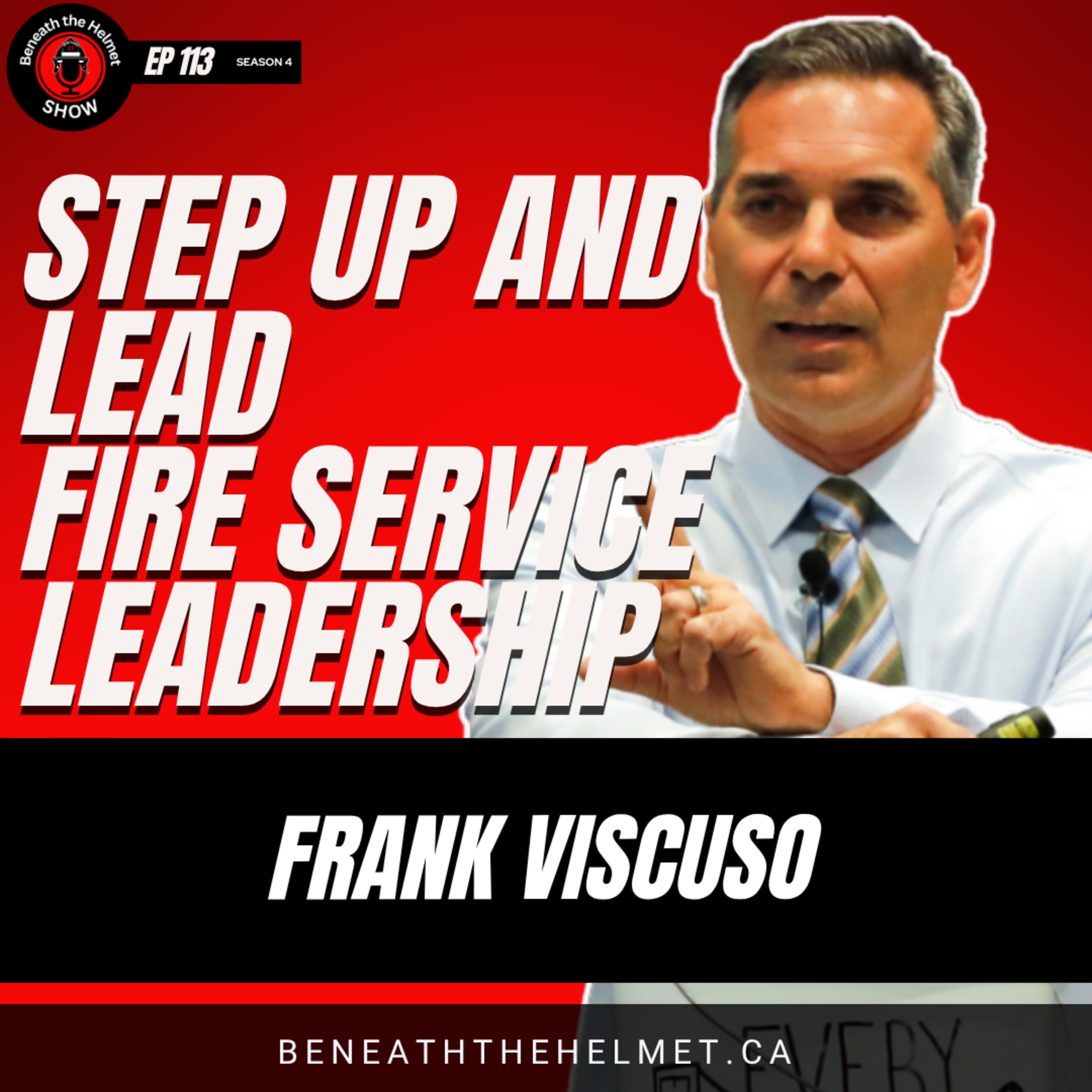
Frank Viscuso has spent a career learning what makes people follow a leader instead of just working for one, and in this episode he lays out the difference between a boss you fear and a boss you'd run into a fire for. He and host Arjuna George get into why treating people right is the actual foundation of fire service leadership, not a soft add-on to it.
They talk through the three types of courage that matter on the job, physical, moral, and the one nobody trains for: courageous communication, having the hard conversation before a policy has to say it for you. Frank shares why the kitchen table still shapes a department more than any org chart, how five generations of firefighters are learning to lead each other, and what he tells his own kids about AI reshaping writing and leadership.
Frank Viscuso is a retired deputy fire chief, founder of Step Up and Lead, and author of 16 books on fire service leadership, including the new 35 Things Every Firefighter Must Know and Do.
Follow Beneath the Helmet so you never miss an episode, and if this one landed for you, leave a rating and review. It helps the right firefighters find their way to it.


Episode 113: Step Up and Lead: Frank Viscuso on Fire Service Leadership, Team Culture, and Courageous Conversations
What makes someone worth following?
It isn't the rank on their collar. It isn't the title on their office door. Great leadership is earned through trust, consistency, and how you treat people every single day.
In this episode of Beneath the Helmet, host Arjuna George welcomes retired Deputy Fire Chief, leadership educator, keynote speaker, and bestselling author Frank Viscuso for an engaging conversation about leadership in today's fire service.
Frank shares the personal experiences that shaped his leadership philosophy, from overcoming self-doubt early in life to learning from both exceptional leaders and those who taught him what leadership should never look like. Throughout the conversation, one message rises above the rest: leadership always begins with treating people right.
Together, Arjuna and Frank explore the realities of leading firefighters in today's evolving fire service. They discuss the importance of courageous communication, why avoiding difficult conversations creates bigger problems, and how accountability can strengthen relationships when handled with respect and purpose.
The conversation also highlights one of the most meaningful places in any fire station: the kitchen table. Frank explains why this space is far more than somewhere to eat. It is where trust is built, mentorship happens naturally, lessons are shared between generations, and the culture of a department is shaped one conversation at a time.
They also discuss generational differences in today's workforce, leadership development, organizational culture, servant leadership, and what qualities truly matter when selecting the next Fire Chief. Rather than focusing on authority, Frank emphasizes vision, mentorship, accountability, and creating an environment where people can succeed together.
Whether you're a new firefighter, an experienced company officer, a chief officer, or someone who simply wants to become a stronger leader, this episode offers practical lessons that can be applied both inside and outside the fire service.
In This Episode
• How Frank Viscuso's leadership journey was shaped by both positive and negative mentors
• Why treating people right remains the foundation of effective leadership
• The importance of courageous conversations and addressing difficult issues early
• Why blanket policies often fail to solve leadership problems
• Building stronger firehouse culture through trust and accountability
• Why the kitchen table is one of the most important leadership classrooms in the fire station
• Understanding and leading across multiple generations of firefighters
• Learning what's inside the box before thinking outside it
• Preparing future fire officers and chief officers for leadership
• The qualities Frank believes every great Fire Chief should possess
• Why leaders must develop people instead of simply managing them
• Creating departments where everyone rows in the same direction
Memorable Quotes
"Treat people right."
"Leadership isn't about the bars on your collar. It's about the responsibility that comes with wearing them."
"The kitchen table is sacred. It's where trust is built and culture is created."
"Learn what's inside the box before you think outside the box."
"We're looking for people who want to move the boat, not poke holes in it."
Why You Should Listen
Leadership in the fire service is constantly evolving, but the principles that create great leaders remain remarkably consistent. This conversation offers practical insights into communication, accountability, mentorship, organizational culture, and building teams that trust one another when it matters most.
If you're passionate about fire service leadership, fire officer development, team culture, leadership communication, conflict resolution, and building stronger fire departments, you'll find valuable lessons throughout this episode.
If you enjoyed this conversation, please follow Beneath the Helmet, leave a rating and review on your favourite podcast platform, and share this episode with a firefighter, officer, or chief who is committed to leading with integrity, humility, and purpose.
Stay well.
Connect with the Host:
Arjuna George – Fire Chief (ret) Owner of Silver Arrow Coaching and Consulting, Beneath the Helmet Show, and Burnt Around the Edges author.
www.silverarrowco.com
www.burntaroundtheedges.com
www.beneaththehelmet.ca
Frank Viscuso Ep 113
Arjuna: Excuse me All right, everyone, welcome back to This Is Beneath the Helmet, season four. This is episode 113. Today, I have a very well-known leadership expert, fire service leader, uh, honestly, a keynote speaker in hot demand, uh, author of several books. In fact, it's 14 books in total now, which is incredible.
We're gonna talk everything leadership and teamwork and stepping up and leading. Today, I got retired fire chief, uh, deputy fire chief, uh, and owner of Step Up and Lead, Frank Viscuso. Welcome to the show.
Frank: Well, thank you. It's so awesome to be here. It's great to see you. We- Likewise it's
Arjuna: been
Frank: a long time, my friend.
Arjuna: Likewise. Likewise. So I think the, probably the average listener right now knows a lot about Frank, but share a little something that maybe someone doesn't know about who Frank is and maybe what brought you into this realm of leadership as your kind of passion.
Frank: Oh, I don't know. I mean, listen, so I speak so much, uh, you know, about 60, sometimes 70 times a year.
Um, I feel like everybody knows everything. Uh, like I don't, I don't hold back. I talk about, uh, when I was younger growing up with a bit of an inferiority complex and being a guy that was an overthinker, and I still have a challenge with overthinking. Uh, someone that didn't have a lot of, of belief. I would let other people determine my worth, um, and I hated that about myself, but I'm very transparent with all of that because I talk about how that, uh, led me to once I started realizing, wait a minute, I don't have to let other people, uh, tell me what I can and can't accomplish.
I could just go out there and make it happen. Matter of fact, just today, a, a couple hours ago, my wife says to me, "You wanna go for a walk on the boardwalk?" I said, "Yeah." So we're walking on a boardwalk and, uh, you know, literally for an hour and a half, and just as we're, we are heading back And I, when I say the boardwalk, Seaside Boardwalk, uh, down by my house in, in, uh, in the Toms River area in New Jersey.
But when we're walking back, you know, after looking at the ocean and just taking in, uh, all the sights, we're just ready to get off the boardwalk and walk to the car, and she goes, "Hey, is that your friend?" And I look over and who's walking towards us, and he's, he's looking down, and I wasn't paying attention either.
We would've passed each other. One of my best buddies that I used to work with when we were lifeguards. Now, I'm first gonna tell you this. You and I know firefighting's the greatest job on Earth. But the truth is this. I actually think it's the second greatest job on Earth. I think lifeguarding is the greatest job on Earth.
Firefighting is a very close second, okay? 'Cause lifeguarding, we, uh, we just reminisced about how great it was. He became a state trooper. I became a firefighter. Uh, uh, but, um, the reason I bring it up is before we left, he goes, "You know, uh, when we were lifeguarding, I had just, just, I was, uh, just became a firefighter."
And he says, uh, "Yeah, you always said you were gonna be a deputy chief." I go, "When?" He goes, "When we were lifeguarding. I remember we were sitting on a stand, and you said you're gonna be a deputy chief." I said, "When we, when we were sitting on the stand, I was only on the job for about two years." He goes, "Yeah, you said it."
I go, "Are you sure? 'Cause I don't remember saying that." But I love that he brought that up because that was around a time in my life where I realized you can Listen, everything in life is created twice. First right here, and then you go out and make it real, just like the books you've written and the books I've written.
They started here, and then you go out and make it real. I've, I truly believe you can shape your life the same way, and I didn't grow up that way, but I became that way. So that's something about me that I want a lot of people to know. Frank was not a writer. I didn't know the difference between an adjective and an adverb when I wrote my first book, true story.
And anyone that's heard my story knows I was reading a book on how to write a book when I wrote my first book. Then I had to read a book on how to get your book published, and I went through the process and I failed and failed and failed and failed, and finally something happened. And then it just kept happening because we kept making it happen.
So, um, persistence I guess is what we're talking about.
Arjuna: Love that. Love that So what is it about leadership that really excites you? I'm, I'm very curious about 'Cause I know this is your realm and this is- Yeah what you live for. What is it about leadership that really excites you?
Frank: it's a couple things. I think, again, going back to when I was in high school, I have been, um, influenced by positive and negative examples of, uh, of leadership when I was an athlete.
You know, I had a, a coach in one sport that believed in me wholeheartedly. We are still great friends today. Um, I went on and I, and I played, I rowed in a I, I was a rower, you know, and I rowed in high school, uh, for a couple years, but then I got a scholarship to Rowan College and it became just a big part of my life.
And, uh, I was, you know, uh, his belief in me, and the whole team for that matter, uh, helped me understand what leadership was all about. But then I competed in other sports, and in two other sports in particular. One of them I competed with fr- from the age of seven till I graduated high school, but I did not really have a coach that, that believed in me, and there was some politics involved there too, and so I was kind of a victim of that.
Uh, and then there was another sport that I tried, and I remember as a And I'll just give you an example, was it was, um, football. And I played football when I was younger, but I, I, I go out for it my freshman year. I wasn't a very big kid, uh, but I was somebody that for whatever reason, uh, at, at a scrimmage, he put me at middle linebacker.
I certainly was not a linebacker. I don't know why he put me there. At the time, I didn't really know if I'd be better as an offensive or defensive player. When I was younger, I, I, I was a center, but when you get older, I just didn't grow, you know? So I didn't know what I should play. I'm trying to figure it out.
But he just throws me in a scrimmage at the beginning of the season. He throws me as, as a linebacker, and I run in to make a tackle and I hit a guy that was a lot bigger than me on, on the offensive line from the other team. I pinched a nerve, and it was so painful I, I didn't know what to do. and I, I mean, and I didn't wanna complain.
I didn't wanna say I'm hurt, but I knew I was hurt. I mean, it was excruciating at the time. And then- We went to the locker room after the game. I had a hard time taking my stuff off, and I remember jumping in the car and I told my dad, I said, "I'm really hurt. Something's wrong." And, you know, he was just like, "Well, what happened?"
You know? And, and I said, "I don't know. I I can't even lift my arm." Long and short of it is this: I find out later that I was talking to a teammate and I said, and this was just like a couple days later, I said, "Man, yeah, I don't know what happened." I didn't know wh- I pinched a nerve. I didn't know what it was at the time.
But I said, "I got hurt on that one play." He goes, "Yeah." He goes, "You know what? One of the coaches turned to, to head co- freshman coach and he said, 'I think Viscuso's hurt.' And the coach says, 'No, he's not hurt. He's just showing us he doesn't wanna start.'" And I remember being really bothered by that. You What makes you
I mean, I didn't wanna cry that I'm hurting. I'm trying to be tough, but that was the impression that that guy got of me, and I was bothered by that. And I remember thinking, "You know what? He didn't" I didn't wanna play the sport anymore. When I, I finished the season, 'cause my father said, "You started it, you're gonna finish it."
So I finished the season, and then I never played football again. 'Cause I remember thinking, "I don't wanna play for him. I don't wanna play for him." And that, like there's examples, couple examples. You know, on, from the rowing standpoint we had a guy that believed in us, and I tell some of the stories in my seminars and books about what he did.
Uh, but then in another sport I had a guy that just made me feel like I wasn't worthy. And that's where it started. In college I had the same experience, good and bad teachers. Um, and in, in the fire service, good and bad leaders. And th- and you, I sure would agree with me with what I'm gonna say. You could learn a lot from a really good leader But you learn so much more from the ineffective ones.
Because what happens is if you love your job, you don't come to work or you don't lie awake at night saying, "Why do I love my job? What do I love so much about" You're just happy you have a job you love. You don't even think about it. "Man, I I got a great job. I love my job." That's it. But when you don't like your job, you could lie in bed at night and not sleep, 'cause you're dealing with stress or maybe anxiety, or maybe fear of retaliation.
I know so many firefighters that deal with this stuff where they have bosses that they don't trust, they don't, don't feel valued. If you This is such a stressful job. If you have a person in a leadership role, a officer that you fear more than a fire, that's a problem. And you know as well as I do, we have that in the fire service.
We have a leadership challenge. And because I had experienced both there too, I just thought it doesn't seem that hard. But somebody has to stand up and say, "I'm willing to, to be a voice of reason here and say there's a better way." And when you do that and you're a one person in your area that's doing that, you also now put a target on your back.
And when I put a target on my back, I also realized who the true leaders are and who the fake ones were. Because the fake ones
froze up there
If it's better, uh, you let me know and we'll continue. Oh,
Arjuna: you're back now. Yep, you're back now.
Frank: I don'I'm not sure where I left off, but maybe we can edit that. But, you know, when you have somebody that you don't trust, when you kinda are afraid of retaliation, I've dealt with that. And, um, so that just makes you more passionate about wanting to spread a message of, hey, there's a better way, like you're doing and like I'm doing and like so many people are doing.
There are a lot of good people out there doing it.
Arjuna: There sure is. There is some incredible people out there. You mentioned the challenge the fire service is facing right now in leadership. Could you boil down, pinpoint some area that we need to talk about a little bit more that would maybe reduce that challenge a little bit?
Frank: You have it on a sign on your bookshelf right there, treat people right
Arjuna: Yeah, for sure
Frank: Uh, that's first and foremost. First and foremost. Um, life is difficult. You know, I don't know A, a matter of fact, I ask another question at my seminars quite often. I say, "Raise your hand if you ever had a bad day." And every hand always goes up 'cause everybody's had a bad day.
And then I tell them, "By the way, look, um, I know we've all had legitimate bad days. I'm not talking about those. Um, but if you're anything like me, your average bad day wasn't a bad day at all, it was a bad 10 minutes that you let ruin the rest of your day. Don't let a bad moment turn into a bad day. Let a bad moment be what it is, just a bad moment."
But the reality is, as firefighters, we deal with people that are having bad moments all the time. But what we sometimes don't think about is the firefighters are also having their own bad moments. Who's dealing with a sick child? Who's dealing, going through a, a relationship challenge in their life?
Who's going through a financial challenge? Who's not going through a financial challenge in today's world? I mean, I just spoke to, to somebody just today. Uh, I was getting my hair cut and, and the, and the, the girl cutting my hair was saying, "I had to move back in with my parents. You know, I can't afford to live anymore."
And she's talking about, uh, the challenge of, of just trying to live. And then she's talking about someone who's leaving New Jersey, but they don't want to leave 'cause they gotta pay, pay an exit tax when you leave the state. Like, "I, I worked my whole life here and you're gonna pay me to leave here now," or, "I have to pay you," I'm sorry, "to leave here."
And they're just talking about all these challenges, but everybody's dealing with it. Treat people right. Well now, I mean, where, how do you build teams? Uh, you build teams, uh, first of all in battle you build teams, and you build teams in training, but you also build teams around the kitchen table. When we're sitting down and when we're talking that camaraderie and you just say, "Hey, how's your family?"
Matter of fact, I see that, uh, I might be dropping right now with, uh, bandwidth, so, but hopefully we still have a signal. But as a matter of fact, I like to start anytime I run into somebody that I haven't seen in a while, or anytime I, I went to the firehouse and I had that one-minute conversation with somebody, it was all about their family.
"How'd your daughter do in her soccer game? Uh, did you guys pick a college up for your son?" And you take time to get to know people, and, and then when you go through hard times, you know, hey, I'm here with a brother, true brother, a true sister, someone I can value. We get that part right, that's the foundation.
And then there's a lot more. How we train, how we deal with challenges, how we deal with problem people, how we deal with people fires in general. Uh, how do we deal with, uh, policies, procedures, all that stuff. Uh, but at the end of the day, it starts with treating people right
Arjuna: Love that you picked that up, 'cause that's one of my foundational things is just treat people right.
Just be nice. Like Bernacini used to say, right? Just be nice
Frank: Right. I mean, and, and how great We were talking about, me and Anthony Villa were talking about Bernacini just the other day. How amazing. And Anthony Castro, as a matter of fact. Last week, two Anthonys and I, uh, both spoke about, uh, the value he brought to the fire service by being someone that, that was just telling it the way it is.
And, and man, we are, we're blessed to have him, you know- Sure for the time we did and what he's done for the fire service.
Arjuna: 100%.
Frank: And I'm, and I saw him live twice, which was amazing to see him speak because here's a guy in a Hawaiian shirt that's sitting down, uh, in a chair just talking to everybody like it's a fireside chat, and there's 180 people in the room.
Yep, exactly. It was pretty awesome. Yeah.
Arjuna: Very chill human guy, for sure.
Frank: Yeah. I wish I had a opportunity to really get to know him personally. Shook his hand once or twice. Uh, didn't really know him well, and I wish I did. Yeah.
Arjuna: I agree with that 100%. So since joining the fire service, what changes have you seen in regards to leadership that really excite you that we're moving in the right direction?
Or maybe we, you feel that we're moving in the wrong direction. But since joining, have, have you seen a big change in the leadership realm in the fire service?
Frank: Well, we can cover, um, we can cover a lot with that question. Um, first let's see what the challenge with maybe going in the wrong direction is, uh, I've mentioned the word policies earlier, okay?
Do you know, firefighters mostly dislike policies. Officers, many of them like them because they're seeing it through two different lenses, right? I look at policies like they're a playbook. Like if I, I'm not gonna win, you know, a game, if I'm a football coach, I'm not gonna win a game without plays. It's the same thing in the fire service.
The problem is this: seems like every third policy that comes out is more of a punishment than a policy. Somebody did something wrong, we're not gonna address that person and that thing specifically, we're gonna put it down a blanket policy and now everybody has to do it this way. And firefighters sitting there going, "This is ridiculous.
We know why we have the policy, but now we can't enjoy this one thing we used to enjoy doing anymore. It's no longer allowed because one guy, one person, one firefighter, one officer," whatever it may be. And so that part I think we're getting wrong. Um, I also, uh, think on the right side is we have people that are out there, and a lot of them, that are putting out content that are actually saying what I just said or something to that term.
And some are saying it a different way. Some people are-
Arjuna: See you, but I can't hear you
Frank: We'll tr- we'll try to go again. You're back. You let me know where-
Arjuna: You're back, you're back.
Frank: Edit that or no? Oh,
Arjuna: yeah, I can edit that out, yeah.
Frank: Okay, so where did we stop?
Arjuna: I think the, uh, the good side, there's people out there, and that's where
Frank: Okay
Arjuna: heard the end, yep.
Frank: Now on the good side, there's people out there that are, that are spreading a good message about leadership, about, again, treating people right, talking about things like we just talked about, and trying to, trying to, uh, make people understand, uh, look, uh, those bars you have on your collar aren't for show.
I mean, you have a responsibility to lead an organization to a better place, and part of that is by saying, "We have rules, regulations, policies and procedures for a reason, and they're to help us be effective at helping them, and then getting home safely at the end of every shift. So we're gonna look at it through the right lens, and we're gonna get together and we're gonna do what we need to do.
The most important thing, which is train. Get out there and train, and be prepared for anything we're about to face."
Arjuna: Yeah, you highlighted a kinda interesting point about, um, just a policy comes into play because of somebody's inaction and they didn't wanna necessarily face that discipline. They didn't wanna talk to that person.
And that highlights a huge leadership area that we don't have the, the guts sometimes to have those difficult conversations.
Frank: We talk about courage a lot in the fire service, right? We have the courage to go in when other people are running out. To me, okay, let's We know that, so let's not pat ourselves on the back and, and, and, uh, be, you know, that, that ridiculous.
Here's the reality. There's a few types of courage that serve you well. There is physical courage, which is to function effectively when there's physical danger present, right? That's a very important, uh, courage to have. We know that. There's moral courage, which is doing the right thing when you're tempted to go in a different direction, but there's also courageous communication, and that's the one we don't talk about enough.
Being willing to have the hard conversations that are necessary to lead during difficult times, to be able to sit down with someone and say, "Hey, what you're doing isn't right. It's not, it's the it's not the right activity. It's not good for you. It's not good for your organization. It's not good for the direction we wanna go in, so let's have a conversation about it."
And some people have a difficult time doing that, and I understand why, because when most people get promoted, there is no training. Maybe you took a promotional class or you read a book on, uh, how to answer questions in an assessment center or at an interview, which is all fine. There I got no problem with any of that.
I did all that stuff. But then it comes time where you take your oath, you get promoted, and no one sits down and says, "Now here's your playbook." I mean, in all honesty, this is why, and, and I'm not doing this to plug it, I'm just This is why Anthony Castros and I came out with that Step Up and Master Leadership and Conflict Resolution, an online class.
Because we were looking at it saying, "We're gonna give people what we wish somebody gave us."
Arjuna: I can see you, but I can't hear you again
Frank: Now you can, right?
Arjuna: There you go. Yep, there you go. Okay. You're back.
Frank: See, what happens is every time something happened on our department that I had to address, it was like I was addressing it for the first time as if it never happened anywhere in the world before because I didn't you know, I didn't know where to go to get the information.
So we wanted to put And this is what all my work is all about, my seminars, my books. Let me give you the information on how to navigate through this labyrinth, you know, called fire service leadership. Uh, and, uh, again, there's a lot of people. You're doing it. There's a lot of people. I got books in front of me by some friends that they've, uh, written on leadership, and I'm going through every one of them thinking, "Man, I wish I had this too when I was going through it," because you're not alone.
There's a lot of people that have been through what all your listeners are being through from every level, from I just became a firefighter to I just became an officer until I'm navigating through a difficult situation. And there's, there's resources out there that can help people through these, and we just have to be ambitious enough to go out and get it.
Arjuna: We're definitely in the golden age of fire service knowledge. There's no lack of, uh, knowledge out there of being able to share with the world, right? So.
Frank: Well, here's the thing. It, it's never been easier in the history of the world than it is today to get information, right? At the same time, it's never been more difficult to get the truth.
So the challenge is this: uh, anybody can start a podcast, can start a social media page, can put information out there and be a self-proclaimed expert, but have they tried these things that they're teaching? I see some people that are out there teaching, and I'm friends with some of them. But I see some people that are out there teaching stuff where, um, it might be okay for you to do and say and get away with the things you get away with.
Maybe you have a different relationship with your boss. But if you did that with, in another organization that has more strict rules, um, person could lose their job. So some of the things that you are, some of these people are, uh, advising people to do is very reckless because they may take that advice and go, "Yeah, you know what?
I don't, uh, that I agree, policies are bullshit. I don't, I don't need to follow them." Try it out in my department. That's called insubordination. And what happens is explain that to the town attorney when he says, "Sorry, we're gonna let you go." "But I heard on a podcast" Well, I don't care what you heard on a podcast.
Love it. That's not This is our policy manual right here. These are our rules. And that's the dangerous part of it. And, and again, I've had these conversations with people that are out there doing this and putting information out there, and I appreciate everybody that's passionate about spreading-
Test, test I know. I'm just waiting back to see Oh, you're
Arjuna: back. You're back, yep
Frank: They're trying to spread a message. But spreading a message because you wanna improve the fire service is different than spreading it 'cause you wanna sell a shirt, and that's where we need to be smart, who we listen to. Yeah,
Arjuna: 100%. Yeah, it, it, bit of a information overload, uh, really out there. But if you're smart and kinda follow the right people, you can, you can learn so much and grow so much in a short span in your career.
Uh, but there is- Yeah yeah, there is, uh, that poison apple out there sometimes you can,
Frank: yeah. We- I mean, you have to be able to filter things out and say, I Man, if it doesn't feel right, doesn't sound right, you know, maybe it's not. Maybe it's not.
Arjuna: Listen to that gut, right?
Frank: Listen to your gut.
Arjuna: So I'm kind of excited about the future of the fire service with the next generation coming in.
There's gonna be some, some challenges. There's gonna be some, some bumps in the road. But I'm curious to see and hear from you what you think about the next generation coming in, what value they're gonna bring, how they might, you know, not necessarily change the fire service, but maybe improve the fire service.
Frank: You know, it's a very interesting thing. You know, we talk about, uh, the generational gap, if you will. You know, and I like to say it's more like kinda like navigating, uh, through the generational gap. Uh, what do we got? Five generations that are in the fire service right now, right? And, and what you have to ask yourself is how do they look at each other?
Uh, here's an example. Um, the TikTok generation. I know that's not the name of them, but, uh, I'm, I'm just gonna say it that way. You know, the, uh, the, the kids that grew up on TikTok, uh, with
Arjuna: TikTok. Gen Zs, Gen Alpha. Yep.
Frank: Yeah, yeah, yeah. But, but the, uh, the reason I'm referring to the people that are out there that, that are involved in that platform as an example, and I, and I'm on there.
We're talking about, how do I word this? If they were crying, their parents would say, "I'll give you this if you stop crying." My generation that's on Facebook, if we were crying, our parents would say, "If you don't stop crying, I'm gonna give you something to cry about." Right. And that's a difference in how things are.
And it's almost like Gary Vaynerchuk talks about this. I just heard him talk about this. He said, uh, it's almost like, uh, like today's parents are trying to make up for, uh, generations before them, saying, uh, "You know what? Uh, they were too hard on kids." And, and I don't know that that I agree with that, uh, completely, but I think you know where I'm going with it.
But, um, I think what we really need to start doing is, is understanding each generation, uh, a little bit more. Like that whole, "That's the way we've always done it." Some firefighters that are getting in might say, "Well, but that doesn't make sense It doesn't make sense again because you have brand new information that maybe works for a department that has 160 members on duty.
We have 12. And so for us, it does make sense. And if firefighters are a little bit resistant to change when they become creatures of habit, just like all human being, not a firefighter, every human being. So, um, that can play a part in it as well and we just need to understand that. But here's a, a big, uh, situation that I hear a lot about.
I hear people say, "These kids today don't wanna work. They don't wanna work." I'm raising three boys. I know why they're saying that, but here's what they means. Anybody that's listening that's a new firefighter needs to understand this. When you're a young firefighter, when I got on the job, if you got over- offered overtime, you took it.
All right? You, you didn't You took it first of all 'cause it was good money, number one. But if a holiday's coming up and you know that a firefighter that's been on a job for 10 years who's married and has two young kids at home is gonna be ordered in on Christmas Eve and you don't have a spouse or children and you're kinda new, you'll be like, "Hey, I'll work for you so you don't get ordered in," because we took care of each other like that.
That part seems to be changing to where it's like, no, I, I, you know, I'm not People are saying they won't take overtime, and these are in certain departments. They're like, "We can't even get these kids to take it. They don't wanna be here." Well, because they, they are gr- they grew up with a different philosophy, right?
And maybe it has to do with stuff they're learning on social media. You know what? Um, this is why firefighters of my generation may be saying, "They don't love the job the way we love the job. They don't care about the job. They're just here for a paycheck." That's, I don't agree with all that, so I don't wanna mis- uh, communicate my message.
I don't agree with that. I'm I just want both parties to understand each other. They say all these kids do, right, all they do is stare at their cellphone. Well, guess what? If we grew up with cellphones, that's all you would do, too. Matter of fact, some of us do it and we're much older than them. So matter of fact, I build my entire business on my cellphone My entire business.
And, you know, from speaking, most of what I research and writing, a lot of stuff that all of it's off my phone. So I use that all the time. And sometimes they see kids on it and are like, you know, they, they don't even know how to make eye contact. They don't even know how to, how to have a conversation, an, an in-person conversation.
Well, sit them down and let's tell- why don't we do this at firehouses? And some do, by the way. Why don't we do this where when it's dinner time, throw your throw your phones on the counter over here. Let's put them off and we're gonna actually make this family time here at the firehouse. Because this is what'll happen if you do that.
You get to know each other. You get to see how people think. You get to see how they were brought up, and you get to see we're not that much different. Different generations see things a little differently, but we're not that much different. And then what happens is the people at that kitchen table say, "I like doing this.
It feels good to talk to each other. I'm gonna do this at home when we have dinner, too." Hey, no cell phones at the, at the kitchen table. I don't know if your house is like mine, but I have to say it pretty regularly, "Hey, kids, put your cell phones away." 'Cause they just naturally sit down one at a time, and then all of a sudden, and dinner's almost prepared, yeah, and then dinner comes out and one of them's in the middle of watching a video.
"Okay, we're all sitting down now. Phones away." Boom, phones are away. And that's when we have the best conversations, when we do it. And, uh, and I don't even remember what your original question was. All I'm saying is as generations, all we have to really do is get to understand each other. Because I believe that my father's generation belie- or let's start with my grandfather's generation, believed that my father's generation was lazy.
My father's generation believed that my generation was lazy. My generation believed the next generation is lazy. This generation will believe the next generation is lazy. It's been that way forever, when in reality, nobody is We're not going in the wrong direction. We just have to make sure when we show up at work, whether it's a, a, a 10-hour shift, a 24-hour shift, a 48-hour shift, or you're a volunteer and it's drill night, it's time that we put all this stuff aside and we start working as a team You know?
And if we do that- Do you think the next- Yeah, I'm sorry. Go ahead.
Arjuna: No, yeah, I was just gonna say, how do you think the next generation leaders, so the Gen Zs when they become chief officers or fire chiefs, how do you think their leadership style will be different than what we see today?
Frank: I don't know. I mean, think about it.
I mean, when, when I was younger and I needed to learn about something, first of all, what did I have to do? I had to go to a, to a library and get an encyclopedia this thick.
Arjuna: Yep.
Frank: And with the letter Z so I could look up what I needed to find on zebras, you know? But today, access to information, and it's all there.
And so maybe I think, uh, it's gonna be They're gonna be able to get answers quicker on how to deal with situations. I think that's a good thing. I remember when I got on the job and we had somebody from public service energy and gas come in and explain to us about why you don't want to have a hose stream hit a primary, uh, line because it's, you know, it's gonna, uh, it could cause someone to get electrocuted and cause a bigger fire and a bigger issue.
And you're like, "Okay, so I know not to shoot this line at that wire up in the sky." Now go on YouTube and just watch it. You could watch anything. Google whatever you want, and you could see it happening live. And, um- And so that's one thing. They're gonna have access to information and, and, uh, that's a good thing.
And I think really what it's gonna come down to is how they're gonna apply it. I can't say how I don't know. Everybody's different. But if they actually take the information they have, and including being, uh, a student of the people that are already in the room, that have been there before, have That have done it before.
I love to say this: I want people to think outside the box, but first learn what's inside the box. And you only learn that by sitting down with people that have been there and done it and and, and have them share with you what went right, what went wrong. And all that's gonna help you build this, this database inside of you that you're like, "Okay, now I, I, I have a better understanding.
I didn't experience it firsthand, but I talked to the people who have, so I think I have a pretty good grasp." And that's gonna help you when you're teaching the next generation. So, uh, will they be using electronics forms of teaching? Will they be using AI? Will they be using a Yes. I just don't know how yet.
AI's so new. Scares me, but at the same time, maybe we learn how to do it right and, and, and it does enhance everything in life. You know? Maybe But as a father of two boys that are now still in high school, I have one that's graduated and he's out in the work, but my two that are still in high school, I don't know what advice to give them for a career.
I told them this. I said, "You know, let me explain something, my take on AI." Um- Will AI re-replace people like me? Um, well, it, it's gonna replace some authors 'cause some people are just gonna say, "Write me a book on this," and they're gonna write you a book. They're right. That's why I'm glad I've written four
Actually, technically, fif- 16 books without AI. Only 14 are published now, but two are coming. So, you know, I'm glad that AI wasn't a thing because I wasn't tempted to go in there and, and, and use it. But at the same time, one of my books, um, I wanted to get it edited and I hired a guy that was, um He, he edited a couple of New York Times bestselling books.
I thought this would be great. And he had different packages, right? And one, the cheapest package was $800. The most expensive one was like, like almost four grand. But the four grand was he's gonna rewrite your book for you. I said, "No, I just want you to, to just, you know, dot the I's, cross the T's. If a sentence doesn't make sense, help me word that sentence better."
So I took the $800 package. And guess what? Now you can go on Grammarly and you could just have that done for you. You don't have to pay anybody $800. And I have never been to Grammarly, I just talked to other authors who have been. Matter of fact, to this day, I have never once been to ChatGPT. That's what it is.
GPT, right? Yes. Yep. Yep. Never been to it once.
Arjuna: Yeah.
Frank: Not one time. And what's today's date? It's 6/11/2026. Understandable. I've never been on it. I've never been on it yet. I don't even know what the site looks like. I don't know if you pay for it. Yep. Um, it's not to say I haven't used AI for things. Mm-hmm.
Because I have, but I have not been on that site yet and, and I'm not being stubborn. I just haven't felt the need to go on there at this point yet. Someday I will. Yeah. So what I'm telling my kids is this, uh, it hasn't it won't replace me as a writer, but it, it, it'll replace It may, some people may write their books that way instead of writing, but it did replace the editor I hired You know, it did because it's cheaper and AI did a better job editing that book than that other editor did, 'cause when I did have it printed, there were still grammatical errors in it that I found.
And, and quite a few. So I want my money back.
Arjuna: If you're listening.
Frank: If you're listening.
Arjuna: Well, you're, you kind of circled back to the whole, you know, sitting around the kitchen table thing. That's how you're gonna learn about the inside the box stories, right? Yeah, man. Is around the kitchen table, right?
Putting down those phones and hearing about the stories, the in the box stuff. I like that. That's beautiful.
Frank: The kitchen table's just a beautiful place, man- It is in a fire station. And, and I, and, you know, in two of the books I talk about how it's a sacred place.
Arjuna: Mm-hmm.
Frank: You know, it's where you will talk about the fire service.
It's where you will talk about, um, the game that just happened last night, you know? And again, here I am. I, I wish I was at the firehouse today, right? Because again, I just told you the date. Last night was 6/10/2026. I happen to be a New York Knicks fan. If you are a basketball fan, you will have seen on, on 6/10/2026, here they are in the NBA finals against the Spurs.
They're down 29 points, and I haven't watched the Knicks in the playoffs since, I mean, literally what- you know, 30 years ago. Forgot. I mean, it's so long ago, I don't even remember how long ago it was. Yeah. Patrick Ewing or something? Was that the- Yeah, Patrick Ewing. Yeah, yeah. John Starks. Great, great team and, but they didn't win.
And so here, and I'm watching it with my son last night, and it's halftime. They're down 29 points. My son's like, "Dad, I'm gonna go upstairs and, you know, get online with my friends." I'm like, "Okay." And I'm tempted to just tu- I'm so frustrated, I'm gonna turn the TV off. And I said, "You know what? No. I'm just gonna wa- see if they have any fight in them because"
And sure enough, they come back and they win it. And I'm just in awe. I wish I was at the kitchen table today so I could go in and, and, "Did you see that game last night?" 'Cause you know we're gonna spend most of the breakfast talking about that game and just have fun. And yes, we'll talk about things during that time at the kitchen table that we will be very grateful HR is not in the room.
Um, we'll be But you know what? I like this. Um, I was told many years ago the kitchen table is rankless. The kitchen table has no rank. Uh, at the same time, the kitchen table does still need standards. You know, especially if you're an officer. If you're an officer listening to this, it's real important that we understand that, um, a lot of things, a lot of careers have been damaged and even lost over things that occurred at the kitchen table that an officer didn't stand up and say, "Hold on.
We're not going in that direction. I need to see you in my office right now. Let's talk about this. The direction you're going in is inappropriate, and here's the reasons why And I'm not gonna tell you how to act, I'm not gonna tell you how to be, but I am gonna tell you what's acceptable and what's not.
See, being an officer in a fire service is almost like being a parent, you know? We wanna give them everything they need to succeed, time, training, tools, equipments, guidance, environment, support, but we need to hold them accountable. We need to hold them to a high standard when we need to teach them right from wrong.
But to do that, you as an officer also need to know what's right and wrong. And it's easy to fall into the trap of, "I just wanna be one of the guys. I wanna sit at the kitchen table and like I'm sitting down at a bar having a beer with everybody. I want that feeling." We all want that feeling, but that's not what we're here for.
You know, we wanna, we wanna, I wanna keep it light, I wanna keep it fun, but our group trained three hours a day. So if they're gonna sit down at breakfast, lunch, and dinner and tell some jokes and have some fun, I'm okay with it because they work hard, and they put the time in, and they love the job, and I want them to feel like, "Hey, this is a home away from home."
I want to feel like it, it truly is a second family, and that takes work. But part of that is also, again, holding that, that standard and, and I, I like to explain it like it's the strike zone, right? We can't expand a plate and widen the zone just to say, "Hey, you know what? That's outside the strike zone, but it's okay if you do it."
No. Sometimes you gotta say, "Hey, let's get back in the strike zone. Let's, uh, let's not go too far off path in our, in the, in how we're talking, the things we're saying, and the things we're doing." If I was, and I have done dumb things in my career, but if I was going in a direction that I should not be going in, I would rather be surrounded by people that would say, "Hey Frank, you're not gonna, you don't wanna do that," than encourage me because they wanna watch the train wreck.
And I've worked with both types of people. I've worked with both type of You know, first of all, kitchen table's a great place. Don't take legal advice from the firehouse kitchen table, okay? And, uh, but at the same time, hopefully you could sit down and you, and you feel like you are truly with brothers and sisters that care about you.
Arjuna: And those courageous conversations, right? That'Yeah the key.
Frank: For sure.
Arjuna: I'm very curious, Chief, if what would if you were in charge of hiring the next fire chief in your town What would make that person stand out against everyone else, in your opinion? What would be the things that you would be looking for in that interview that would be like, "This is the person that, that has to lead our fire organization"?
What would be some of those things?
Frank: Well, I mean, first of all, I, I'd want someone that has experience in the fire service. I don't wanna just, uh You know, I, I mean, granted, I mean, and what you're asking for, I know what you're saying, but tru- trust me when I tell you, I know there's, there's And you know this, there's people that have, uh, been brought into every industry that didn't have a, uh, solid foundation in that industry.
So I'd want somebody that had a solid foundation. I would want somebody that has led a team already through adversity, uh, because matter of fact, I have a friend right now who's a fire chief. He's going through serious adversity in his community, in his town, uh, dealing with lawsuits, dealing with people that have lost their jobs, dealing with emotions.
A whole bunch of stuff's going on, and I called him up to talk to him about it one day, and what he said is, "Everything about it sucks." He says, "But I'm thankful for this opportunity, because this is exactly what we're gonna need to be able to develop the culture that we are supposed to have here. We need it for things to go wrong for us to get it in the right direction."
So part of that is the mindset. I want someone with the win mentality. What's important next? I don't care about what happened. That's over with. The end of a failed strategy is the beginning of a new strategy, so where is it we wanna go? I want someone with vision. You know, like what is your goal for this department, okay?
I uh, yeah, and you could tell me, "Man, we're, I just want us to operate as efficiently as we can." No, man, what's your goal for this department? I mean, honestly, do you want to be the best department, in my case, on the East Coast? You know, is that your goal? Because if that's your goal, then this is good.
Let's, let's go make that happen. I'm not You, you have my permission, you know, to develop the, the, the finest fire department in the country. Somebody who does what, again, that sign behind you does. They treat people right, but at the same time, they're gonna tell them when they're wrong, and they're gonna be stern and firm.
You know, I like, it's like, like a great football coach or a great, um, baseball coach that is gonna sit down and say, "This is our game plan. This is our goal. This is what we're gonna accomplish. Here's how we're gonna get there. And by the way, you're either on the bus or get off, because we're not looking for anybody as a rower."
I'll put it the way I like to say it. We're looking for people that wanna move the boat, not poke holes in the boat. Because if you're only gonna stand here and look for problems, and as a, as a youth baseball coach I've had this conversation with parents. If your goal is to stand in the outfield against defense and criticize the coaches and talk about how bad this is and how bad that is and, and just cause drama, this is not the team.
It's not the team. Because the team we're forming here is gonna be a team that's gonna help people go through adversity and become a better version of theirselves. So maybe there's a point where we keep a pitcher in longer than you would if you wanted to win the game, but here's what you need to understand.
We're gonna keep that pitcher in to help that pitcher get through adversity because what they're gonna see when they're 15 years old, 14, 12, 13 is nothing compared to what they're gonna see when they're a senior in high school. And if they're gonna pitch when the entire fan base and the entire, uh, dugout on the other side is gonna be chanting at them trying to throw them off their game, we wanna know that they're mentally prepared.
We don't care that they can throw the strike. Oh, right, they're struggling right now? Good. Let's get them through that mentally. We want to make sure that they don't break down here. So, like, we'll have that goal and then if we have people that are like, "Yeah, but, you know, my son should be playing this position or this or that," that's not what we're about.
Everybody gets time on the field. Everybody's gonna get developed. Everybody's gonna face adversity. We're gonna try to help them through that adversity. And at the end of the day, the goal is about development. Now, back to your question, as a fire department, what's the goal? So I want If I'm gonna If I'm hiring a chief, I wanna know that they're coming in with a game plan.
"This is where you are. This is where I intend to bring us." And I don't want them coming in from day one and sitting down and saying, "All right, moving forward, this is our plan." No, get to know your people. I would rather you sit down and say, "Hey, you know what? Our new chief is starting next month, and that chief has agreed before he even starts to come down and meet one-on-one with 88 members of our organization- And sit down with each one of you for 10 or 15 minutes and, and you could tell the chief how you feel about the department up at this point, what you think is right about it and what you think's wrong, is wrong about it.
And I know chiefs who have done this, and I love that because they're not coming and saying, "Hey, I'm gonna tell them how to act. I'm gonna tell them what to wear. I'm gonna tell them what to do." He's gonna say, "No, I'm gonna come in and I'm gonna listen to them and find out what they like and what they don't like.
And then I already know some of the things I do they're not gonna like, but I need them to know that I'm willing to listen to them and take everything into consideration." And then when you get to a point where you say, "Okay, now we're gonna move the boat forward. Here's the direction we're gonna go." And then you sit down with all the people rowing in the boat and say, "What do you need from me?"
To help move the boat in that direction. You know what direction we're going in. We're in alignment with that thought, but what do you need from me? And they may say, "I need time. I need certain resources. Uh, I need access to X, Y, Z." Let's make it happen. One team, one mission. The organizations that break down are when you have administration and you have rank and file, and it feels like two different teams with a wall in between them.
Gotta tear down that wall, and you gotta say, "We're one team, one mission." And that doesn't mean that, you know, the, the firefighters are gonna, you know, run the show, so to speak. I one time had a conversation with a buddy of mine who's a, a, a, uh, general in the Army, uh, General Thomas Felty, and I said to him, "Do you ever micromanage?"
He says, "Never." And he, at the time he was, uh, he was in charge of our infantry program in Fort Benning, Georgia, the US Army infantry program, and, um, he was a colonel. And he says, uh, I said, "Do you ever micromanage?" He says, "Never." He says, uh, "You know, Frank, my job is to prepare young men and women for battle, and how effective would I be if I had to make every decision for them?"
He goes, "We go out, we train, they'll make mistakes, and then we figure it out, talk about it, and we fix it. And then, you know, when they're, when it's time for battle, they're prepared." He says, "Frank, when's the last time you put out a fire?" I said, "Last week." He goes, "All right. But when's the last time you put out a fire?"
I said, "We had a great knockdown last week. My, it was my my company, my crew on duty, and I was a deputy chief and a tour commander at the time." He goes, "Yeah, but where were you?" I said, "At the command post." He goes, "Exactly. You didn't put out the fire. The firefighter with the hose line put out the fire."
See, you exist and your position exists to serve that person, because if they succeed, you succeed. If they fail, you fail. Now, this is important now that we understand this, but we also get this second part right, because then I said to him, "Okay, so Am I to understand that I'm a deputy chief but I work for the officers and the firefighters that are under my command?"
He goes, "No, you work for the chief of the department, who by the way also has a boss. You serve the firefighters." He goes, "And let me explain how it works. If a, if a procedure or a policy comes down, my job is to enforce that and make sure that it's read, understood, and that we are" You know, because this is about, about this is organizational structure, okay?
So we're gonna make sure that this is done a certain way because this is how the organization wants it done. If the firefighters don't like it, you could say, "Well, okay, if you don't like it, then don't worry about it. Yeah. Don't worry about it." Now who's leading who, right? You have to sit down and explain to them, "Okay, well, I understand your feelings, and I will pass that up the chain of command so they hear it, but this is the procedure moving forward, and here's the reason why."
And that's the part where we get wrong. Too many people sending out policies, too many people are giving direction, too many people are telling us to change a procedure or tell us to do a certain thing a certain way without telling us why. If you tell people why, now there's a reason behind it. They don't have to agree with the why, but they have to know, hey, there's a thought process behind this.
They're not just telling us to do something as a punishment. They're not telling us to do something to give us busywork. They're telling us to do something because there is a goal. This is the goal, and this is the procedure that's gonna help us accomplish the goal. Well, now it hits differently, okay? And, uh, well hopefully that-
Arjuna: I love it
explains or
Frank: helps a little bit.
Arjuna: You're a master at visual storytelling, that's for sure. You, you put me down a couple of different roads there of, uh, visual storytelling, so kudos to you.
Frank: Well, I appreciate you saying that. Oh, for
Arjuna: sure. And
Frank: my wife and kids just came home, uh, so if you hear a dog barking, I apologize for that.
See, I have a Labradoodle-
Arjuna: Oh,
Frank: so do I and a Dalmatian. Oh, do you?
Arjuna: Yeah.
Frank: I didn't know that. Uh, my Labradoodle is probably like yours. He, he's just the most lovable dog on the planet. And my Dalmatian
Arjuna: Different story on the Dalmatian.
Frank: I love him, but he chews stuff. Well, he doesn't, he's out of the chewing phase, but he is, he's reckless, all right? He, this is his house and I'm just living in his world. Let's just put it that way.
Arjuna: You're, you're serving him. You're not-
Frank: I am serving
Arjuna: him you're not working
Frank: for him.
Uh, you know, so, so I wrote the book, uh, Sprinkles the Fire Dog, you know-
Arjuna: Yeah
Frank: with Paul Combs who- Yeah and it turned out to be a, a three-part series. And, um, my youngest son convinced me that we need a second dog, and for, for Bodhi, our, our labradoodle, and he says, uh, and he writes this essay. Uh, yeah, I still have it.
He writes this essay on why, and it's called Our Missing Piece, and he writes on why we need this dog and why our dog needs a dog when we go to baseball tournaments, how our dog needs a best friend. And, and he put down the pros and cons, and the pros were it'll help me, meaning him, it'll help me, uh, learn, be more responsible.
It'll give Bodhi, our other dog, a best friend. It'll help you promote your book. It's what he writes on there. That's awesome. And then he goes to the cons, and this is him. He writes, "There are no cons. It's perfect."
Arjuna: Priceless.
Frank: So I told him there's no way we're getting another dog, and my wife said, "I know, but look at this picture because this dog's available and we can go get him today."
I'm like, "Oh, he got to you." Yeah. So yes, we got a dog a week later.
Arjuna: Love it. Love it. So as we kinda come to a close, I would love to kinda review some of your books. So the, the, your newest one's 35 Things Every Firefighter, uh, Should Do. Yeah. Uh, should know and do. Yeah. As well as the officer edition of that.
What would be one thing you wanna share from each one of those that would be like, this really hits home? This is like, if I could pick out of any of these 35 things, this one is like, oof, this is a must. What would be one of those things you wanna share?
Frank: You know, uh, that's a, a One of the things is difficult to answer because I really wanna say, uh, all 35 are important.
Uh, here's, here's the thing with, with those particular books. First of all, um, I sat down and I started, um, years and years ago, my When I wrote, uh, co-authored the book, uh, Fireground Operational Guides, there's 60 operational guides in that book, and a tactical worksheet that's a universal tactical worksheet that I used at every fire.
And then there's 60 guides for 60 different types of incidents, from gas emergencies to basement fires to, you know, you, you name it, you know? Uh, bomb scares. And then, but there was a 61st secret, um It wasn't a, it wasn't an operational guide, but it was a document in the book. The book originally came with a CD that you can print it out, and when you put in the CD, the last, um, secret, uh, chapter was 25 things every firefighter must know and do.
And what I'd come to find, I would go and I would teach, uh, places like, um, Wallingford, Connecticut, as an example, was the first time I ever taught Step Up and Lead. I was brought in there for four days to work with their officers, and in the kitchen they had 25 things every firefighter must know and do hanging up on the wall.
And I'm like, "Wow." And then I would find out it's, it's in a lot of places. So, um, about a year ago I sat down, I said, "I wonder if I could expand on all of them." And I started to sit down and write it as a book, and some of them changed since. And then what happened is I said, "I But I have to add this," right?
And next thing you know, I, like the three Us, unaware, unable, unwilling, and with that. So I, all right, so it's 36 things now, and then I kept going and it was thir- what we said earlier, uh, learn what's inside the box. That's one of the 35 things. It's great to think outside the box, but first learn what's, what's inside the box.
And as I'm going through the list of, of these things, you know, uh, I come down to, uh, for example, like career advancement begins now. Don't wait until you say, "Hey, now I wanna get promoted." No. You're brand new. You're a new firefighter, but get in the books now and don't get out of the books. I also talk about another one, which was a, a, um, a newly added one.
You will work for good and bad bosses. All stuff we talked about today. Um, and here's another one. You can't solve a problem if you refuse to acknowledge that it happened in the fir- or that it exists in the first place. So, and now I gave you more than just one, but the point is this. As I'm writing it, I end up with 35.
And then there was one final one, uh, that was a, there's a bonus one in the book also, that is your badge number. Uh, that's, you know, and I, I don't call that number 36, I call it number 198, 'cause that was my badge number. And I talk about how, uh, you have basically a firefighter has two families. You have the one you share a last name with, and you have the one you share a department name with, and you wanna honor both of them.
And when you do that, you're honoring that number, too, and that badge will represent something. And when you're done and you're retired and that badge is hanging up in a little frame, maybe in your office or somewhere, every time you look at it, it's gonna represent the 20, 30, 40 years that you served, and that number's gonna mean something.
And so I take that book, by the way, and I submit it to my publisher at Fire Engineering Books And, uh, quite honestly, it took me less than two weeks to write the book because I've been teaching it for years, and a lot of it was already written. So when I submit this to them, I just kept writing because I said, "Now, if you're an officer, let's talk about a couple things."
And I started with chapter one, it's not about you anymore, okay? And it's really never been about you when you're a firefighter. It's not about you, is you're important, and I'm not gonna diminish that. But when you become an officer, it's now about the people you serve and it's, and that, those people you serve includes the firefighters that work under your command, and the importance of that.
And that led to number two, which is set the standard. Departments have standards. There's, you know, SOPs. We, we know that, and we need to follow them. We talked about that a lot today. But I'm not talking about those standards. I'm talking about your personal standards, how you show up every day, how you prepare for work, how you deal with adversity and setbacks.
You know, what standard do you set? And so I started writing and going through, uh, everything from forging strong bonds and mastering the basics and the normalization of deviance and all this stuff. And my publisher reaches back out to me and they say, "Hey, regarding '35 Things Every Firefighter Must Know and Do,' uh, we're gonna send you a contract.
We love it. We wanna put this book out." I said, "Great." I said But I have something else to send you. It's 35 Things Every Fi- Now here's the interesting thing about it. I didn't set out for 35. They both landed on 35. And it felt like anything beyond this, I feel like I'm forcing, just trying to find, give me one more.
They just landed there. And I said, "These are things that I wish somebody taught me." So then I sent them that book and, and we make the decision that we're gonna put them out together. Cool. Yeah, so, um, anything I write, I, I would consider those two passion projects more than anything else, meaning I just really, um, felt inspired to put it out.
Anything I write is, is go- I have one goal, to help people. If I could help you navigate through the challenges you're gonna encounter that I struggled to navigate through, because even though some of the information was already there, I wasn't actively out there seeking it. Well, let me, let me just package this in a way.
I will speak about the officer book for a moment, 35 Things Every Fire Officer Must Know and Do. A lot of that was written already also in all the other books I wrote. I just said, "I'm gonna, I'm gonna take I got a whole chapter in Step Up and Lead on that, but I'm just gonna take that and say here's something you need to know."
Conflict resolution, okay? Three ways people typically deal with conflict. They ignore it, and that doesn't work. They fight it out. That doesn't work. What does work is compromise, or specifically collaboration And I'm not talking about compromising on the policies and procedures. So I'm talking about is there a way we could both feel good about the outcome and moving in this direction together?
That's the ultimate goal in dealing with conflict. And you have to look at conflict like it's a knot in a rope. Both parties pull their side of the rope, the knot gets harder. So don't try to win that argument. Unravel it a little bit, and you do that by replacing judgment with curiosity. You know exactly how you feel about things.
You wanna know why they feel the way they do. Why are they so passionate? And you can only do that if you ask questions and listen. And that's ultimately the direction I went with, with that particular book, is taking what I just shared with you and saying, "Let me explain this to people so as an officer you understand."
And I'm truly hoping that, uh, that people see the value. I'm happy to, to hear that the book is books have been doing well. somebody just sent me, um, 16 of them and asked me to sign them for a new recruit class, and, uh, man, that, that was an honor. So I signed them and I just sent them back to them, and I'm hoping it just helps get them off to the right start.
Beautiful.
Arjuna: Well, it's been an
Frank: honor
Arjuna: chatting with you. I feel very privileged to spend an hour with you for sure.
Frank: Well, listen, I had something because of where we had spent a little time in the past, maybe I can finish with this.
Arjuna: Sure.
Frank: I thought this was pretty important. So we met in, oh, uh, we met in MEP at FDIC.
I'm not sure if that the first place, but at Penticton. Uh, I was out there doing a seminar and, and we had spent some time together and, uh, I think we had lunch together the one day, right?
Arjuna: Yeah. Uh- Which was, uh- tour and dinner, I believe. Yeah. Yeah.
Frank: Yes. Okay. So-
Arjuna: When I was at a winery. Yeah
Frank: yes, that's right.
And, uh, that was great by the way. So I've been out there twice since, and the last time I was out there, staying at the same hotel that they run the conference in. And, uh, I go down and I have lunch and, uh, my impression was this. Uh, it just, you know, the restaurant bar right there, uh, the waitress that was serving me, and I was alone, was kinda standoffish.
Um, just gave off a signal of being rude, and she wasn't rude, she just did- wasn't personable at all. And I thought, "That's unfortunate," you know? 'Cause, uh, she must be going through some difficult time in her, in her personal life or whatever it is. That night we go to another restaurant and it's a bunch of us.
Same waitress. She's working both places. She's happy. She's serving us, having a great time, a great conversation. And I say, "I think that's, she looks just like the waitress that " And the guy said, "Yeah, yeah, I, I thought the same thing. She's at the hotel." And I'm like, "Wow." So we started talking to her and, um, and I asked her, "Do you work at the hotel too?"
She said, "I do. I do, yeah." I said, "You actually served me twice today. You served me for lunch." She goes, "Oh, um, I'm sorry. I don't remember that." I said, "You didn't seem like you were present." She goes, "Well, that's, working there is not the same as working here." I said, "Well, what's the difference?" She goes, uh, she didn't say the word culture, but she explained how the culture is different.
How, uh, the way, you know, she's in one place for dinner, she felt like it's a family. Like, "Hey, we're all just happy to be here, and we get along great there." It's like they look for what you're doing wrong. The point is this. Same individual working the same job in two different places, and in one place she's thriving and a joy to be around, and in another place she just doesn't wanna be there.
You wanna develop a healthy culture? Think about how that happens in the fire service too. One person can love the job and thrive in a job and love being a part of the fire service, and that same person can hate everything about the job because the culture. And that culture matters. And it starts, again, with that sign.
Treat people right. Doesn't mean you're being a pushover. It doesn't mean you're giving them everything they want. It means you're showing them respect. And that's where it all starts. So, you know, thank you- What a great- for allowing me to share that.
Arjuna: Yeah, what a great story. That's, uh, just encompasses like you said, the fire service culture, right?
You can have a terrible culture and, uh, hate the best job in the, well, the second-best job in the world.
Frank: That's right. And anybody that missed the, the lead-in to this podcast may- Exactly not understand why you said that. But I just know- You have
Arjuna: to go
Frank: all the
Arjuna: way back
Frank: to the
Arjuna: beginning
Frank: I just, I, I I see a couple of my books on your shelf back there.
That's it. Indeed. Thank you for, uh, for- Indeed uh, allowing me to, uh, be part of your journey, man, 'cause I know you're out there putting some great content out there. So, I'm, I'm glad you find time to look at some of mine as well.
Arjuna: Oh, of course. Of course. Um, one last little message to our listener today.
Anything that's kind of sticking in your mind or maybe a question that I did not ask you that I wish I, that you wish I asked you?
Frank: No, man, just understand it's, uh I, I, I feel like I said that I, I never know what what direction I'm gonna go in when a podcast starts, you know? 'Cause, uh, if anybody is like, "Hey, we're gonna send you the eight questions we're gonna answer, ask you," I'm I don't even read them, you know?
'Cause I want it to just be authentic. If you're gonna give me that quick thing at the end, "Hey, we're gonna ask you these six questions real quick at the end." All right, I'll read them. "What's your favorite food?" Uh, pizza. You know? Okay. But- Um, I never know what direction it's gonna go in, but the direction this one went in I think was, was one that I'm, I'm kinda happy with the message.
Uh, it starts by how we treat people. And, um, and never do I want anybody to ever think that my message is, uh, you wanna just be a, the nice guy or the nice gal. That's not the point. That's not what treating people Sometimes treating people right is being tough with them. Just like a good coach is gonna be tough and say, "I'm gonna tell you this 'cause I love you, but it's, maybe it's gonna sting a little bit when you hear it, but it's only gonna sting because you might be un- understanding the message wrong."
Like, most people don't like being criticized because some people don't know how to be criticized, or maybe they have a fragile ego and they feel like they're being minimized. That was me. I had a fragile ego when I got in the fire service. I had thin skin. I'm not gonna stand here and say that I didn't.
So, criticism felt like I was being attacked. But then there were certain people, mostly the firefighters on my job, that'd be, that'd be like, "Frank, come here. Come here, sit down. Let me Don't worry about what the captain's saying, that's just how he is. Uh, I know sometimes it can feel like it's an attack, but let me just explain to you what he's saying so you understand it better, 'cause I could see that you could, that you feel like it's, it's personal.
It's not. That's how he talks. He's being tough because he has to be tough because the stakes are high. This is why what you're doing is incorrect, and here's why we- we're gonna- we do it this way. And if you wanna go right now, we'll go in the backyard, we'll pull the equipment out again and we'll go through it."
I had those types of senior men. That was great. So be that type of person for someone else. Be someone that guides them in the right direction. Treat people the way you wish somebody treated you. Treat people the way you wish people, uh, would treat your family members. You know? If you have kids, the way you would want your kids treated, you know, when they were working at a job for the first time.
So again, the message is exactly what you have posted right there. Treat people right.
Arjuna: Love it. Love it. So for the, uh, the listener, uh, there might not be too many that are listening right now that don't know who you are, but for the ones who this is the first time exposing to Frank, how can they learn more about you?
Where can they find your books? And, uh, any, any upcoming events that you wanna share?
Frank: Well, as far as, uh, um, where you can find me, I'm on I'm pretty much on all the social media platforms, and you could start by looking up my name, Frank Viscuso. You'll find me on, on a lot of them. Uh, TikTok, Instagram, LinkedIn.
Uh, on Step Up and Lead, I primarily work off of Step Up and Lead, a page, and you'll, you know, just click on the right one 'cause the fake ones pop up all the time, you know? Look for, you know, it's got about 151,000 followers. Uh, and, and that one grows pretty regularly, so we interact a lot on that. Uh, I'm easy to get ahold of.
Go to my website, frankviscuso.com, you know, or commonvalor.com. Both bring you there, and there's all information about how to contact me. As far as where I'm gonna speak next, I'm all over the place, you know? I'll be in Maine, then I'll be in Ohio, then I'll be in, um, uh, Tennessee, then I'll be in Atlanta.
Arjuna: Mm.
Frank: And, you know, it's, it's, it's nonstop, but, uh, uh, so by the time this comes out, I'll probably be done with those four, you know? But, uh, but, you know, I, if, uh, if you're interested in trying to set something up in your area, just send me an email and we'll see if we can make it happen, or maybe I'll already be coming in your area and we can, we can make sure we get your crew to come there.
But thank you for giving me this opportunity. I, I do appreciate it. Uh, I love what you're doing. You're putting out some great content in the form of books and what you're doing here. Keep doing it. Keep doing it, and I hope that, that, you know, people subscribe to your channels and, and keep being inspired.
Nothing's better than driving to and from work being able to listen to one of these podcasts or, or just, you know, driving around town killing time. I was waiting to get my hair cut and I'm listening to a podcast, you know? So, um- Yeah yeah, so, so thank you for what you're doing. No,
Arjuna: I appreciate that. And, uh, kudos to you for, you know, all the, the knowledge and wisdom you put out into the world.
Uh, much appreciated. Well,
Frank:
Arjuna: From a former fire chief who, uh, read most of your books, I, uh, it, it helped me forge my leadership style as well, so thank you for that as well.
Frank: Well, well, thank you for that, man. That's the kind of stuff that keeps me going, so I appreciate that. You have a great weekend.
Arjuna: Yes, you as well.
All right, everyone, hopefully you enjoyed this awesome episode. Lots of nuggets in here. Uh, be sure to check out Frank's books. Uh, two more on the way apparently, so there's gonna be 16 very shortly. And if you wanna have him speak at your event, make sure to check him out. All the best. All right, until next time, stay well.
All right, that's a wrap.
Frank: All right, great. Did, was this, um, video and sound better after
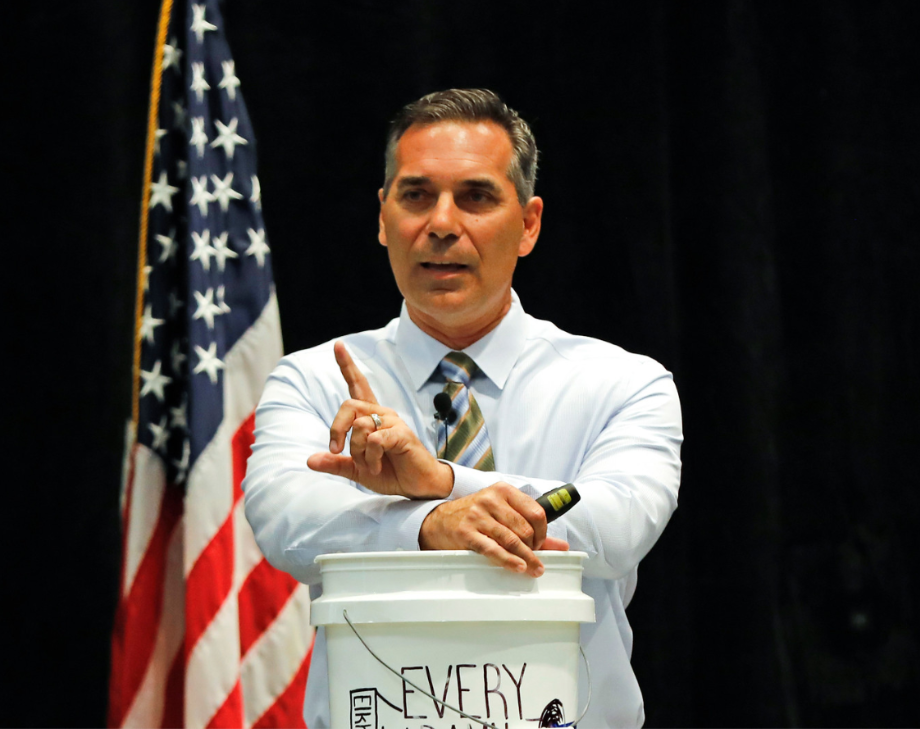
Deputy Fire Chief (ret) and Founder of Step Up and Lead
Frank Viscuso is a retired deputy chief and the author of fourteen books, including Step Up and Lead, Flash Point, and 35 Things Every Firefighter Must Know and Do. As a fire service officer, he developed more than 70 SOGs, created probationary firefighter and driver training programs, and acquired more than three million dollars in grant money for his organization. Frank is an international speaker who travels throughout the world providing leadership training for various teams and industries including the fire service, EMS, sales teams, the healthcare industry, small businesses and large corporations. He was an opening ceremony Keynote Speaker at FDIC (2022) and the ISFSI Instructor of the Year (2025)


