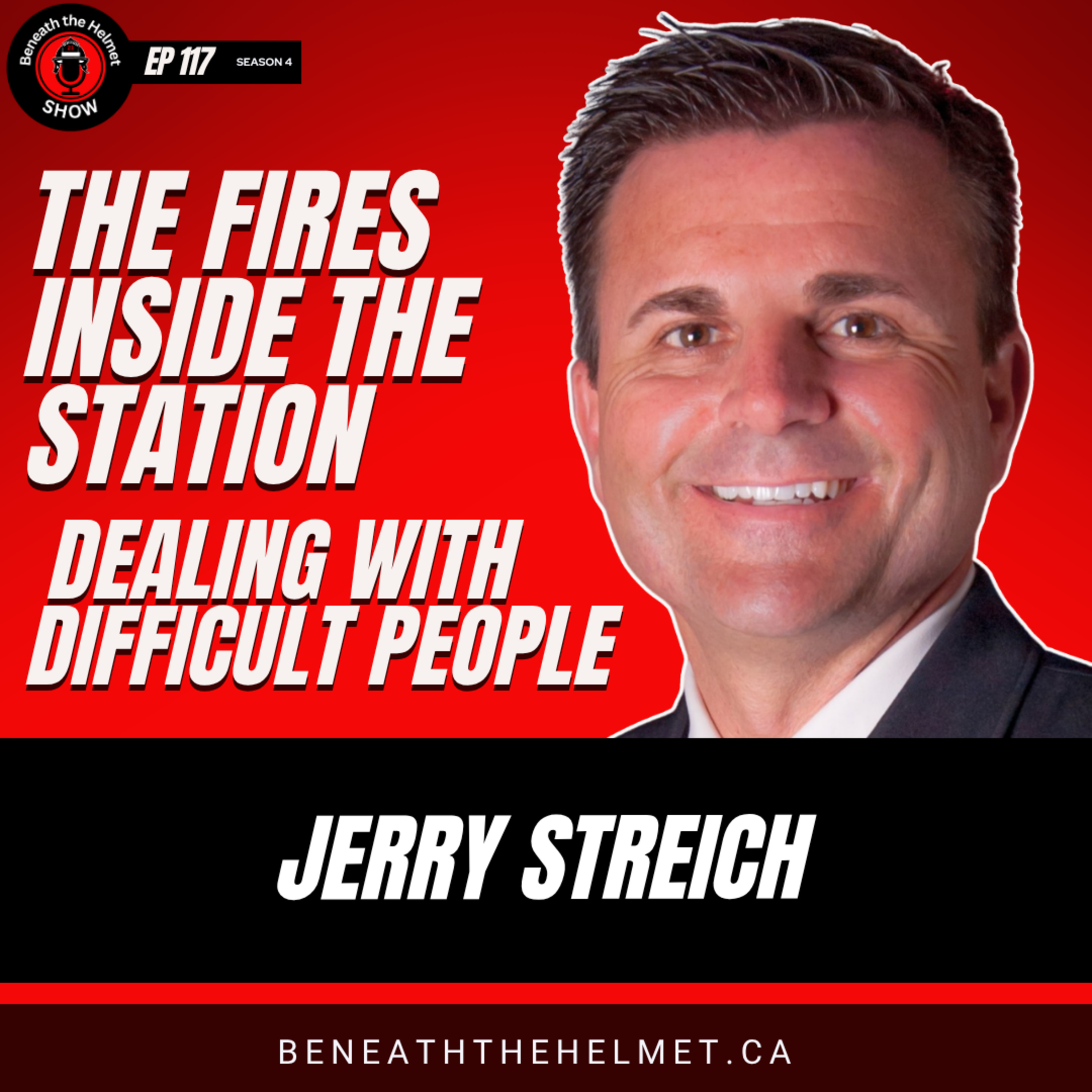
The Fires Inside the Station with Jerry Streich
What happens when a fire chief can command a complex incident with confidence, then feels overwhelmed by the personnel issues waiting in the office?
Jerry Streich joins Arjuna to discuss the fires that begin inside the station. Drawing from more than three decades in the fire service, military service and a leadership crisis that reached his family, Jerry offers a practical framework for recognizing difficult behaviour, reducing gossip, setting clear work rules and building accountable teams.
The conversation reaches beyond managing one difficult person. It asks how the fire service can prepare officers for human complexity, create safer cultures and honour the people waiting at home.


The Fires Inside the Station with Jerry Streich
Firefighters spend years building mental models for operations. They train ladders, pumps, search, command, and mayday procedures until action becomes familiar under pressure. The human side of the job often receives far less preparation.
Jerry Streich knows that gap from lived experience. After serving as an Army combat medic and moving through every rank in the Minnesota fire service, he became a fire chief at 37. He could manage complex incidents with confidence. A difficult personnel situation in the department left him losing sleep, worried about his family and searching for a leadership model he had never been taught.
That experience eventually became Dealing with Difficult People: For Fire and EMS Organizations.
In this conversation, Jerry and Arjuna examine the patterns that create friction inside a firehouse. Jerry defines a difficult person as someone who consistently changes the organization’s mood and repeatedly pulls away from its mission, vision and values. The word “consistently” matters. Every firefighter can have a hard day. Leaders need to respond to observable patterns without turning a person into a label.
The episode also explores how gossip fills information gaps, how organizations accidentally reward entitlement, and why unclear work rules make fair accountability harder. Jerry shares how a respectful workplace policy and consistent training helped establish clearer expectations in one department.
One of the most important exchanges challenges the idea that the fire service is a family. Family language can create belonging, and it can also blur workplace boundaries and make harmful behaviour easier to excuse. Jerry and Arjuna offer another frame: the firehouse as an elite team whose members know their roles, train for the mission and remain accountable to one another.
The conversation comes home to the personal cost of leadership. Jerry describes realizing how much his work had entered his family’s nervous system. His lesson is direct: learn the power of no, protect time away from the job, and prepare for the human side of leadership long before the next promotion.
Key Moments
03:20: Jerry discovers that operational expertise did not prepare him for complex personnel problems.
11:20: A serious personnel incident becomes the catalyst for his book and leadership work.
20:35: Jerry recognizes how his work stress and radio traffic affected his wife and daughters.
26:40: He offers a fire-service definition of a difficult person.
30:05: The conversation turns to the fires that begin inside the station.
35:00: Jerry and Arjuna examine “family” language and the elite-team alternative.
43:20: Gossip, confabulation and the danger of filling missing facts with assumptions.
45:40: How organizations build entitlement by avoiding early conversations.
49:35: Clear work rules, respectful workplace policies and accountability.
57:25: A humane approach to managing up when the chief’s behaviour has changed.
1:04:15: Jerry explains what he would do differently as a new chief.
1:09:20: Boundaries, health, focus and the value of having fun in the fire service.
About Jerry Streich
Jerry Streich is a retired fire chief, Army veteran, author, speaker and organizational development practitioner with more than three decades of leadership experience. Through Capstone Public Sector Solutions, he helps public-safety organizations and leadership teams strengthen communication, culture, recruitment and organizational performance.
Resources
Jerry Streich / Capstone Public Sector Solutions: https://www.capstonepss.com/
Dealing with Difficult People: https://link.amazon/B0aFsnIU7
Episode page: Click Here
Watch on YouTube: Watch Now
Silver Arrow coaching and leadership support: www.silverarrowco.com
Episode Companion Guide
Want to take this conversation deeper? Download the free Episode 117 Companion Guide for reflection questions, practical tools and key takeaways from my conversation with Jerry Streich.
Download the Companion Guide
Reflection Question
What behaviour has your team learned to tolerate because “that is how this person has always been,” and what clear, respectful first conversation would move the ember one step closer to resolution?
This episode shares personal experience and leadership education. It is not legal, clinical, counselling or formal human-resources advice. Follow your organization’s policies, collective agreements and applicable laws, and seek qualified support when safety, violence, harassment or legal risk is involved.
Connect with the Host:
Arjuna George – Fire Chief (ret) Owner of Silver Arrow Coaching and Consulting, Beneath the Helmet Show, and Burnt Around the Edges author.
www.silverarrowco.com
www.burntaroundtheedges.com
www.beneaththehelmet.ca
Host: Arjuna George
Guest: Jerry Streich
Season: 4
Approximate runtime: 1:18:00
Editorial note: This transcript has been lightly formatted for readability. Speaker intent, conversational cadence and the guest’s own terminology have been preserved. Timestamps are approximate and should be checked against the final edited media before publication.
Arjuna: [00:00:00] All right, everyone. Welcome back. This is Beneath the Helmet. This is season four. Today, you’re listening to episode 117. Today, I’m joined with the founder of Capstone Public Sector Solutions, fire chief, fire service advocate, author, and speaker, and today we’re gonna talk all about the new book that’s just come out, Dealing with Difficult People: For Fire and EMS Organizations.
So that’s today’s topic. Welcome to the show, Jerry Streich.
It’s time to ignite your soul and unlock your full potential. Join us on Beneath the Helmet, the podcast exploring firefighters’ health and wellness. Hosted by retired fire chief Arjuna George, our podcast is the perfect place to start your journey towards becoming the best version of yourself. So come on, let’s join the conversation and find out what sets your soul on [00:01:00] fire.
Jerry: Thanks for having me. I’m honoured to be here and to speak to my, uh, Canadian colleagues and those abroad.
Arjuna: Fantastic. So tell our listener today a little bit of who Jerry is and what made you come up with writing this fantastic book that truly I feel from recruit to fire chief should read this book for sure.
Jerry: Well, thank you.
Arjuna: So tell us how you got to this point of writing this book, uh, for the fire service.
Jerry: Sure. Well, I, uh, graduated from high school. I gr- I, I’m born and raised in Minnesota. You know, I’m, I’m six hours from the Canadian border. Great. But, um, I, I, I grew up right next to a fire station, and I was able to visit those firefighters every day.
Uh, when I was young, uh, they just inspired me to want to be something, uh, like them. And I just moved through the purpose of there’s no better way to be, uh, a, a good person other than to be a firefighter, ’cause they were so kind to me. And, uh, [00:02:00] but at that time, in the ’70s now, my parents divorced, and I was six, seven years old.
I was sort of seen as the trouble family, because back then families didn’t divorce. And if you were trouble or not, you sort of had this little, this little niche on you. So I would go visit the firefighters and talk to them about, about the world, and, uh, but I had nothing to offer. So after high school, I joined the Army where I became a combat medic.
And during that time, and I’m sure we’ll talk about it in our discussion, um, I found out the definition of leadership. And actually more so than anything, it changed the perspective of who I was as a person. And, uh, then that led me into the fire service. I’ve held every rank in the Minnesota Fire Service you could have.
I’m a retired volunteer, and I’m a retired career person. [00:03:00] Uh, I moved up the ranks, and at age 37 got my first fire chief, paid fire chief’s job in what at that, that time was Minnesota’s largest fire district, uh, joint powers entity where they f- the s- multiple cities form one entity to manage all of their fire services.
And that led me into finding and discovering that I had no idea what I was doing, as it related to dealing with complex personnel issues. I, I, I found out that- I was training 100% on operations, and I w- and I was good at it, and I put a lot of time in it, and I could do a lot of good, really cool, fun things.
But when I got to the chief job, I struggled, uh, uh, personally, uh, with, with stress and just all of the [00:04:00] complexities that happen when your, your, your mood helmet goes from yellow to red to white. And now I’m faced with, uh, dealing with these complex people in a complex organization, and I had a tragic incident happen, which we’ll talk about, that made headline news And Bobby Holton from Fire Engineering at the time heard it on the news or through some feed or something and asked me if I would be interested in maybe talking about it and writing about it.
Uh, and I said sure. You know, I needed that. I, I needed to discover what just happened with this incident and why I wasn’t aware how to manage it. And then that led me at the Fire Department Instructors Conference, I’ve been there for over a decade, teaching this topic, which happens [00:05:00] to be one of the most attended pre-conference sessions at FDIC.
In fact, three years ago it was one of the highest numbers they’ve seen in 95 years, you know? And people are like, “Wow, that’s great.” And if it were something like, you know, raising a ladder or doing something, that would be great, but we have to be honest about it. We’re talking about dealing with difficult people here, and it’s heavily attended, not just from veterans with 40 years on, but from new firefighters who just joined the team.
And so that led me down the road of, you know, formulating a book. And, uh, when it comes down to writing a book, if you ever wrote one, as I know you have, there’s procrastination, there’s, there’s doubt, there’s- Imposter
Arjuna: syndrome …
Jerry: there’s imposter syndrome. There’s rereading and rewriting [00:06:00] and thinking you need to add two more chapters.
The long story is I’m so glad it’s, it’s out and available. And, uh, o- one of the editors finally told me, he said, “Streich, you need a 1.0. Everything you’re talking about could be 2.0.” Oh. So, so the book was debuted last year at FDIC. Uh, and, uh, it… I, I just feel so good that it’s done and that I’m hearing comments, uh, from people saying they fully understand it and lived it and experienced it and should have had this a long time ago.
Arjuna: Well, like you mentioned in the book, uh, there’s dozens, maybe hundreds of books about how to deal with difficult people But the fire service and first responder agencies are a bit of a unique beast, right? So I think you really nailed, uh, the characters that we see in the fire service, uh, in particular, right?
So… And really made it a, a, a simple read, an easy read for anyone in the fire service to comprehend and put into action, right? [00:07:00] ’Cause it’s scenario-based as well as information sharing, right? So I, yeah, great book.
Jerry: Thank you.
Arjuna: Well, I guess starting off, uh, you mentioned leadership kind of right out of the gate.
I’d love to hear your definition of, of leadership in your own words for the listener.
Jerry: Sure. Well, a leader to me is someone who inspires others in a, in a, in a direction, in a path, who supports them in that path, and is willing to stand next to them at whatever cost to defend the mission and the vision that we’re all trying to achieve.
Whatever it is, you know? And I talk about it in the book. I didn’t know what leadership was when I graduated from high school, and I played sports, and yeah, we’re gonna throw the football and we’re a team or whatever. But th- this is much more in depth when we’re talking about our field, uh, where we’re, we’re under time compression, we’re under stress.
[00:08:00] We, we have very few opportunities to lose in our field. We just don’t have it. In fact, we don’t even train to lose. We don’t train to fail. So when I got into the military in the… I, I wrote in the first part of this book about my understanding and how I gained my understanding in leadership, because I had no idea what it meant.
And I met a guy named Ser- Sergeant First Class Glasgow, who was my drill instructor. If you’ve ever served in the military or in the United States military or in the Canadian service, um, the first thing they do is they get you off a bus and they… Y- you’re introduced to a bunch of really loud words and definitions you’ve never known about.
But what they do is they strip you down. They put you in the same clothes. They take your hair off. They strip you down, and you are no longer anybody’s class but the military’s [00:09:00] class. Your mom is not here anymore, and we are gonna define who you become in this army. And that then led me through a bunch of self-reflection and understanding of, one, what leadership was, ’cause I was watching it.
And I write it in the book, when I, when Glasgow… When I got off that truck, Glasgow’s uniform was so crisp you could cut an apple off his seams. And I mean that. This guy was, was- He was it. There was… You could tell in a instant who this person was just by how they looked, because the way we present ourselves actually matters.
So I learned that leadership was a variety of, of ways of supporting another. It’s not about position or power in my, in my book, and I’ve held every rank, and I used to not knowing what I didn’t know, uh, and I’ve apologized to [00:10:00] chiefs in the past when I became a chief because, uh, it’s easy to criticize somebody than it is to really fully understand where they’re at.
And when I became a chief, I learned, you know what? I, I wasn’t… I shouldn’t have done that, you know? You’ll never understand what it’s like to be a chief until you’re the chief, and you will never be able to, um, recreate that journey. Uh, i- in fact, Chief, your journey. You own that journey. All of those little forces and all of those little pressures and those winds and all that can never be recreated in that timeframe to another.
And so I asked Chief, “Just take it one or two steps forward. Don’t bring it back.” But, um, so I learned leadership through the military, and some will say, “Well, that’s pretty harsh in the fire service.” Well, we have to then go into the fire service and see what works and what doesn’t. One [00:11:00] style does not work for all, and one win in one department when you move to the next doesn’t automatically make it a win in another department.
Uh, you can’t keep repeating the model because the people change and the culture and the beliefs and the values change.
Arjuna: Makes it interesting and challenging all the same time, right? So-
Jerry: Yeah, exactly.
Arjuna: Yeah. Right. So you mentioned briefly the, the kind of, I would say, the incident that sparked your interest in, in figuring out how people work, how people operate, how they function, the behaviors I don’t wanna spend too much time on the story, ’cause it’s a pretty in-depth story and I wanna save it also for the book.
Right. But give us a little highlight of how this formed your kind of need to share this information with the world, this, this event.
Jerry: Sure. And, and, you know, it’s an interesting story. I had someone tell me yesterday, he said, “When I started reading your book, I thought it was a crime novel,” you know? And then it led through the, through the system, and I thought, well, that’s an interesting [00:12:00] take on it.
But I ended up inheriting people who I had no idea where they came from, where they live, how they grew up, what, what, what provided them a worldview, and what is their worldview. But before the previous chief left, he gave me five names on a napkin that said, “These are the five people you’re gonna have trouble with.”
One of them changed my life, because he then became… Not because of the note. I did my own, my own research. I did my own evidence, you know, based fact-finding. I would first go to the personnel file, where you’re supposed to have all the answers of these employees. Then you open them up and you look in the files, and oftentimes it’s you open up the file- You know, you can blow dust out of that thing.
It hasn’t been touched forever. And that was the case with a couple of the people that I was told I was gonna have, I was gonna [00:13:00] have issues with. And one of those individuals I learned was a bi- a larger problem when I started interviewing the fire multi s- multi, multi-station department, 75 firefighters, um, combination.
I started interviewing them individually. “Hi, I’m Jerry Streich. Here’s where I live. Here’s my wife. You know, I got a couple daughters,” blah, blah, blah. “Who are you?” Listen to them. And then we start asking about, you know, what are the strengths of our organization? And, and then eventually we get down to, are there any threats we should be aware of?
And I started hearing the same name, and every time I heard the name, I bumped that person down to the next interview, bump them down. And I ended up with the person I’m talking about in the book named Stan. And Stan was a big guy. He, uh, I don’t know his history as I look back and reflect on all this because I was a, one, I was a new chief.
This happened in the first year of my chief, uh, adventure and [00:14:00] journey. And, uh, I could have went back and found out a lot more about this individual, but so much was happening in the timeframe as a chief, I didn’t. But he was seen as a threatening bully, to the point where he would poke you in the chest, where he would kick a can across the fire station, where he was…
It was learned through a series of investigations and so on that he has a history, uh, a family history of domestic assault. And he also learned that, um, uh, multiple people said, told me, “If I see that vehicle in the driveway, I turn around and go home.” So for any officer or any, any supervisor or manager, when an employee says, one, they don’t feel safe Two, they’re gonna turn around and not participate.
That becomes one of your highest organizational threats and one of your [00:15:00] focuses. You can’t look away at that. No longer can we just say, “Well, that’s just Stan. That’s just Jerry. He’s always that way. He’s been that way forever.” ’Cause look on the news, especially, you know, in our country. Uh, I, I’m not paying attention much to the Canadian news, but I mean, we have a lot of stuff happening in the fire stations that are much different than when I started in the ’80s.
You know, we have shootings at the fire station. We have, we have people wrapped up in cellophane, and we have these crazy initiations and stuff that any citizen would look at and say, “That’s the fire service?” Uh, you know, every poll in our country says they’re one of the most trusted individuals in the country, CNBC, Gallup Poll, everyone else.
But if they see the stuff inside the organization, uh, they, they would raise their… We, we would lose a lot of, a lot of trust in our community. And [00:16:00] I soon learned that, um, I was lacking training. I had somebody who was keeping me up at night, ruminating on the same person in bed. I’m just thinking about all these challenges when I should be sleeping, all of these challenges and how do I deal with them, ’cause I didn’t have a, an administrative mental model of how to manage it.
And when you think about our operations every day, we train on ladders several times a year because we don’t often throw ladders, and we’re trying to keep our mental models fixed and in place, so when we’re under stress and we’re moving toward the building with a ladder, we just do it. It’s, it’s intuition, right?
Uh, but I had no administrative mental models on how to deal with this stuff, and I, I hope that makes sense. Um, so we ended up where there was a high-profile incident that happened, made headline news, [00:17:00] and I started to ask the question, “How did I not know this?” I have several degrees. I can manage a multi-story apartment fire as a commander without even breaking a sweat.
But when I go into the office, I wanna roll up in a fetal position and lay under my desk. Seriously. I’m up at night. And now this individual progressing and progressing and now threatening and now, and now I’m wondering if I have to watch my back, and my family is watching their back, and it’s just not…
It’s not cohesive for anyone in our work or any work. So after that incident, and, uh, looking back at a lot of stuff that happened, um, I had to ask, “How did I miss this?” And what I found was no one’s talking about it There’s, in the fire service and i- in the EMS industry. ’Cause there
are thousands of books on dealing with difficult people in the [00:18:00] world, and that title is, you know, I, I was, uh… this is an FDIC or, or a fire engineering published book. That title was what was bringing people to class because that’s the hook, but it’s so much more. And, and I would say, “Hey, I’d like a different title for the book,” and they’re like, “There’s nobody doing this in, in, in the industry.
This is the title, and it’s for fire and EMS.” But when you get into it, you’ll see… And I wanted it to be interactive. But I, I finally started writing the book, and the first couple years I had a, I had a hard time doing it. I learned through writing the book and teaching this class. The first couples, uh, couple years I would cry telling this story to people in attendance ’cause I, I learned that I s- I experienced PTSD by managing people And some people say, “Well, that, that’s not…
You can’t get PTS…” Uh, look at [00:19:00] me. Here I am, this guy. I had the same scars. They’re, they weren’t on the incident. They were threatening my, my ability to manage, uh, my finances to support my family. I didn’t wanna get fired, you know? I didn’t wanna go to court. I didn’t wanna die at work. Um, they’re threatening my, my credentials and everything I fought for to have a perception of someone who’s credible.
Social media posts, and all that stuff is threatening, and, uh, I believe… Well, I know it did. It created a lot of challenges for me mentally. So I had to, I had to go through that process and talk to people, and then I started writing the book little by little. Then it started changing, like maybe I’ll give them a scenario.
I’ll add research to it. I’ll ask the reader questions because I know everyone that reads this book, when they see the, the definitions of the, the [00:20:00] number of traits I’ve selected, they’re gonna say, “Oh, I know that’s Willie right there,” you know? “And that one’s Susie, and that one’s my boss,” you know? So that’s how I got into this, and it’s a long story, but, um, I just felt like I had to write it because it was missing in the fire service, and now here it is.
Arjuna: Now, that story that kind of opens up this whole book is, like you say, like a crime story. Um, it was pretty, I don’t know, riveting to kind of go through and like, wow, this, this is the worst-case scenario. Yes. Right. This is the worst-case scenario when you’re dealing with difficult people. Um, so once again, we don’t wanna spoil the whole story, but-
Jerry: Right
Arjuna: uh, it’s definitely something that opens your eyes up, uh, that any one of us listening right now could experience today, tomorrow. Right. Uh, so yeah, pretty powerful. And one thing that really stood out to me in the story was the, the… It was the one sentence, I think, how you realized the impact it was having on your family [00:21:00] by putting the fire service first versus your family first.
When crisis is hitting, instead of staying home with your family, you chose at the time, which probably most of us do, to go deal with the incident instead of-
Jerry: Right …
Arjuna: the family. I thought that was a pretty powerful statement as well, so.
Jerry: Well, that’s what changed my life. And, um, there was a moment when this incident happened when my best friend called me, and that was my wife, and I’m- I’ve been with her 38 years now.
We had kids together. We built our life together. And, uh, you know, I learned during that time too through the research of this book, I have two daughters, 31 and 28. One of them is a, a, like a nurse practitioner in Manhattan, New York. She went to NYU. She stayed there. She was an ER nurse during, uh, the pandemic, putting the tubes down everybody’s throat.
And, um, I learned through my younger daughter, who’s a career [00:22:00] firefighter, that my pager and all of the radio traffic that was going on at home was not immune to fear. They listened to the 14-year-old hanging in the closet, and then I would leave. They had listened to some of this, and, and I never even thought of that, you know?
So now they’re growing up. They’re thinking, “Dad’s leaving. Don’t know if he’s coming back or whatever.” But the same is true with my wife. We don’t sit and talk openly about this stuff, but when she starts hearing me, my best friend who I’m venting to about what’s going on at work, and here’s who I called, and now these are who coming around the house every now and then to see if we’re okay, that kind of stuff, um, that scared her, and I never expected that at all, and that’s what really turned me.
It wasn’t so much the incident, which was very traumatic and [00:23:00] powerful. It actually ch- turned the fire service, uh, organization to the high… I mean, we just skyrocketed after this. Um, but the impact it had on my family, and I didn’t even consider my family in any of this. I was so work-focused, which I’m not today.
But it, it, that changed my life.
Arjuna: Yeah, that was a powerful statement. Once again, it was something that stood out to me because I think that’s probably, uh, a challenge for a lot of fire service personnel is to putting work first, right? So- Right … I think this podcast is kind of sharing that, you know, the value of balance and the value of, you know, not being fully involved in the fire service 24/7.
There’s a time and place- Right … but there’s also a time and place for the people who you cherish, right?
Jerry: Right.
I would say my youngest daughter now, who’s in her third, fourth year, she went to school, got a degree and all that stuff, and graduated in my living room, uh, [00:24:00] from college because of COVID.
And, uh, she walked across the living room, her picture came up on the screen or whatever. But, uh, she ended up… I ended up getting a recruitment grant to manage a statewi- help manage a statewide recruitment, and I needed a social media marketer, so I hired her. And she went to the academy to learn what a firefighter was and fell in love with it.
But she’s, she’s always like, “Well, now I can be on this committee, and they asked me to be on this, and then they asked me to this, and they want me to do this.” And I, and I, I just told her, I said, “Honey, with all due respect for the fire service, this job can and will suck you up and spit you out. And once that’s done, the next one will come up.”
So one of the, the, you know, one of the number one leadership words I ask people to use is no. Not out of disrespect, but out of respect for you and your family. Just say no. You could be on a million [00:25:00] committees, and if you’re, if you’re active, as I know you are, and others watching are active in the fire service, I mean, they will take you in a heartbeat, but it takes time away from your life and your family’s life
Arjuna: I wanna, yeah, I, the power of no is such a critical, uh, sentence really.
Uh, that’s just a, a powerful one. But also the, the mindset of we put everything first, and we always leave our family the last little bit of our energy and everything. But when really we should be putting our family, all our energy first, and the fire service gets what’s left of our energy, right?
Yeah, we do. And I’m not watering down the fire service. I think we, you know- Yeah … it’s a beautiful thing. We, we are passionate about it, but there’s more to life than strictly just that.
Jerry: Right. But we’re also, we’re also fire service leaders who have served our entire life in it, and we’re focusing on the Millennials and the Gen Z-ers now, who are m- you know, Gen Z’s mainly who we’re recruiting.
But I don’t want them coming in and just seeing me face forward at work, [00:26:00] you know, and requiring them to do everything. I mean, we get a benefit of vacation for a reason. Or we need to, for the volunteer side, we need to ensure that our organization allows some freedom and gets rid of that guilt for not being at the, the car wash that raised $200, you know, or something.
Um, we, we need to free up our people, and if that means hiring more people to do the job, uh, and volunteer, let’s do it.
Arjuna: Yep, guilt is a definitely a big one, especially in the volunteer fire service, for sure.
Jerry: Exactly.
Arjuna: So to kind of set the stage, how would you define a difficult person? I know you define it in your book.
How would you define that to the listener today?
Jerry: Yeah. And through my research in asking why I didn’t know how to do this, I started to define Stan and the other individuals that I had to deal with. And I had to deal with a lot of people in my career as an assistant and, you know, as a fire marshal, and all that.
You, you [00:27:00] deal with a variety of people. It’s different when you’re in the white helmet, and you’re sort of a… At that time, I was the HR, uh, director and everything. In fact, after this incident, I went back to school to learn why I didn’t know this. So I went back to school, and I got a degree in human resources.
And even in that four-year degree, I didn’t learn what I was missing in the fire service. ’Cause as you stated, we’re a, we’re a different w- uh, class of worker. You know, we live with each other for 24, 47, or we’re in the, we’re in the volunteer house, which is a compilation of anything that’s not full-time, part-time, paid on premise, you know, whatever, or true volunteer, but we’re relying on each other as a tool every day for our own wellbeing and success of the community.
So one of the things I couldn’t find is what does a difficult person mean that fits the fire service? I couldn’t find it, so I developed [00:28:00] my own. So a difficult person to me is one who consistently changes the mood of the organization. The key word is consistently. You and I and, uh, the listeners have probably been difficult at some time to somebody at one time.
But these are the people who are consistently changing the mood of the organization and fail to follow the mission, vision, core values of the organization. They’re just constantly gossiping. They’re constantly talking negative about the organization. And for officers or our leadership, you know, you report to the chief.
And I know I’ll get… I get messages on my social feeds and stuff. “No, I don’t report to the chief, I report to the firefighters.” No, you are part of a span of control process when you’re an officer within a leadership team managing a, a lot of times, a multimillion dollar organization, or some sort of [00:29:00] public trust entity for another.
And the chief can’t do it alone. In fact, I don’t think the chief has a ton of stuff to do with culture and, and, uh, you know, culture’s developed on the floor. We can debate this, but I can influence the organizational culture. I can provide benefits to the group through, uh, s- uh, strategy and initiatives to get more funding, to improve our equipment, and to improve our facilities.
But, um, I, I, I can’t do it all. So we have officers who are managing the crews. And because that definition wasn’t found, I created my own. But the key word is continually, and the key word are those individuals who just don’t wanna follow, uh, what I c- what, you know, the book True North. They’re not on the true north, uh, element.
They’re like five degrees off all the time. And there’s true north, but when you’re [00:30:00] five degrees off, it doesn’t look like much when you’re in short range. But when you get long range, five degrees is a long way off the path of where we need people, uh, to help the organization achieve its mission and its goals
Arjuna: You made the point that, uh, in the book, and that’s kind of the theme, I guess, of the whole book of it’s harder to put out the fires that are inside the fire stations than the fires that we fight every single day.
What is it that makes it so hard, do you think? Why, why? Do you have, like, a root cause? Do you have, like, one major factor that makes it so challenging that the fires inside the station are more difficult to put out than the ones that we fight on- Yeah,
Jerry: I’ve been saying that statement for years, ’cause I, I said it one time at a conference and I just said, “You know what?
You just, you made a statement that everybody should know,” because that’s what I lived. Yeah. When I was in a, in a, in a high-level leadership role, I was putting out more fires inside the station than I was outside the station, right? And those fires tend to be [00:31:00] personality driven, commun- communication driven, and so on.
And why is that? What are the barriers to give us the courage to actually have candid professional discussion? There’s a number of them. One of them in the fire service is, well, a human factor is we all wanna be liked We don’t like confrontation. We, we want to be known as the good firefighter. We don’t- we wanna follow, we typically follow the li- the weakest link, by the way, you know?
The, the, the weakest norm that everybody accepts, we’re following that. But when someone comes in and says, “Hey, I think we should do things differently” not change it. I learned that many years ago, not to use the word change. We’re just gonna do it differently. Exact same thing, different terminology and, and way to present it to people.
But, but the fire service has been [00:32:00] evolving forever. And, um, if we weren’t, we’d still have horses in the station, and we’d be complaining about picking up the horse poop and putting it in a bundle. But we all wanna be liked. We don’t like confrontation. We don’t have training on how to deal with one another.
We don’t even know each other’s manual. What does that mean? You can go to any store across the world and buy something, and it’s gonna come with a set of instructions. What it does, what it doesn’t, how to keep it safe, how to maintain it, what’s gonna wreck it. It doesn’t come with a human that walks in the door.
We have to discover it. Nobody asks about it. In fact, I was just teaching in a department a couple weeks ago and I said, “How do you get- become part of your department?” They said, “Literally, you just walk in the door and say, ‘I wanna be part of it.’ We don’t have an interview process. We just sort of teach you what to do and tell you when to come, and you’re [00:33:00] part of, you’re part of the fire department.”
Uh, and then over the course of five, 10 years, you’re trying to figure out this manual, but nobody’s brave enough… I shouldn’t say nobody. Few people are brave enough to ask those, those candid questions. Like, “How you doing?” “Oh, doing great. The weather’s nice.” “No, how you doing? I know that your mom, your mom has cancer, and, and I don’t know if it’s true, and I’ll ask you, but I heard you’re taking care of your mom after you leave the station.
How is that going? And is there anything we can do to help you? And I truly mean I wanna help you.” We’re not doing that. When’s the last time your department had any training on teamwork, on conflict, on defining, more importantly, the system’s rules? There’s a lot of departments in our country that don’t even have policies.
Mm-hmm. And policies to an HR person means work [00:34:00] rules. And if you have a bunch of people who are going rogue and may be considered with Streich’s definition difficult, it may… You may have a system problem. And once we fix the system problem, which identifies clear expectations, uh, what, uh, how to be safe, what we will tolerate, what we won’t tolerate, that’s when, uh, things start to change.
And you have to have a group who are willing to look at that and say, “This is what we’re gonna stay- stand with, and we understand that some people won’t like that, but we’re gonna coach and mentor them. And if they don’t follow the mission, vision, core values the way we wanna redirect it, well, then we have to start the discipline process and move up the ladder to eventually gets to the chief or wherever.”
Um, so that’s how I came up with the definition, and those are some of the keys to why, uh… And the, the other one, the big one, and I [00:35:00] just wrote about this, is our understanding and our tradition in our field of, uh, treating one another as if we’re family
Arjuna: That was one of my questions for today, for sure.
Yeah
Jerry: Yeah. I don’t, I didn’t experience the family feel in my 32 years. Um, I felt a lot of team comradery and things that may have felt like family, but when it… But family typically doesn’t have many boundaries. I can break a lot of rules in a family and eventually come back home and eat at the dinner table with you and, and live as if I normally have.
In organizations such as ours, which is so critical, there’s no one else that can do what you do, period. There’s no one else in your community. You are an elite team. There’s le- fewer than 1% of our [00:36:00] communities are actually firefighters wearing air packs and specialty equipment, $10,000 in, uh, US and gear, driving million dollar apparatus, uh, you know, to these scenes to mitigate an incident that three numbers got you to.
The, in our country, we spend $6 billion a year on the 911 system to get the superstars, and guess who’s hoping you’re a superstar? The people who dial, dialed the number. But the family dynamic, I think, is muddled, and we need to keep having that discussion amongst all of us who have been in the fire service for a long time.
And calling each other brother and sister, I understand that, but it’s get… When, when we bring in our, uh, the newer firefighters who’ve never understood the fire service, it’s confusing to them on what that means, so we have to define that for them. You can’t just walk into a family and say, “I’m your brother” [00:37:00] You know, you know, that, that takes years to develop.
But I think that’s one of the big ones too. How do, how do you feel about that term? You’ve
Arjuna: handled- Yeah, well that was, that was one of the questions I had kind of stewing in my mind was, is the family attitude a benefit to the fire service, or are we… should we be more looking at an elite team, teamwork?
Yeah. ’Cause I think that’s really what we are, we’re a team. Yeah. Yes, we might sleep in the same firehouse over and over again, we eat together all the time, but that, those two things don’t really make a family per se.
Jerry: Right.
Arjuna: And it also- Yeah … probably takes away from your actual real family that you might be now deprioritizing, uh, versus- Good, yeah
your fire
Jerry: family Good point. Good point. Why don’t you go back to your family at the station? Yeah, that’s
Arjuna: right. You know?
Jerry: Yeah,
Arjuna: yeah.
Jerry: Uh, it, it can be, it can be confusing. But I, in, in, in some of my conferences I’ll s- I’ll, I’ll say, uh, uh, I’ve had an opportunity to work in Africa. I’ve trained the La- Liberian National Fire Service in Kenya.[00:38:00]
Um, I’m working with Ukraine now and deploying gear and so on. But if you were in one of those countries and there was a civil war that occurred while you were there, if you’re Canadian or US, I always ask this question, “Who, who do you want to come and get you out of the embassy?” And it gets quiet, you know, and then all of a sudden I hear, “The Army,” you know, “The, the Marines, the Canadian Forces,” you know?
And then I say, “Why?” And we go through this, because they’re trained. All right, what does training mean? They show up and they fully understand what’s expected of them. All right, they’ve got funding. Yeah, they’re funded. They’ve got the right equipment and they got a lot of gas. Give us. They got a lot of that in them, and they know clearly what their expectation is.
But the biggest reason I want them to come get me is, is the measure of probability. If you remember the probability scale, zero to 50% is possible, 51 to 100 is [00:39:00] probable. I want a probability that they’re gonna extract me the first time And then we go, they go, “Yeah, yeah.” And then I say, “Okay, someone dials 911.
Who do they want to come and help them?” They have no idea who you are. Majority of our communities will never even dial 911 in their lifetime, but who do they get? That’s how I live my fire service experience, and maybe that’s too harsh and, you know, all kinds of, of discussion on that. And those are the debates we need to continue to have.
But to your point, that defines an elite team. You’re elite. No one can do what you do, not the police, not, not, uh, the mayor, not your town board people, not your public works people. No one can do it but you. And when you’re in trouble, there’s only one other person that can help you when you’re in trouble, and that’s someone exactly very similar to you with the right training.
That’s a r- [00:40:00] that’s an elite team. Uh, my military experience tells me there’s a broad range of people that join the military, and we go through the same issue. What are your skills? What are you really good at? Well, I can… I, I love using power tools. Okay. Well, I talk to Sue or Mike. Mike, Mike pulls the power tool and it rips his finger off.
He doesn’t have the shoulder strength for whatever reason to get that power saw going. Um, I’m not gonna have Mike fail by, uh, directing him to start the power saw, the K12. I’m gonna give it to the people I know. At the same rate, we know people won’t climb a 100-foot aerial. The same is true when you look at the human manual at the fire station and find out what makes them work the best, what fuel makes them just to their prime and doesn’t bog them down.
And what do we not wanna put them in because it’s not safe for them, ’cause they’re fearful of heights, and now they’re on an aerial, and they’re, they don’t wanna… You know, they [00:41:00] get locked up. But, um, yeah, that term family, I wanna keep debating, and I think we should all be pushing that, that, uh, discussion.
Every one of the leaders should start talking about it. And w- are we an elite team, which I feel we should be, and we are, or are we just gonna fall on the 1950s, uh, 40s club mentality of the fire service?
Arjuna: I’m curious, in the military, do they call themselves family at all?
Jerry: Um, I hear brother and sister Mm-hmm I can’t remember a time where we felt like or I heard we’re a family
Arjuna: Mm-hmm.
Yes.
Jerry: I just haven’t
Arjuna: It’s interesting how that’s kind of morphed into a paramilitary organization such as the fire service, eh?
Jerry: Hmm. Right. Right. And it’s called para because it’s not full, you know?
Arjuna: Yeah, exactly. Yeah.
Jerry: But we, we, um, we follow a lot of the same practices, but the fire [00:42:00] service, much like my book, we’re missing some prime training opportunities that should be required.
Yeah. One of them has to be the aspect of teamwork and conflict, and, uh, I’m starting to hear people now talk about normalization and deviance and all kinds of different terms, which are, you know, fit within a difficult person, uh, uh, trait. But, um, we need more and more people talking about it and debating it, not arguing about it, but debating it.
Yeah. And, you know, this is where you and I are having a candid discussion of what you believe and why, and what I believe and why, not attacking ourselves if we are family, you know? Just allow people to say, uh, something that they believe and then m- muddle on it. And if you don’t like it, say, “Well, I don’t, I don’t believe that, but I can understand that [00:43:00] that’s something you believe.”
Arjuna: Can you imagine if we did that in the world all the time?
Jerry: Amen
Arjuna: to that. Life, life, life would be different, wouldn’t
Jerry: it? It would be, right.
Arjuna: So in your book, you kind of define 10 of your, I wouldn’t say the most popular, but maybe the most impactful, uh, traits that difficult people have. Going through that, was there one that you stood out or stood out to you that was like, “This is the one that’s probably number one in the fire service,” uh, a- as an issue, a challenge?
Jerry: Because- Uh, well, challenge right now in the fire service is my gossiper.
Arjuna: Mm-hmm.
Jerry: And the, the, the individual who uses, uh, what I’ll call confabulated information. Confabulation is a term, and what it means is you have little pieces of information, but you’re missing some in between the facts that you have.
Right. And the facts are what we believe to be the [00:44:00] truth. But now you’re, you’re in a group around the kitchen table at the fire station, or you’re having a conversation, and your brain and you fill in the gaps as if that were the truth. In fact, many people will believe it is the truth, and they will fall backwards on it, and then later learn it’s not the truth.
So we could really reduce the amount of conflict in our organizations immediately if we f- if we seek the truth, if we stop talking about people, and when we start talking about our processes and our practice, and get really good at what we’re doing. I posted some time ago 100 things you should do before you start talking about people.
Like, if, if you’re a firefighter and you don’t know what your maximum relief pressure is, why don’t you know that? Why don’t you know how to actually work a variable gallonage nozzle? Why don’t you know [00:45:00] how to use your thermal imaging camera? Why aren’t you, why are you not engaging the pump you’ve been on 20 years?
Why don’t you know what handline to pull? And I can go on and on and on. You know, what is depth? You know, how much water’s on your tank? What, what’s on, what’s on line six? If you don’t know that, why are we talking about people? Mm. You’re expected to be a professional. Mm-hmm. Yeah. And a professional in a definition, like a Webster’s Dictionary, says nothing about money.
Mm. It’s, it’s an attitude. The same with career. Look it up. It says nothing about money. You can have a great career as a volunteer, and you can be a professional volunteer. It’s a mindset.
Arjuna: so one of the ones that kind of stood out for me, and I, I…
seems like this is a growing trend, is the entitled, uh, trait.
Jerry: Yep.
Arjuna: Any thoughts on how to, how to maneuver through that and maybe how to reduce a [00:46:00] little bit of that s- sense of entitlement?
Jerry: I believe entitlement is built through a series of time. When, when someone becomes so entitled that they feel their years of service overrides every manual in the organization, that’s a problem.
Arjuna: Mm-hmm.
Jerry: And if you are a full-time firefighter, you shouldn’t have no feeling of entitlement because every two weeks you get a paycheck for the skills we’re hoping you’re offering to the community, which is what we hired you for. If you’re in a volunteer organization, the same is true. There should feel no entitlement of being, uh, having the say.
Now, we tend to entitle some of our best performers. That’s heavily s- studied. You may say, you, you know, “AJ’s the best firefighter we have, and I don’t wanna tick him off.” Well, that builds entitlement where they feel like they’re [00:47:00] puncture-proof, and they feel like they have more say than others. But what does it do?
It creates a lot of contention. But I believe the system over time builds entire- titled people because somebody failed to stop it Somebody failed to pull him aside and say, um, uh, “I need to address this behavior.” I’m- I don’t believe we should addre- address people, we should address their behavior.
Behavior should be spelled out in a system of rules and policies on how we act at work. We’re at work. Don’t ever lose track of that. Yeah. You know, even if you’re a volunteer, we’re at a job in some community, some entity is responsible for you. And, um, when we start to put the p- system parameters in and we can train our staff to understand this, it gets better.
[00:48:00] But how do we correct it? We have to have a lot of courage and candor- Yeah … and clarity with that individual. If that individual who’s entitled has become- continues to be disruptive because they feel their, their years of service or their degree or their, their certificate they just got, uh, is overriding everything else, we have to have a discussion with them.
And this is where, uh, the middle managers of our field, the lieutenants and the captains, they don’t get a lot of, they don’t get a lot of extra training- Mm … you know, in this field. They’re, they’re not oftentimes even taught administrative stuff other than the records management system. Would you agree with that?
Arjuna: Oh, 100%, yeah. Yeah. That’s a huge gap in the fire service.
Jerry: It’s a huge gap. And- Yeah … anybody that can take that on, there’s opportunities at FDIC everywhere- Mm … to start focusing on how can we lift up the lieutenants and the captains so that they know what they’re getting [00:49:00] into, one, uh, uh, they know that we’re gonna support them, uh, two, and, uh, there’s training available to find the gaps.
Mm. And if we were to do that, our organizations would be, wou- would be better. But for the entitled, it’s very difficult. Um, and I often, and I’ve said it candidly to people, “Your years of service, although they’re highly respected, and I, you know, I’ll give you a big hug for it because I do appreciate it, does not run this organization.
The, uh, the system rules, the culture we all develop together, you know, on- onward is what runs this organization.”
Arjuna: So you’ve mentioned system rules, policies, rules several times. How did you find communicating that to your organization in a successful way? Because that’s, you know, I, I coach a lot of chiefs, and their, their biggest challenge is communicating the rules and regs to [00:50:00] the, to the troops.
what kind of success have you seen in, uh, around that in the past?
Jerry: During my learning process with the fire district and after this incident, there was an organizational structure change. I ended up getting called to say, “Hey, would you apply for this position over in the next town?”
And I was a chief in two towns, the fire district, and then I went to a more affluent community closer to my home. And I took the lessons that I brought and learned from all of that, what we had, which was an awesome organization. I mean, there’s so much good, and there, it’s great people working hard, and we all try to do our best, understanding that we’re, we’re living a life’s journey as well as a firefighter journey.
You know? And it all, it all comes together. Um, but I went to that organization and, and one, I already had my degree in HR. I understood policies much better. I r- rewrote them all. And just introducing two policies every training [00:51:00] session changed things. One, what are policies? I don’t like those wo- I don’t like that term policy.
Here are our work rules, and here are the boundaries and the expectations our firefighters need to live within. And understanding that when we’re on the field, when we’re on the job site, some of these get gray. You know, for example, firefighter g- uh, gets on the scene, there’s a baby trapped on the second floor.
Firefighter immediately finds the ladder in the yard, throws it in the window. He’s got his PPE on, no air pack. Goes in, does a vent enter search, finds the baby, climbs down the ladder and gives the baby to mom, saves the life. This is a true story. Is, is that a policy violation? Is that a gray area? Do we write him up for not having the air pack after they saved a life?
I mean, there’s, there’s a lot of gray area and dynamics on the fire ground- Yes … compared to here’s how we’re gonna work with [00:52:00] one another when we’re in a non-response mode. This is how we’re gonna treat people. At that time, I implemented a respectful workplace policy, and I’ll offer this to anyone listening.
Um, uh, uh, just message me and I’ll send that to you as a template. I created a respectful workplace policy that was brought at day one of every initiation, every, every new hire. These are our rules. This is what we will hold you accountable, and here’s what we don’t do. And by implementing that one, uh, work rule- It improved my firefighter recruitment to 30% female.
Okay. Two months before I retired in 2020, I- we received the Minnesota Fire Department of the Year Award, primarily because the amount of females. I, I would come on shift and be the only guy in the morning. Okay. And, um, that respectful [00:53:00] workplace policy started with me. Like, we… I will not tolerate grabbing somebody’s butt.
I will not tolerate you effenheimer-ing somebody and stripping them down with word… You know, that’s from me. And basically, here’s how you can get into a predicament where we’re gonna have to have a office discussion, and they get it. They get it. So now you have an organization that’s 100 years old. We’ve been working a system that really hasn’t been working well.
How do we now turn it? And we see this in our country too, where chiefs, you get a new chief in, and the new chief sees their… Or maybe even be directed to doing things differently, and they do it too soon, and all of a sudden they got all these new things happening. And I’ve always been an outsider hired from outside into somewhere, and I’ve always been hired to be a change agent, but what I learned is that [00:54:00] critical 100, 180-day rule in any position of just hanging low, smelling the roses and opening the drawers and talking to people, and don’t do a thing unless it’s going to, you know, be some sort of safety issue.
Don’t go looking for problems because they typically come to us. But, um, but the system itself is so critical to the success of your firefighters. Most of them want it. They wanna know what’s expected of them. Any survey I’ve done through assessments or my own, most of them are, like, 90 to 100% hold people accountable, which means when I read it, um, they wanna be held accountable too.
So if we’re gonna hold people accountable for their actions and their understanding, and we all know that, your organization will, will change. And go into some [00:55:00] of the Canada’s best fire services, the US best fire service, and you’ll see a system that is very similar to that. You know, d- let’s not talk about freelancing on the fire ground.
Let’s first talk about freelancing in the fire station.
Arjuna: Right.
Jerry: From there, things can change.
Arjuna: I’m curious, why is the fire service so different than your standard corporate HR issues? Like, what, what… Is there something that really sticks out that makes us different and why we’re so challenged by difficult people versus the Apples, the Googles?
Jerry: Well, well, one, we’re more willing to tolerate it because we’re a family and we don’t wanna hurt feelings, and more importantly in our country, we’re short-staffed.
Arjuna: Wow.
Jerry: Especially in the volunteer area. Yeah. You know, if we let go of one, that means five others are gonna do one more g- person’s work, you know?
And there are departments that are in that [00:56:00] position where they’re just not using the modern approach to recruiting, and they’re fearful of letting someone go because they’re a family and they live two doors down. The, you know, there’s a lot of those dynamics, and I understand them. Some of them, you know, we need a lot of people to get on board to help r- resolve some of those issues.
But the nice part of a Google or something is, is, you know, the workforce is set up to where I can just let you go without any, any reason. You know, we’re- we’re giving some public protections. We’re giving the right to ask questions. We’re giving some protections even though we’re a volunteer public official, and we c- we can’t just talk to somebody today and say, “You’re gone tomorrow,” without good documentation.
Mm-hmm. Fearful of being sued, and I had that. I was feared of being sued. I was fearful of, of being known as a bad chief. I was fearful, like I [00:57:00] said earlier, about being liked when I first started, uh, because in the first year, year and a half, you know, these bugles felt like plungers to me And I often wondered why I took that job.
It ju- I didn’t know what I didn’t know.
Arjuna: Yeah, I would agree. I felt very similar as well. So saying that, as a, as a fire chief, what happens when the fire chief is the problem? What happens when the fire chief or your officer is that difficult person? So the person who’s listening today is like, how do they up manage, manage up to help that fire chief or that officer?
Jerry: Yep. I’ve had an opportunity to speak to thousands of people in classes, and I ask this question, “How many fire chiefs are in the room?” And they’ll raise their hand. And I’ll say, “I’m gonna ask you this question,” ’cause it’s one of the most common questions I get at FDIC or at conferences when people are waiting in line to talk to you.
They’re like, uh… And I talk about dealing with the difficult boss. But I ask the [00:58:00] chiefs and the supervisors, I say, “How many of you, honestly,” and w- w- we’re here as fire service leaders, be honest, “how many of you would be open to a couple people coming up to you and talking to you if they experienced a change in your wellbeing, your demeanor, your practice, and so on?”
Almost all of them raise their hand, and I don’t know if they actually would or there was pressure, like they felt they had to raise their hand. But most of them say they would like that. Now, I’ve been at a conference before, and I’m walking down the hallway, and I’ve had someone come up to me and say, “Hey, Streich, you all right?”
I go, “Yeah, I’m all right.” “You don’t look good.” “What are you talking about?” “You just don’t, you don’t look like yourself.” And I say, “Well, sorry, I, I feel good.” But you know what? I wasn’t. I normalized my own, my own daily root cause, you know what I mean? I normalized it. I just felt like this [00:59:00] is what, I guess this is what a chief feels like now.
I’m generally upbeat. I like to have fun. Um, I like to get on the line. You know, I like to do what firefighters do and connect with people. But in that case, I had to look at myself and say, “You know what? Maybe I’m not okay.” And I really wasn’t. I was, I was ruminating at night. But how do you deal with the difficult boss?
You, you, you, one, do it with another. Don’t do with intent to go after them and to do a vote of no confidence, but do it with intent knowing that this individual is a human being. This individual worked their entire fire service career and leveled up. Some of you don’t have the courage to level up, and that’s fine.
These people leveled up to take on responsibility that was like a dark hole, trust me. You can go in any interview and they’ll tell you it’s a great department, and [01:00:00] we, we’re very proactive in this. In the first six months, it’s totally different than that. They’re going into the unknown, and our job is to be a good follower, which we don’t talk a lot about.
But what is followership? How do you be a good teammate? How do you really support one another? These are things we’re not talking about. And, you know, I just posted, uh, why people feel they’re burned out. There’s a good s- Gallup poll study on, on burnout. It had nothing to do with trauma and danger. It had more to do with conflict and the, the, the inability to resolve conflict, and they felt like they weren’t liked, and that they’re, uh, they’re constantly going home and bringing it to their, their spouses.
And, and that’s why they left. They tell you they’re burned out when they leave, but then they go get the same job at the same pay next door. Where did the burnout go? Exactly. You know? They just went to a different culture.
Arjuna: Yep.
Jerry: So, um, focusing on, [01:01:00] you know, the system helps. Once the system is in place and you can ask your, your boss, “When is a proper time for me to talk to you about some things we’ve experienced in the organization?”
You say you have an open door policy. To me, that means you’re willing to listen and you won’t be offended to it. And I actually think it’s our duty as a chief or as an officer to, to be criticized at times, you know? It isn’t all our way or the highway. We’re constantly treating our organizations like teamwork.
Well, we’re part of the team. So if we could level that information up and say, “Hey, Chief, we just wanna sit down, talk to you about a couple things. We’ve noticed your demeanor has changed over the last year,” or, “Since you’ve got this position, Jerry, we’ve noticed there’s been a chemical chain reaction between the color of your helmet and your brain, and you’re somebody totally different than you were one year ago,” you know?
And then we all have a [01:02:00] responsibility to look at criticism, especially if it’s coming back to us over and over, and saying, “You know what? Maybe it is me.” Have some humility and say, “Yeah, you know what? I’ve had a number of people tell me that, and why they’re even seeing it concerns me, and I need to find a way to resolve that.”
Arjuna: Yeah, it’s a tricky one, but it’s such an important one. Can you imagine the difference our cultures would be if we had that, that culture built where we could go and talk to the leaders and have that two-way communication, honest, vulnerable communication, right?
Jerry: and
I don’t wanna use this book or this topic as this is the, this is the fire service of North Americas, you know?
Arjuna: Mm-hmm. Yep.
Jerry: I, I don’t wanna… It’s, there’s so many great departments doing it well who are, uh, continue to work through it and develop their systems. I’ve yet to find two departments who do everything exactly the same.
I haven’t. You know? Yeah. You can go even to a national fire service and they, it’s, it’s [01:03:00] different. Every house is different. Station one is different from threes, from 20s to 6s. Yep. You know? Um, but if, if y- to your point, if we were all open to some constructive criticism, meaning we’re giving the criticism to help improve the team’s dynamics and success, we change the game.
Arjuna: Yep. Yep. Well, we’re, we’re making headway. We’re making headway.
Jerry: Yeah.
Arjuna: It b- By, by people like you sharing your wisdom, right, and your stories and your experience, right? So.
Jerry: Well, what I was gonna say, it’s people like you who are willing to get up and schedule all these podcasts and talk to people and broadcast them around the world and push the buttons and ask the questions, those are the types of platforms and people who are making a difference.
’Cause I’m one person. If, if your reach and all the work you’ve done in year four y- hits thousands and thousands of people, you’re making a bigger [01:04:00] impact than I am, so thank you for that.
Arjuna: I appreciate that, but yeah, it’s, we’re all, we’re all part of that, that mission, right? So.
Jerry: Right. Right.
Arjuna: Jerry, I’m curious, is there a question that you wish I asked you that I haven’t asked you yet?
Jerry: Um, yeah, I, I would, I would ask you to ask me the same question other people have asked me, and that is what could I have done differently-
Arjuna: Sure …
Jerry: before this incident happened? And what did I learn through it all? One, I learned I was unprepared. I’ve stated that more times in this discussion than anything else.
I wasn’t prepared. So what should I prepare myself for as a firefighter today? If I were a new firefighter today and I were to look back, I would prepare for myself to be the chief even though I never planned to be the chief. Why? Because it makes me look at what the chief’s roles and responsibilities would be that could help me become a better firefighter.
Because if I understand what the administrative head is dealing with, [01:05:00] I can then have more empathy and sympathy for some of the things that are coming down, which will provide that chief a better, uh, would support the understanding of what they’re doing. A lot of the things, the big direction, especially coming from the outside, they weren’t things I made up.
They were things my bosses or others saw that we needed to do to move forward, and I had to move the ship, right? I would also spend more time talking to people about who they really are. Keep notes. In fact, uh, and then I would set up what I call a predictive change management system. I created this, this, uh, spreadsheet over time to help sort of journal, um, and prepare for the next big initiative that was going to happen in the organization.
So I’d- I would list everybody’s names. I would list their, their demographic, like [01:06:00] what’s their worldview based on research? And these are what we know as the generational differences, but we all grew up in a generation in a period of time that formed our worldview. Uh, from watching my oldest daughter, uh, she works still in the Manhattan area, and, uh, she doesn’t take a lot of overtime.
In fact, there’s a lot of fire service in the United States where firefighters aren’t taking overtime, and when I ask my daughter, “Why aren’t you taking overtime? I used to come to work with a wheelbarrow, you know, to try to fill it up with other people’s you know, overtime.” Um, she says, “I, I don’t wanna live my life at work.
I wanna spend time with family.” And I said, “Why is that?” She goes, “Dad, when I grew up, I watched the, the Columbine shootings. I wa- I wasn’t doing tornado drills like I did when I was go- I, I was doing threat assessment, you know, cover the door dr- training. I heard about Osama bin Laden and Saddam Hussein. I saw the Twin Towers come down,” [01:07:00] on and on and on.
Their worldview’s different than mine. And now they wanna work to l- they want to, uh, work to live rather than live to work, ev- as we’ve heard so many times. And then I would get really into the system itself. Uh, for Stan, um, I coulda took some more time rather than being defensive and seeing him as, uh, um, a personal threat.
I know today that my title will threaten people even though they don’t know me at all, right? I have positional power against somebody. I have probably financial power because I control the budget. I may have educational power because I have degrees and they don’t. Whatever it is, these positions of power threaten people where they may not wanna talk to you, and they may just feel respectful where they don’t think they can communicate [01:08:00] with you on a local level.
So I would open those doors and try to be more personable before in my first year, and really try to understand and ask the question, uh, address the behavior, not the people. That’s new for me. That came out of this. Here I’m trying to address this guy who I, I personally don’t like, but that’s just who these people are.
But how do they fit into our organization, and what behaviors are they violating in our system rules? If they’re not violating them, other people like them, doesn’t mean I need to like them. But at the same rate, when the alarm goes off, we all work together, and I, I, I can ask you and ask others how many times have you seen a fist fight on an emergency scene?
Arjuna: Well, luckily once
Jerry: You did?
Arjuna: Wow Only once. Only- You were one of the- Actually, it was, it was post. It was back at the station, but outside- Okay … on, on the parking lot. Okay So not on the fire ground, no. But- But [01:09:00] active. It wasn’t just a routine… It was- Right … yeah, post-incident once.
Jerry: But why are we not doing it on the fire ground?
Because we’re, we’re mission, task-driven. Yes. We’re, we’re, we’re put under an area of expectation responsibility. We’re under time compression. We’re in a high-stress environment. We know there’s high risk for loss, you know? But when we get back to the station, this is when we address the things and the fire start happen, and that’s why, you know, on the cover of the book, I wanted it to be embers because those…
They’re just waiting for a little oxygen to turn into flames, right? 100%. Um, they’re sm- smoldering in the background. But those are some of the things I would do. I would pay attention to my health. Uh, bala- there is no work-life balance in my life. It is when I’m off, I’m off, and I’m solely focused on myself.
I manage my phone now, so it shuts off. I have key individuals who can bypass those filters, uh, but most of the time when I’m at [01:10:00] work, I’m in work mode and nobody… I’m not hearing the distractions and the interruptions. And, uh, you know, have fun. Yep, 100%. Have fun.
Arjuna: Yeah.
Jerry: It’s such a great, fun job, and I don’t want this discussion or, or the book or anything else to muddle that down.
It really is a really awesome job. I’ve learned so many things that I couldn’t pay a college for, you know? From using mechanical, uh, uh, tools, to driving trucks, to just seeing the world differently. That yellow house on the hill is beautiful to many people, but we know what happens in that yellow house on the hill, you know?
Arjuna: Nothing’s
Jerry: simple. In fact, we m- we may be up at night thinking about what happened in that hill. But those are all the beauties of this fire service we belong to and the people we help, and I hope we can move more, uh, forward in a forward direction of an [01:11:00] elite team mindset and we can get more of these discussions on broadcasts like yours and in training rooms so we can talk about each other, not so much about the people we serve.
Let’s give ourselves a po- uh, let’s give those people a pause and just… when we can, and start focusing on our own response plan inside the organization for these fires, and we’ll change this fire service all across the globe It, it, it’s not easy. It takes time, but we need these newer officers or these, the, the senior leaders who are doing these podcasts to start ch- molding the minds of our fire service entry, uh, personnel so that they can take it forward.
Arjuna: Yeah. Beautiful. I, I think you mentioned, you know, you don’t wanna end this conversation by being negative, negative, negative, and we’re dealing with [01:12:00] difficult people all the time. When you were saying that, what kind of sparked in my mind was that actually, I wouldn’t say it brings me joy, but it makes me happy to cipher, to investigate, to figure out people.
Jerry: Yeah.
Arjuna: That actually excites me, that it, you know, when I can try to figure out how you operate as a person and, and your behaviors-
Jerry: Right …
Arjuna: and how the behaviors affect other people, that kind of, I don’t know, kind of excites me to understand that, right? And be a student of, uh, behavior is kind of- Right
an interesting kind of aspect to look at, right? So those listeners listening right now who wanna learn more about behaviors, it’s gonna just help you so much, it’s a challenge to figure out- Yeah … behaviors.
Jerry: It’s the most important tool in the fire station. Yeah.
I say it to leaders all over. I don’t know why we’re buying all these pieces of equipment and going in route with one on a 700 to a million dollar fire engine to a fire, in route with one. I mean, the [01:13:00] biggest challenge we have is recruitment and m- well, we have a retention problem. I don’t know that we have a recruitment problem.
In some of the discussions we have, um, if you had that system built well, um, they s- will stay in the fire service longer. But, but yeah, we need to continue to focus on people, as you stated, and push that message and really get to know who these people are, ’cause they’re tools. In, in, i- if you, you know, you could sort of have a picture of the chief officers and the l- the, the executive leadership with all these tools, and picking from the toolbox who can solve the problem in the organization.
And I don’t care what rank it is, if you can solve this issue, mm, you just, you just helped this entire team look good. 100%.
Arjuna: Well, Jerry, I think we could probably sit here and chat for another four- Yes … six, eight, 10 hours for sure. Um, maybe it deserves a, a repeat episode somewhere down the road, but I [01:14:00] just wanna thank you for sharing your experience, um, the knowledge that you gained over this, over, you know, some really challenging times in your life.
And I think- Yes … that’s so valuable that you’re putting pen to paper, sharing it with the world, and helping the fire service, uh, you know, get 1% better each day, right? So thank you.
Jerry: Right.
Arjuna: Appreciate that.
Jerry: Just keep… Thank you. Yeah. And just take it a couple steps forward. Try not to make it go backwards, you know?
If you can only get one step forward in your journey, you helped us all.
Arjuna: 100%. So Jerry, where can people find your book, and how can they connect with you if they want to?
Jerry: Yeah, so the book is on the, it’s on Amazon. Um, it’s at the Fire Engineering bookstore. Uh, uh, I have a, a QR code you could have if I can send it to you that the Fire Engineer- Engineering gave me for the Canadian audience.
Oh. And, um, so I’ll send that to you, and you can post that somewhere. You can buy the audiobook now, is, is one of the big sellers, the audiobook. [01:15:00] And, uh, th- there’s an e-book as well. So I’m, I’m just honored anybody would wanna read it, but I guarantee you it came with time and research, and it’s a, it’s a, it’s just an experience that will help you sort of see the fire service a little differently, uh, through the use of humans and traits.
Arjuna: How can people connect with you if they wanna reach out to you?
Jerry: Oh, sure. Jerrystreich.com is the easiest one. Perfect. Uh, S-T-R-E-I-C-H, uh, jerrystreich.com. Reach out to me and I’ll, I’ll offer your, your audience this too. I get, I get probably, uh, I’ll just say four phone calls or messages a week from people who are dealing with challenging personnel issues, from chiefs all the way down to firefighters.
What I don’t want you to do is to go down the rabbit hole I was in, where I felt like I was the only one in that funnel [01:16:00] Any firefighter or f- officer who’s been around a long time has done and experienced all kinds of issues. If you need somebody to talk to, if you have somebody you just need a neutral opinion on, I’m not an attorney, I’m not a counselor, I’m not a…
I’m just a guy with an experience who’s, you know, understands human y- uh, resources and, you know, team dynamics. I want you to reach out to me. I will pick up the phone. Uh, there is no reason why I wouldn’t pick up the phone. But call me, tell me your story. I can give you some, some, you know, a couple paths.
Just don’t feel like you’re at home, you’re at home and there’s nowhere to go. There’s, there’s people who will talk to you and work with you to get through this.
Arjuna: Yep, many officers, leaders, chiefs feel isolated, right, in that position, right? So books like these, if they [01:17:00] don’t feel comfortable even reaching out to you, a book like this could also save their career, right?
So.
Jerry: That’s right. Yeah. That’s right. Right.
Arjuna: Well, Jerry, once again, could sit here and chat for a long, long time, but, uh- Yes … I’m sure our listeners have got to their location while they’re, uh, you know, commuting to work by now. So-
Jerry: All
Arjuna: right … we will, uh, depart. And, uh, hopefully everyone enjoyed this great episode.
Hopefully took some notes if possible. Be sure to check out his book, it’s a great read. And, uh, all the best to you in the fire service world. So thank you, Jerry, for sharing your wisdom. Appreciate it. All right, chief. Thank you for all you do. All right, everyone. Until next time, stay well. All right, that’s a wrap
Thank you for tuning in to Beneath the Helmet. We hope that this podcast has provided you with valuable insights into the world of firefighters’ health and wellness. Remember, caring for your physical, mental, and spiritual wellbeing is crucial to achieving optimal [01:18:00] performance. Join us next time on Beneath the Helmet for more inspiring conversations.
Until then, stay well.
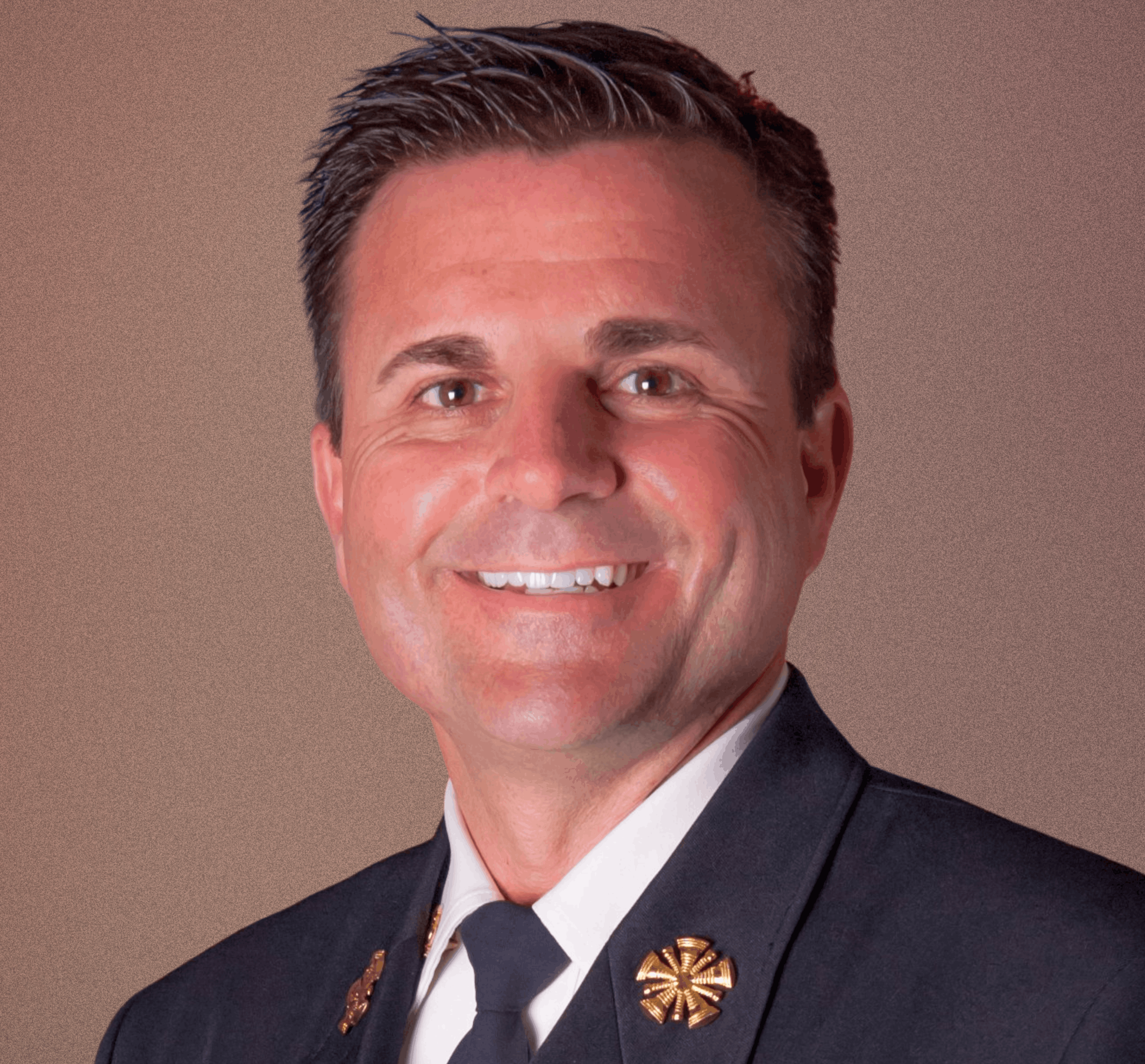
Founder - Public Safety Advisor | Speaker | Published Author
Jerry Streich is a public safety strategic advisor, keynote speaker, and author of Dealing with Difficult People, published by Fire Engineering Books.
A former U.S. Army Combat Medic, Fire Chief, and emergency manager, Jerry has spent more than 40 years leading, serving, and developing others in the fire service. His work has taken him across North America and Africa, where he has trained thousands of leaders and advised local governments, public safety agencies, and the organizations that support them.
Today, Jerry helps communities strengthen leadership, improve organizational performance, and make better public safety decisions. His passion is helping leaders build healthy cultures by addressing the difficult conversations firefighters avoid and how avoiding them quietly damages culture, trust, and mental well-being.


