Tactical Brain Training for First Responders: Learning to Notice Before You React
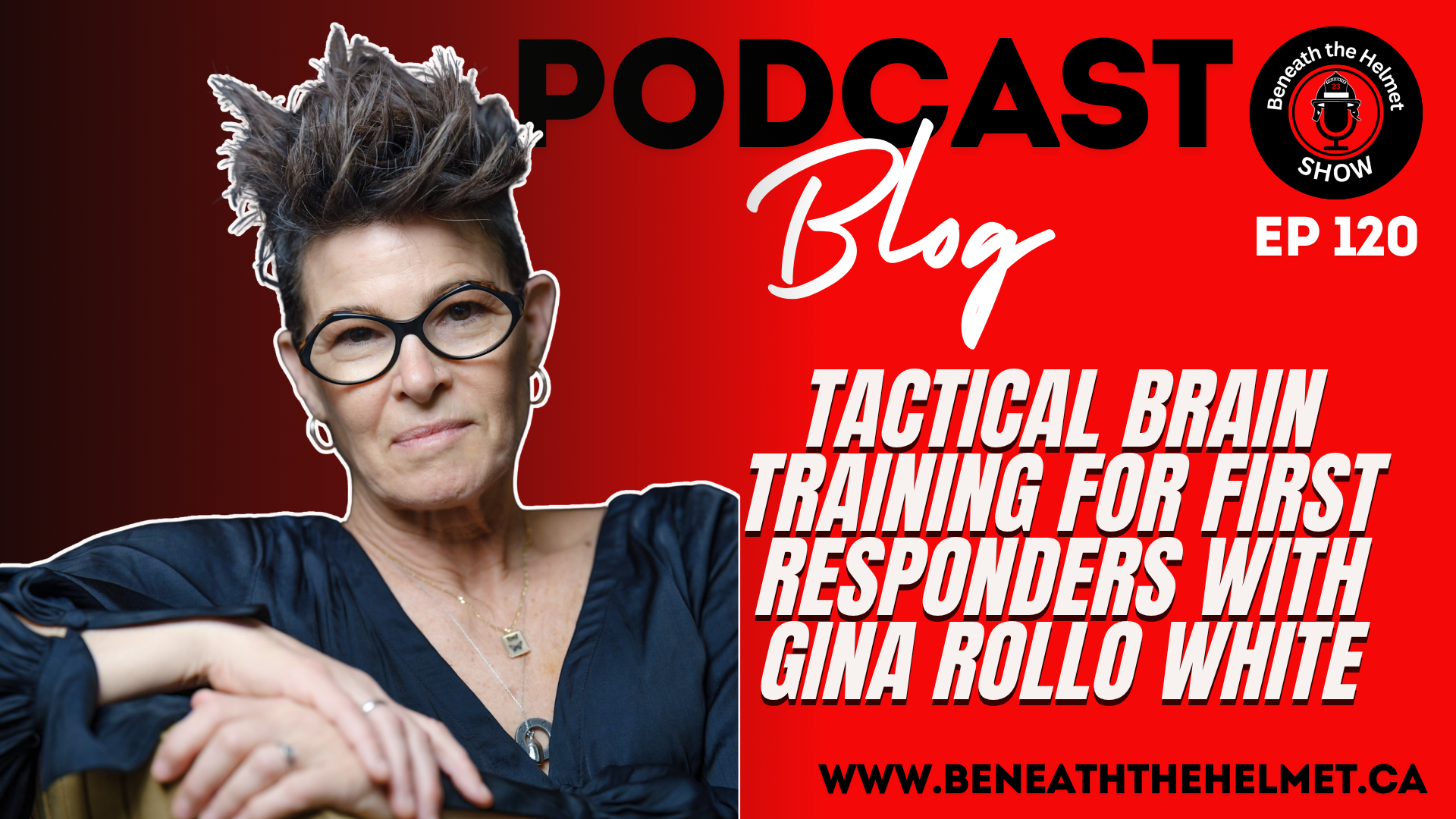
First responders spend years learning how to read a scene. They notice smoke conditions, patient presentation, changes in behaviour, hazards, exits, traffic, tone of voice and the details that can change an outcome. Episode 120 of Beneath the Helmet asks what happens when some of that same attention turns inward.
My guest, Gina Rollo White, founded Mindful Junkie and wrote Tactical Brain Training. Her work translates mindfulness into practical language for people who operate in high-stress environments. The point isn't to be calm all the time. The point is to notice what is happening soon enough to have more choice about what happens next.
That distinction matters. First responders often need to narrow attention, suppress emotion and act decisively. Those capacities can be protective and professionally necessary. The difficulty can come when operational patterns follow us home, or when we lose touch with the signals that tell us our system is carrying more than we realize.
Awareness Before Regulation
Gina repeatedly returns to noticing. Stress may show up as a clenched jaw, raised shoulders, heat, jitteriness, racing thoughts, numbness or a change in breathing. The exact signal is personal. The useful question is not whether your response matches someone else's. It is whether you are learning your own patterns.
In the conversation, I describe one of my own signals as an 'electric' feeling in my body. It took me decades to recognize it. That is part of the challenge. We can become highly skilled at reading everybody and everything around us while remaining less practised at reading ourselves.
From Reaction to Response
Gina describes the goal as creating space between a stimulus and our response. That space may be small. On a scene, it may be feeling your feet on the ground or naming what is happening internally. Off duty, it may be taking a breath, stepping away for a moment, going for a walk or using another strategy that fits.
This is where Tactical Brain Training connects strongly with self-leadership. Self-leadership is not controlling every internal response. It is developing enough awareness to recognize what is happening, understand your options and make a more intentional choice when capacity allows.
Triggers as Information
One of Gina's most useful reframes is that triggers can be information. A smell, location, conversation or behaviour may create an immediate shift. Rather than treating the reaction as proof that something is wrong with you, curiosity can open another question: what is this response telling me?
That does not mean curiosity or breathing can solve every trauma response. Gina distinguishes everyday triggering from more complex post-traumatic experiences and acknowledges the role of professional therapies and supports. The practical lesson is narrower: when we can safely notice a reaction, the reaction itself may give us information about what needs attention.
Reconnecting With the Body
First responder work can require temporary disconnection. Some calls require feeling everything in real time to do the job. Gina's point is that this adaptation deserves context, not shame. The next skill may be learning how to reconnect when the emergency is over.
She suggests experimenting with simple body-awareness practices. The purpose is not to force a particular sensation. It is to rebuild familiarity with what tension, ease, fatigue, anger or stress feel like in your own body.
The Second Arrow
Near the end of the episode, Gina introduces the Buddhist metaphor of the second arrow. The first arrow is the difficult event itself. The second is the additional suffering we may create through self-judgment, rumination and criticism.
That idea landed with me because of the connection to Silver Arrow. It also raises a useful self-leadership question: after something difficult has happened, what are we adding to it? There may be accountability, grief or repair that genuinely needs attention. That differs from repeatedly attacking ourselves in ways that don't help us learn or move forward.
Five Takeaways From EP120
1. Awareness comes before regulation.
You cannot choose a different response if you don't notice your system has shifted. Gina encourages listeners to learn their own early signals: clenched shoulders, heat, jitteriness, racing thoughts, shallow breathing or whatever shows up for them.
2. The pause is a skill.
The goal is not to eliminate stress. It is to create enough space between the stimulus and your response to regain choice. Sometimes that may be a breath. Sometimes it is feeling your feet, naming what is happening, stepping away briefly or using another tool that fits the environment.
3. Triggers carry information.
Gina reframes a trigger as something worth investigating. What happened? What did you notice? Where did you feel it? Curiosity can move the experience from automatic reaction toward greater agency.
4. First responder strength can include reconnecting with the body.
Turning down feeling can be useful when a job has to get done. The challenge is learning how to reconnect afterward. You can rebuild body awareness gradually and practically.
5. Watch for the second arrow.
The difficult event may be the first arrow. Self-criticism, rumination and judgment can become the second. Noticing that second layer gives you another place to intervene.
A Small Experiment
For the next week, pick one early stress signal and one response you want to practise. Keep it simple. Notice your shoulders. Feel your feet. Lengthen an exhale. Name what is happening. Catch the second arrow. Write down one thing you are grateful for in the morning.
The goal is not perfection. It is familiarity. The more familiar we become with our own patterns, the earlier we may recognize when something is shifting and the more options we may have for what comes next.
Listen to Episode 120 of Beneath the Helmet with Gina Rollo White for the full conversation on Tactical Brain Training, first responder mindfulness, triggers, body awareness, gratitude and self-leadership.
Buy Gina's book Tactical Brain Training: A Guide to Trauma and Stress Management for First Responders and the Professionals Who Support Them
Buy Arjuna's Book
Burnt Around the Edges: A Guide to Mastering Stress and Surviving Burnout
Your host
Arjuna George
When Showing Up Isn’t the Same as Being Present