The Invisible Injuries of First Responders: Burnout, Trauma & Moral Injury
One minute into her career as a medical social worker, Iris Waichler stood at the bedside of a young man with second and third degree burns, injured running back into a burning apartment to save his roommate. That was day one. Over 40 years later, after countless hours on a hospital burn unit and in the emergency room, she has written Burnt Out, a book built almost entirely from interviews with firefighters, EMTs, paramedics, and the families who love them.
In this conversation, Iris and Arjuna dig into the real difference between burnout and trauma, and the harder-to-name wound called moral injury, the quiet erosion that happens when someone witnesses a decision that goes against their values and has nowhere to put it. They talk about how men and women first responders often carry stress differently, why families need real agreements about how much of the job comes home, and how kids sense far more than we give them credit for, even when nobody's said a word.
Iris also shares one of the hardest nights of her own career, a call that stayed with her long after her shift ended, and the moment that convinced her these stories needed to be told to a wider audience.
This episode is honest, practical, and full of the kind of permission a lot of first responders need to hear: nobody is Superman, and giving yourself permission to struggle is not a weakness; it's the doorway to healing.


Beneath the Helmet — Episode 115
The Invisible Injuries of First Responders: Burnout, Trauma & Moral Injury
Guest: Iris Waichler, Clinical Social Worker & Author of Burnt Out
One minute into her career as a medical social worker, Iris Waichler stood at the bedside of a young man with second and third degree burns, injured running back into a burning apartment to save his roommate. That was day one. Over 40 years later, after decades on a hospital burn unit and covering the emergency room, she has written Burnt Out, a book built almost entirely from interviews with firefighters, EMTs, paramedics, and the families who love them.
In this episode, Iris and Arjuna get honest about the difference between burnout and trauma, and about a harder-to-name wound called moral injury, the quiet erosion that happens when someone witnesses a decision that goes against their values and has nowhere to put it. They talk about how men and women first responders often carry stress differently, why families need real agreements about how much of the job comes home through the front door, and how kids sense far more than we give them credit for, even when nobody's said a word.
Iris also shares one of the hardest nights of her own career, a SIDS call that stayed with her long after her shift ended, and the moment on a dark road driving home that broke her open. It's the story that convinced her these experiences needed to be told to a wider audience.
This episode is honest, practical, and full of the kind of permission a lot of first responders need to hear: nobody is Superman, and giving yourself permission to struggle is not a weakness. It's the doorway to healing.
About Iris Waichler
Iris Waichler is a clinical social worker with over 40 years of experience, most of it spent working directly with people in the hardest moments of their lives. She began her career on a hospital physical medicine and rehab unit, working closely with burn patients, amputees, stroke survivors, and their families, before spending years covering the emergency room. She is the award-winning author of four books, including Patient Power, Role Reversal, and her latest, Burnt Out, which draws on interviews with firefighters, EMTs, paramedics, and their families to explore burnout, trauma, and moral injury in the first responder world. She lives in Chicago and writes regularly on stress, caregiving, and first responder wellness.
Key Highlights From This Conversation
The difference between burnout and trauma. Iris breaks down burnout as the slow erosion that shows up when you start thinking "I don't know if I can do this anymore," and it bleeds into your sleep, your relationships, and your ability to show up as yourself. Trauma, by contrast, often traces back to specific incidents that accumulate over time. Knowing which one you're dealing with changes how you respond to it.
Naming moral injury. Moral injury happens when you witness or take part in something that conflicts with your values and have no outlet to process it in the moment. Iris and Arjuna both agree it may be one of the most under-named experiences in the fire service, something people often can't identify until years after it started shaping them.
Gender and stress in the first responder world. Iris's research surfaced real differences in how men and women first responders carry the job, from the physical toll to the reluctance many women feel about letting their "brothers and sisters" see them struggle.
Communication is an agreement, not a formula. Every first responder Iris interviewed had a different arrangement with their partner about how much of the job comes home. What mattered wasn't the amount shared, but whether both people were on the same page about it.
Kids feel what isn't said. Children of first responders often sense something is wrong long before anyone tells them, and sometimes blame themselves for it. Iris recommends bringing kids into the fire station, letting them climb the truck and ask questions, as a way to give them language instead of leaving them to fill in the blanks.
The hero myth cuts both ways. Arjuna and Iris talk candidly about how society's habit of putting first responders on a pedestal, as heroes, as invincible, can quietly make it harder for them to ask for help. Iris's closing message: nobody is Superman, and giving yourself realistic expectations is one of the most important things you can do for your own well-being.
Resources Mentioned
- Book: Burnt Out by Iris Waichler, available at burnedoutbook.com and on Amazon
- Website: burnedoutbook.com
- Twitter: @IrisWaichler
- Fire Strong — online peer support resource for first responders
- Responder Health — online mental health resource for first responders
- International Critical Incident Stress Foundation — training, education, and crisis intervention resources
Listen to the full episode above, or read the complete transcript below. If this episode gave you language for something you've been carrying, share it with someone on your crew.
Connect with the Host:
Arjuna George – Fire Chief (ret) Owner of Silver Arrow Coaching and Consulting, Beneath the Helmet Show, and Burnt Around the Edges author.
www.silverarrowco.com
www.burntaroundtheedges.com
www.beneaththehelmet.ca
# Beneath the Helmet — Episode 115
## The Invisible Injuries of First Responders: Burnout, Trauma & Moral Injury
---
### Welcome and Guest Introduction
**Arjuna:** Welcome back, everyone. This is Beneath the Helmet, season four, episode 115. I'm your host, Arjuna George, former fire chief turned author, speaker, and coach to the fire service.
Today I'm joined by a clinical social worker with over 40 years of experience and an award-winning author of several books, the latest of which is called *Burnt Out*. We're going to discuss the invisible injuries that many of us experience as first responders, including burnout and trauma.
Please welcome Iris Waichler.
**Iris:** Thanks. It's a pleasure to be with you.
**Arjuna:** Fantastic. Welcome to the show.
---
### Iris's Career Origins
**Arjuna:** So Iris, tell us a little about your background. Forty years in social work is a long time, and that's an amazing career. Tell us what shifted your path toward writing and sharing your wisdom that way.
**Iris:** They kind of blend together. I'm a medical social worker, and I started out working in a hospital a long time ago. The unit I was on was physical medicine and rehab, so we had patients with very severe and chronic injuries. We had burn patients, because we had a wonderful burn unit at the hospital. We also had amputees, people with strokes, head injuries, and amputations. It was a huge variety of people, but they shared one thing in common: in a moment, their lives changed, and it changed dramatically for them, but also for their families.
I loved my work because I got to see every patient who came onto the unit. I worked with every family.
---
### First Burn Unit Case
**Iris:** As I was thinking about my career before the show started, I remembered my very first day on the job. I walked up to the desk, and even though I was on time, they said, "You're late. Rounds have started," and told me what room to go to.
When I went in, the doctors were at the bedside of two young men. What I learned was that they were roommates, and there had been an apartment fire. Firefighters had rescued one of them, but his buddy didn't know that, so he ran back in to save his friend.
I walked into the room, and his arm was up in a sling, and from here all the way down he had second and third degree burns. That was my introduction to working with burn patients.
**Arjuna:** Day one.
**Iris:** Day one. Literally one minute into my new job. It reminded me of those sculptures in biology class that show you the muscles and tissue of the human body. I could see all of that with him. I thought to myself, "Can I do this?" Day one, one minute in, and I said to him, "Tell me about you. Tell me about your story, how you got injured." And the humanity took over, and his compassion took over. His buddy was there in the bed next to him, his injuries not as severe because the firefighters got to him first.
I was hooked. I really was. I was so compelled to work with the people who came onto my unit. What got me started in writing is connected to that too.
---
### Writing to Empower Patients
**Iris:** I was walking down to the unit one day and saw the family of one of my patients outside the room, sobbing uncontrollably. I looked in and all that was happening was a resident doing a simple EKG. He hadn't taken the ten seconds he should have to tell the family it was just a repeat test, just to monitor him. They told me they thought he was dying because he was hooked up to the EKG and they thought they were losing him.
I got so angry at that resident for not taking the time to explain. It got me thinking about people in vulnerable situations, life crises, overwhelming situations, and how helpless and hopeless they feel. I wanted to do something to empower them, to give them the information and support they needed, ideas about how to cope, and a way to talk about how it impacted them and their families.
So I went home, and at that time it was a typewriter, but I sat down and wrote my first book, *Patient Power: How to Have a Say During Your Hospital Stay*. I believe, and still believe to this day, that if you educate people, it empowers them. Even in situations that feel hopeless, they feel first that they're not alone, which is critically important. So many people feel that they're alone, or that what they're feeling isn't the right way to feel, as if there's a right way to feel in these situations.
That was the beginning. *Burnt Out* is my fourth book. My second book was about infertility. My third, *Role Reversal*, is about taking care of yourself and your aging parents. There were fifty-five million people taking care of aging parents; now it's up to sixty-three million, because we're living longer thanks to medicine and medical care. That creates even more challenges for caregivers.
---
### Why She Wrote Burnt Out
**Iris:** *Burnt Out* came about because I was talking to my neighbor, who is a firefighter. We would sit on the porch and have a beer. He knew about my experience, so he felt comfortable talking to me, and we'd swap stories. He'd been a firefighter for thirty years and was a lieutenant. I also covered the emergency room, so I saw a lot of people coming in during critical situations.
He would tell me stories because he couldn't go home and talk to his wife, and he didn't want to upset his daughters. So he kept it inside, and found it really important to have these chats. One day he said, "You know, I know you write books. Maybe this would be a good topic, because I know I'm not the only first responder who feels this way, and I don't always know how to cope or what to say to my family."
That triggered the same response in me. I put feelers out to friends and family and people I knew around the country. I always think it's important to go to the people on the front lines, so I interviewed firefighters, EMTs, and paramedics, and then their family members too, to get their stories firsthand, their experiences, what they wanted other first responders to know.
It was an incredible experience because I wasn't sure what kind of response I'd get. In many cases I was a total stranger, and I wasn't sure how honest they'd be or if they'd trust me. What was really incredible was they were totally open to talking with me and answering my questions. I'd ask what their hardest day on the job was, and they'd eagerly tell me their stories. I think what drove that was, first, it helped them to talk about it, and second, they wanted to help other first responders.
It turned into a beautiful experience for me, and I'm so grateful to my neighbor and to everyone who helped with the book, because their commentary, their quotes from our interviews, is one of the most powerful parts of the book.
**Arjuna:** I'm so happy you're putting this out into the world, that you're curating stories of first responders sharing some of the most challenging times in their lives, and that sometimes a person not directly in the fire world, but with close ties to it, might be the best person to share those stories. A second view, a second lens on how they're showing up in the world.
**Iris:** Absolutely.
**Arjuna:** And what I loved about it, it's humanizing the fire service again, which is a huge focus of mine in my podcast and my writing. Bringing that human aspect back to where we need to be. Sharing stories, being vulnerable, all of that is so critical.
**Iris:** I mentioned to you that I listened to your podcast with Flip. I loved his notion of the kitchen table, and how it totally brings the humanity there. When those conversations aren't formal, there's no protocol, that humanity just sitting and talking with other people can be so healing.
**Arjuna:** You add food to it, and everyone's stress level comes down.
**Iris:** I love that too. When people eat, they relax.
**Arjuna:** But when was it, after talking to thousands of first responders, that you thought, "This is something that needs to be shared with the world"? Was there a moment?
---
### The SIDS Call and Its Aftershock
**Iris:** You know, if you asked me what was the moment that stood out as one of the hardest things I had to do, I was thinking about that too. When I was covering the emergency room, paramedics brought in a baby who was just a few months old, a SIDS baby who had died, and the parents were there.
I thought about those paramedics, and I thought about that long ride to the hospital and what that must have been like for them. The parents were, of course, devastated. What I ended up doing was thinking to myself, "I will stay here as long as they need me to."
We ended up being there for six hours, because I promised myself I wouldn't leave a second sooner. I didn't want them to leave thinking, "I wish I would have." We talked about the baby. I gave them a lock of the baby's hair. We cried together. They wanted a photograph, so I took a picture. I did everything I could to help them. But I also thought about how the first responders go through things like this many, many times, sometimes multiple times a day. I couldn't shake that.
Then came the incredible part. When I left, it was the middle of the night, around three in the morning, and I was driving home on a dark road with some moonlight. On the road, I saw what I thought was a baby, and I slammed on the brakes. I saw what looked like a pool of blood. I got out of my car, and someone had placed a doll on the road in oil. It just broke me, after spending six hours with that family. I'll never forget it.
It was certainly one of the longest and hardest nights I ever had. But it made me realize how deep these moments go. I did my job for six hours with that family, but that moment on the road, in a way, I was grateful for, because I just sobbed and let everything out.
It made me think about first responders and where all that emotion goes. Where do they have the opportunity to talk to other people? How do they let it out when nearly every day of their job means witnessing a person's worst day? That's really what propelled me to continue this work, to do this book, to do my little piece to help and support them.
**Arjuna:** Powerful story.
---
### Lessons From the Interviews
**Arjuna:** I'm curious, what did you learn about yourself writing this book? There must have been a moment where you thought, "Wow, I never really knew that about myself."
**Iris:** I guess one thing I learned was that I was reaching out to strangers, people I'd never met, and I wasn't sure how comfortable that would be for me. But what I found was they were so incredibly kind and generous and open, and that was a huge relief. The other thing I had to figure out was there were so many stories, so many opportunities to talk with people, that it was hard to narrow down what to include in the book.
But I found, even with my patients at the hospital and certainly with this project, I always learn more from the people I'm working with than they learn from me. I'm totally open to that, and it's such a pleasure when it happens. I'm grateful for those moments.
**Arjuna:** Was there anything that came up through the interviews that caught you off guard, something you weren't expecting to be an issue in the fire service or first responder world?
---
### Gender Differences in Stress
**Iris:** Yeah, I did a lot of research, and one of the things that surprised me was that women and men first responders approach the job differently. I interviewed both, and what I learned is that women firefighters tend to approach the job in a more ergonomic way, so their injuries are a little different, tending toward neck and knees.
The other thing I learned is that women don't want their brothers and sisters to know when they're having a difficult time, because there's more of a sense they need to prove themselves. So they tend to be more quiet and withdrawn when they're struggling. They internalize it more. I found that really interesting.
**Arjuna:** Moving forward, are there things men and women do differently for prevention or recovery from these occupational injuries, or is the process the same in the end?
**Iris:** I think women, given the chance, are more open about asking for help, even though that's contrary to what I just said. But when they acknowledge they have an issue, whether mental or physical health, they tend to be more open to accepting help than men are. I think the end result, if they go to the right places and find the right support, is the same and can be very successful.
---
### Burnout vs. Trauma, Explained
**Arjuna:** What's your definition of burnout, and the difference between burnout and trauma, occupational stress injuries? How would you define the difference between those two?
**Iris:** That's a really good question. I think burnout happens when you say to yourself, "I can't do this anymore. I don't know if I can go on." It starts affecting not only how you do your job, but it spills out into your relationships with loved ones and friends. You can't sleep. It affects how you eat. It affects every aspect of your life.
It can spill out in other ways too. Often, one of the tough parts for first responders is that in order to cope, they turn to alcohol or drugs to do the job. Those are signs that something's wrong, that you're not facing the job the way you need to, and it's time to get help.
If you're depressed, if you feel overwhelmed, if you wake up and say "I don't know if I can go in today," if it affects your ability to help your fellow first responders when you're on the job and you freeze up or see something, there's something called moral injury, where you see someone on the job do something that's morally or ethically different from your beliefs and values, and it stays with you. It eats at you. You internalize it.
Those are examples of burnout. Trauma is something that happens a lot during the normal course of the job. You go to a car accident. Here in Chicago, one of the stories I heard was about someone who'd jumped onto the L tracks, and the first responder who came to that. Hazmat situations, fires, all of it. Those can cumulatively cause trauma. When you repeatedly face traumatic situations, that can cause trauma. But I'd say that's more manageable than the burnout phase, when you know things are getting worse, more chronic.
That's the time to really engage in self-care and pay attention to how it affects your family and what you bring home, because that's a good way of understanding when there's trauma. I interviewed someone who said that whenever he came home after a particularly tough shift, he'd sit outside for a long time and get himself to a place where he could walk in the door. I always asked everyone I interviewed, "What's your agreement with your partner about how much you're going to share with them about the job?"
Some said, "We agreed I wouldn't share anything, because it made them worry more." Some said, "I'd tell them some things." Some said, "I didn't want to relive it, so I didn't want to talk about it again." People experience it in very different ways.
---
### Moral Injury and the Culture Shift
**Arjuna:** Of the people you interviewed, how often did moral injury come up? It was kind of a new term in the first responder world a number of years ago.
**Iris:** I'd say it didn't come up often, but it did come up in my research. Before I write a book, I always spend three to five months researching, because I don't want to write something that's already been written. Moral injury came up in articles and research papers I read. It's more like when a commanding officer makes a choice you don't agree with, and you obviously can't say anything about it, but you know in your heart and mind it doesn't feel right.
I'm sure that happens, but I don't think it happens frequently. When it does happen, though, that's the kind of thing that can really eat at you, and it may be harder to shake, because when your ethics and values are brought onto the table at your job, it's not something you can tuck away and forget about. It's very deeply ingrained.
**Arjuna:** My take is it's probably more prevalent than trauma, only because it's something that happens almost every single day. From people I've talked to and my own experience, it happens so frequently that we almost don't recognize it in the moment. When people start looking back at events in their life, they think, "Well, maybe that was a moral injury I was experiencing, but I earmarked it as an argument or a trauma, or I didn't even notice it."
**Iris:** Yeah. How did you experience it, and how did you handle it when it came up?
**Arjuna:** When I was experiencing it, I didn't even know what moral injury was. It was a year or two later, when I was writing my book, that I first heard the term. As a fire chief, I'd never heard of it. When I started digging into it, I realized I retired due to burnout, but looking even deeper, it was moral injury that led to the burnout. It's been about five years since I left the fire service, and I've come to understand that moral injury was what started it.
**Iris:** I think, and tell me if this matches your experience, but when I talk to people, and when I talked to my friend on the porch for thirty years, he told me how things had changed in the right direction. When he first started, there was no opportunity to really talk. They didn't even do critical incident debriefings. When someone had a tough call, or somebody died or got injured, they were basically told, "You have to suck this up. We can't discuss it." The old guard believed that if you felt that way, you were weak.
He said that as time has gone on, that's fortunately changed. Now there's more opportunity, critical incident debriefings, and an acknowledgment that the job has emotional and mental health hazards as well as physical ones. There are opportunities now to talk about it, and it's so much better than it was. I think that's maybe why moral injury came to the front, as people were able to be more honest and explore what was really happening, what was really eating at them. Does that match what you think?
**Arjuna:** For sure. We're not there yet. We're getting there. There are huge changes from the day I joined the fire service to today, light years ahead, but it's still not organizationally wide. We've made leaps and bounds, no doubt about it. I have firefighters I talk to regularly who say, "I'm going to my therapist tonight, I have an appointment with my coach." Those weren't words that came out of a firefighter's mouth a few decades ago. People are definitely talking about it now, and there are podcasts like this and books like Iris's that are being vulnerable and sharing stories of being human.
---
### Culturally Competent Support
**Iris:** One of the interesting things I learned was that at one firehouse, they recognized they wanted to focus on the mental health of the team, so they had a social worker ride along on the firetruck on calls. It was hugely helpful for the social worker, but also for the firefighters, paramedics, and EMTs in that house, because they recognized she was so committed to understanding their job that it helped them open up to her more. It was a win-win for everyone.
**Arjuna:** We've seen great success with culturally competent therapists, counselors, and social workers, ones who understand the first responder world. They seem to gain instant trust. If they have no idea what the first responder world looks like, that trust has to be earned, and it takes longer. But when they know the language and the culture, that trust can be built fairly fast.
**Iris:** Yeah, and it can make all the difference in whether it's a successful relationship and intervention or not.
---
### The Root Causes of Burnout
**Arjuna:** Looking at burnout in particular, did you unravel, or what are your personal thoughts on, the root cause of burnout? Is there something you can pinpoint, one event, one thing?
**Iris:** Two things come to mind. First, when I talk about caregiving, sixty-five percent of caregivers are women, and we're terrible at taking care of ourselves. We're really good at taking care of everybody else. I think that's a quality that's in first responders as well. They're so committed to taking care of other people, and many times they're not the first generation in the job. There's often a multi-generational thing going on, so they're brought up with those beliefs, those values, that we're here to help people and bring them safely out of these crises.
I think the people who get burned out the most are mostly the ones most entrenched in those values and beliefs. They spend so much time focused on taking care of other people that they don't pay attention to their own bodies and minds until it's screaming at them. Either your back is really painful, or you're depressed, or irritable, or you can't sleep or eat. We're getting all these messages, but we don't necessarily pay attention to them. And then there's a sense of guilt. Why does everyone else seem like they can handle it, and I can't? So I think people may be afraid to speak up because of that feeling too, that there's something wrong with them, that everyone else seems fine.
**Arjuna:** Just have better ways of masking it.
**Iris:** Yes. Yes.
**Arjuna:** We're very good at masking it.
**Iris:** But that's also what makes you so good at the job. How many people are going to run into a burning building? How many people are going to rush into a car crash? It takes a certain kind of person to want to take that job on.
I remember one interview with the daughter of a firefighter. She told me her dad brought her into the fire station to look around, see the people he worked with, see what he did. She said it was the first time she really understood what he did, because she saw the respect everyone had for him, and she knew how important that job was for him and how many people relied on him. She even said that if he were to die on the job, she'd be okay with that, because she knew he was doing something he loved, something he felt was important, alongside his fellow first responders. That really changed her point of view.
**Arjuna:** Powerful statement.
---
### Family Impact and Communication
**Arjuna:** Did you interview partners as well, or mostly just first responders?
**Iris:** I did interview partners, because I think that's a huge part of all of this, that relationship. How does this affect the relationship? What people told me was they're aware of the job and how hard it is, and often aware of the toll it takes on their partners. But the key to all of this is communication, and some couples are better than others about it. There needs to be some agreement about how you're going to talk about this. And then there's the piece about your kids. What do you tell them? You're gone for a lot of important days, graduations, holidays, birthdays. And as kids get older, they recognize there's a risk, how scary this job can be. It's really important as a couple to have some agreement about what messages you're going to give your kids about the job and the toll it takes.
One firefighter I interviewed said the first thing he did when he got home was open his kids' bedroom doors, give them a kiss, see that they were sleeping. Then he could go to bed. He couldn't do that until he'd done that.
---
### Family Communication Barriers
**Iris:** But he also said he and his wife had agreed he wouldn't share much about the job with her, and both were okay with that. The problem happens when your partner sees you struggling, having a hard time, and you're not able to talk about it. Those are the times it may take an outside person to come in and facilitate that communication.
There are so many programs out there, not only for first responders, but acknowledging that family members need that kind of help too, and the kids do as well. I have a whole chapter in my book about resources, and there are so many books now for kids, from age three all the way up to teenagers, to help give families the language they need to talk about this in wonderful ways. That can be really powerful.
**Arjuna:** It's such a sensitive topic, and it's hard to find the right words sometimes. Resources like that let you approach it with, "This is how I use these words." You can easily go, "I'm going to share too much, or not enough, or I'm going to say something that traumatizes my kid." It's a very delicate process, but so important.
---
### Helping Kids Understand the Job
**Iris:** That's one of the things I mentioned in the book, that it's really important to take your kids to the fire station, to climb the truck, wear the helmet, sit in the cab. For EMTs and paramedics, have them get inside, put on a cuff, wrap their arm in a bandage, just to engage them and give them a sense of what you do. That can provoke really interesting questions, good conversation, and reveal any anxieties they might have.
Kids are really sensitive and aware of things going on. When things aren't right, they sense it. They may not have the words to ask the questions, but when their parents or caregivers are having a hard time, it spills over, and they feel it. Sometimes they blame themselves. They think, "Maybe I did something to upset mom or dad." That needs to be addressed too.
---
### Processing After the Call
**Arjuna:** In the first responder world, we're trained to be experts at compartmentalizing emotions during an incident. It's part of being a first responder, showing up in a professional manner without being emotional on scene. But there's a time and place to process those things. Any words of wisdom on what worked for the people you interviewed, about transitioning from being a firefighter or police officer to being a parent, a partner?
---
### Therapy Groups and Online Help
**Iris:** I think different things work for different people. For some, one-on-one time with a therapist or counselor can be really meaningful. Some people really respond to groups. When they hear other firefighters or first responders sharing their experiences, it hits home, and they begin to recognize the issue isn't with them. It can strengthen relationships too.
I think the hardest part of all of this is opening that door. One of the wonderful things I found in my research is that computers and chat rooms are a wonderful resource. Sometimes people are reluctant to go somewhere in person. There's Fire Strong, a place you can go online in an emergency to talk to someone when you're having a hard time. There are all kinds of places you can go online, as well as places in your local area. I think it's important to recognize what's going to be the most meaningful kind of help for you.
It can be a kind of desensitizing process. You can start with finding something online and talking to people there, and that may give you the support and knowledge you need to move toward something more face-to-face, either one-on-one or in a group. Fire programs have human resources people, EAPs, employee assistance counselors, so there are things built into the system. But sometimes people are reluctant to go into the system. They want to go somewhere that feels safer, more private.
If there's reluctance, or it feels hard to ask for help, or you want to be anonymous, some of these chat rooms are really good places to start. Responder Health is another good online program. The International Critical Incident Stress Foundation is another really good one, with resources, counseling, education, all kinds of things you can tap into. I think once you open that door and start exploring, you'll say, "Oh yeah, this makes sense to me," and it gives you the information you need about what path to choose.
**Arjuna:** Of the people you interviewed, did any mention a lack of resources, or were the resources there, and it was more about the will to open up to them?
---
### Rural and Volunteer Resource Gaps
**Iris:** I think that's tougher for volunteer firefighters, who tend to be in more remote, smaller towns. There's less budget for it, fewer resources. Plus their situations are a little different. When they go out on a call, there's a good chance they'll be responding to a family member or neighbor or someone in town they know. The stresses and anxiety are even more intense in those situations, and yet they have fewer resources available.
So there is an issue with local, on-the-job resources for people. In situations like that, I'd say the thing to do is turn to online programs first. Sometimes those programs will know about something geographically close to you. There are also programs out of state or nearby where, if you're having a really tough time, burnt out or depressed, or it's affecting your personal or professional life, you can go and stay for a while to get intensive treatment.
**Arjuna:** I'd say professional counseling, yeah, there's definitely a gap there because it costs a lot of money. Some departments have budgets for it now, but in small rural communities, most are relying on peer support, because it's free and it works. Maybe a little training for the peer support team leaders, but all in all, it's a pretty good resource for a reasonable cost. I think that's the gap filler for a lot of those communities. But I agree that volunteer and paid-on-call organizations in small rural communities have a stress level that, in my opinion, is more than working in a metro area. You might go to more calls in a metro, but you also don't know most of the people you're working with, most of the time, and you go home and go to the grocery store and nobody knows who you are. In a small community, people are saying, "Hey, how was that fatality fire last night?" That's not something you want to talk about in a grocery store.
**Iris:** For sure. I think the other thing in these smaller communities is that many volunteer firefighters have other jobs. Firefighting isn't their full-time job, so they're juggling those experiences, and they may experience the intensity of a rough call more profoundly than first responders for whom this is their entire work world, with more experience and more support around them. I think that's an issue for the volunteer folks.
**Arjuna:** What was the ratio of career to volunteer people you were talking with?
**Iris:** It really was about fifty-fifty.
---
### Family Impacts and Warning Signs
**Arjuna:** In your book, you talk a lot about the family aspect, and we've touched on that through this conversation too. How are families impacted by first responders? What are some of the things impacting families that we might not recognize right now?
**Iris:** One of the interesting things a daughter said to me was that her dad was gone so much that when he came home, she wasn't quite sure how to relate to him. He kind of felt like a stranger. Each time he came home from a shift and had been gone for a few days, it was like she had to get to know him again. It was a little hard for him to just jump in and be part of the family and the things they normally did. The cadence, that rhythm, was off because of the nature of the job and the shifts. I thought that was really interesting and important. What we talked about was carving out special moments and time to do something meaningful for both of them, to build on and strengthen that relationship.
In terms of partners, it was really hard for them, because if you know someone well, you know when they're struggling, either physically from an injury or emotionally, when they get more irritable, angrier, more isolated. They can't sleep. They don't want to eat. They're coming home drunk, drinking more. It's not hard to see when something's not right, but it's really hard to know how to open that door and say, "I see this happening." Again, it's the communication piece. There's an element of compassion, acknowledging they're doing a very stressful job, acknowledging you're worried about them, that you want to be there for them, but you need to talk about what that means.
Or you need to be able to say, "What you're doing is really negatively affecting our kids, our relationship, our marriage. It's important that we do something about it. I want to talk to you about that, about how I see what's happening, how I see the way you're behaving and how it's impacting me. I'm worried, and I love you, and I care about you, and I want to help make it better." Including them in that discussion, that decision, the notion that you want to work together and it isn't a unilateral thing, is super important.
Sometimes that can open a huge door, because sometimes first responders think they're doing a great job of hiding how tough things are, and they're not. As you pointed out with your own moral injury, you weren't able to put a name to it or identify it until a year later. That can happen too. So the important thing is, if these red lights are going off and you see things, don't wait a year or two to bring it up. When it starts impacting relationships or the ability to function, it's important to say something, but in a compassionate way, as a dialogue, an exchange of information and feelings, in a healthy way. As a team, what can we do? What options are available through the department, what other resources are there? There are programs for family members, for first responders, and now special programming for kids too. That's getting better. We're nowhere near where we need to be, but we're moving in the right direction, in baby steps.
**Arjuna:** Definitely heading in the right direction.
---
### Kids' Media Exposure and Trauma
**Iris:** I worry about kids sometimes too. Here in Chicago, when something major happens, a drowning in Lake Michigan, a major fire, I remember one year when a train came off the tracks and multiple cars went down. Kids see that. They know about it. It's on the news, on TV. Other kids talk about it. You need to consider and understand that whether they ask about it or not, it's on their minds. They're thinking about it. It's important to give them an opportunity to talk about it or raise any questions.
**Arjuna:** The access to trauma visuals and storytelling is so much greater than it was even five years ago. With social media, people are seeing terrorist attacks in real time, murders in real time. And these are kids seeing this too. We might see a huge influx in how that's going to challenge our next generation.
**Iris:** On the other side of the coin, they film *Chicago Fire* here in Chicago. One time I was walking my dog and a block away there was a house on fire, and I thought, "Oh my God." Then I turned the corner and there were a bunch of cameramen. Now, when they're filming, they'll put up signs when you're entering a particular neighborhood that say, "Don't be concerned if you see fire or smoke, we're filming here." I was driving along Lake Michigan one day and saw a bus overturned, what looked like firefighters, and I thought, "Oh my God," and then realized *Chicago Fire* was filming.
**Arjuna:** They're making it realistic looking, I guess.
**Iris:** They were very realistic looking.
---
### Mentorship, Resilience, and Balance
**Arjuna:** As we come to a close, I'm curious what statement or conversation you think every recruit firefighter needs to have before they jump on a firetruck and go to an emergency, in regards to this topic.
**Iris:** That's a great question. If it were up to me and there were unlimited resources, I'd pair them up with a mentor, someone who's been on the job a long time. I'd talk to them about the hardest day that person had, about the hardest part of the job. And I'd talk to them about a word we haven't mentioned yet that's really important for first responders: resilience. "In your experience, what do you recommend to help me be resilient, to do the job the way it needs to be done, without sacrificing a piece of myself, without harming relationships in my life?" Those are really important questions.
The other piece is recognizing things that can help create balance, another word we haven't talked about today. In my experience, the first responders who create balance in their lives, who exercise, meditate, do yoga, swim, take a walk, whatever it is, those things really help on the job and in coping with the most challenging things that happen. Learning what's most effective for each individual is really important.
**Arjuna:** My own balance was one hundred percent out of whack. My balance was work, and not much else. A lot of hobbies disappeared over the years, a lot of exercise, healthy living, being outside. I talk about this often: joy. Having fun, playing. I got a dog just before COVID, thank God, and I have to play with him every day now, something I never got to do before. I used to look at playing board games with the family as not a wise use of my time. Now I look at it as the best use of my time. Playing games, having fun, laughing, turning off the mind, just enjoying life, versus always doing or learning or growing. I'm a lifelong learner and support that one hundred percent, but you also have to have balance in your life.
**Iris:** I think that's great advice. When I talk to caregivers, we always talk about this too, because as a first responder or caregiver, you put everyone else's needs first, and so caregivers get burned out because they're afraid to ask for help. They think, "I should be able to do this job on my own." So I always say to them, "Taking care of yourself is the best way to take care of others." I don't care if it means locking yourself in the bathroom for a bubble bath, or going out for dinner with a good friend. I think it's really important to carve out those moments of joy.
I also think another important piece, and we touched on this, is having somebody in your life you can sit and have an honest, candid conversation with, like my neighbor and I did. Having that person to talk to on a really honest, personal level really does help a lot. And that's why, if you don't have that, it's important to reach out to the other places we've described. Doing all of this without guilt, giving yourself permission to do it, is hugely important, and it's a lot harder than it sounds.
---
### The Hero Myth and Asking for Help
**Arjuna:** Your conversation brings me back to one I had with a podcast guest a while ago, about how society may actually be contributing to some of this mental health crisis by putting first responders on a pedestal as heroes, as Superman or Superwoman. When you see yourself as that in the mirror every day, you can't say, "I feel weak today." You can't put your hand up and say, "I need help," because Superman doesn't do that. That's one of the elements really holding back mental health progress, in my opinion, that mentality that they're invincible, tougher than any other human on Earth. That's not the truth.
**Iris:** I totally agree with that. I think that's a great point. The other piece is having realistic expectations of ourselves, because nobody's Superman. That's really important, and it's hard to do sometimes.
**Arjuna:** Especially when you keep hearing it over and over, hero, hero, hero, in headlines, magazines, wherever. It's like, "How am I supposed to put my hand up if I'm a hero?"
**Iris:** Absolutely.
**Arjuna:** Iris, is there any question you wish I'd asked that I didn't?
**Iris:** We covered a lot of ground. I can't think of anything specific. I think we did a pretty good job.
---
### Where to Find Iris Online
**Arjuna:** How can people learn more about you, and where can they purchase your books?
**Iris:** My website is burnedoutbook.com. You can learn a lot more about me there, and buy my books there, or on Amazon. I'm also on Twitter. I like to post articles Monday through Friday to help people with these kinds of topics, a free place for people to get information and resources. I post a variety of things. On Twitter I'm Iris Waichler, I-R-I-S W-A-I-C-H-L-E-R, and you can find articles there about stress, anxiety, burnout, caregiving, and first responders. I'm starting to write articles specifically about first responders too, and those will be posted there and on my website.
**Arjuna:** What's your next book project?
**Iris:** There will not be another book.
**Arjuna:** No? That's it, four books?
**Iris:** Yeah. I'm not getting any younger, and as you know from writing a book, it takes a lot of work, time, and energy. What I'm doing instead is focusing more of my energy on podcasts, writing articles, doing seminars and webinars, to reach more people and discuss these issues. I think that's really important to continue doing, so I'm going to throw myself into that.
---
### Final Takeaways and Wrap Up
**Arjuna:** One parting message for our listener today.
**Iris:** I think watching shows like yours is really important, reaching out and getting as much information as you can. A lot of your audience are first responders, and turning to you and to people like you is the first step. Acknowledging that nobody is Superman is a really important tip too. Being aware of what you can and can't do, and giving yourself permission to get help and ask for help when you need it, those are the most important things. If those things can be done, your path is going to be a forward one.
**Arjuna:** One hundred percent. Permission is a funny thing. You wouldn't think you'd have to give yourself permission, but it's so true that you need to give yourself permission to feel that emotion, permission to reach out and say, "I need help." It's a new process for a lot of first responders, to ask permission of themselves.
**Iris:** And I personally want to say to the people who follow you, and to you, I'm so grateful for all the incredible work that first responders do. It's so important, and it's so hard. So they have my eternal gratitude.
**Arjuna:** Thank you for curating these stories and putting them out into the world. I know your words and the stories of the firefighters and first responders you interviewed are going to make an impact, and maybe save a life. So thank you.
**Iris:** I hope so. Yes. That would be my dream.
**Arjuna:** Fantastic. Thanks for having me on... well, thank you for being here.
All right, everyone, thanks for joining me. Hopefully you enjoyed this awesome episode. Be sure to check out her book, *Burnt Out*, and visit her website as well. Until next time, stay well. That's a wrap.
---
*Thank you for listening to Beneath the Helmet. Subscribe, share this episode with someone who needs it, and visit us at www.beneaththehelmet.ca.*
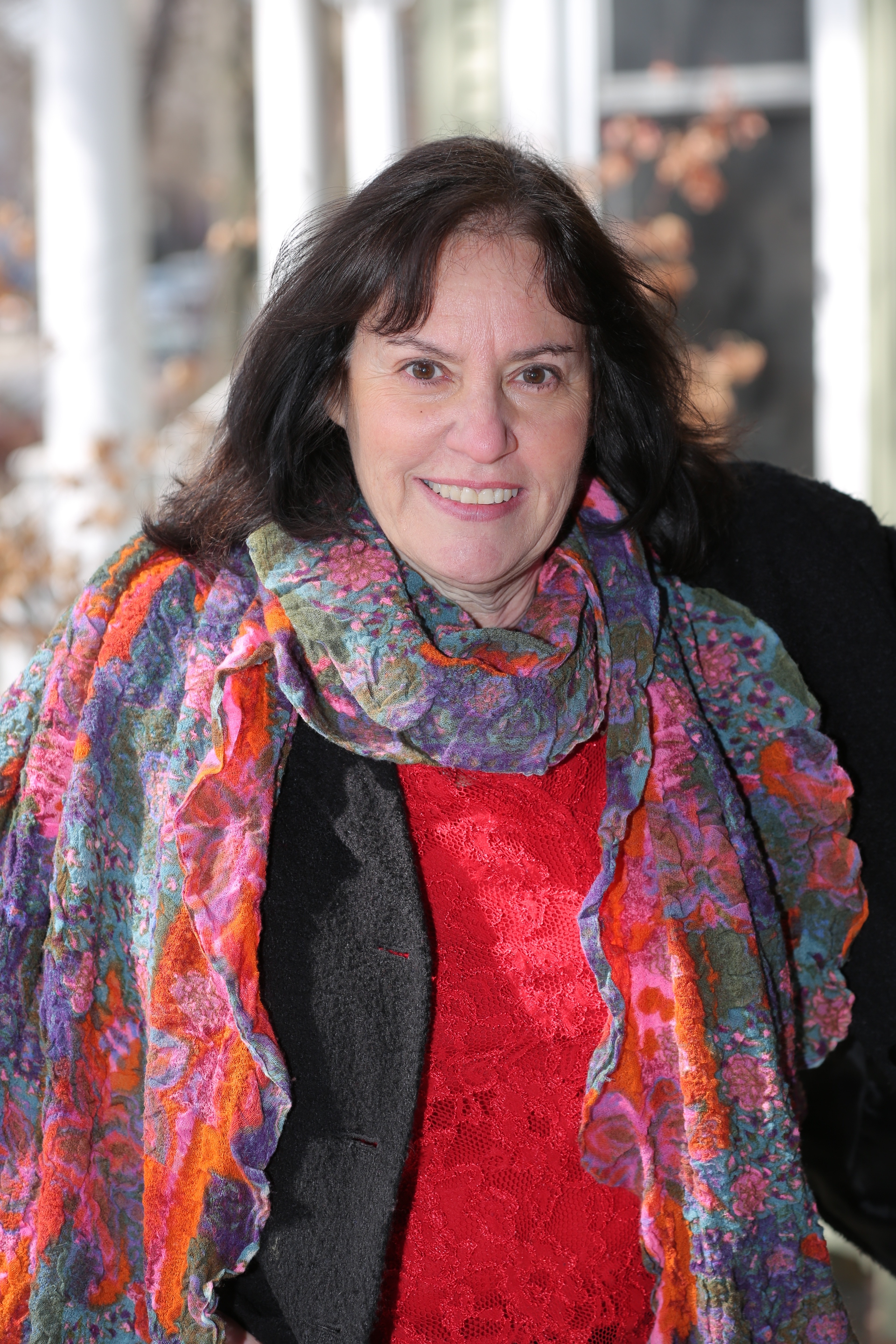
Social Worker / Author
Iris Waichler, MSW, is a 12 time award winning author of 4 non-fiction books. She worked 40 years as a medical social worker. Her newest book is Burned Out. It looks at first responder trauma, how it impacts them and family members, and how to cope. Her 3rd book, How to Take Care of Yourself and Your Aging Parents, won 8 major book awards. She has authored hundreds of articles on healthcare topics like infertility, aging, and caregiving. Iris has appeared in the New York Times, Good Housekeeping, and Next Avenue Magazine.


