AI Should Give Fire Service Leaders More Time for People, Not More Work
The fire service is constantly evolving. New technologies, specialized responses, reporting requirements and community expectations all have a place. But almost every new responsibility takes time and attention from the same people already carrying a heavy load.
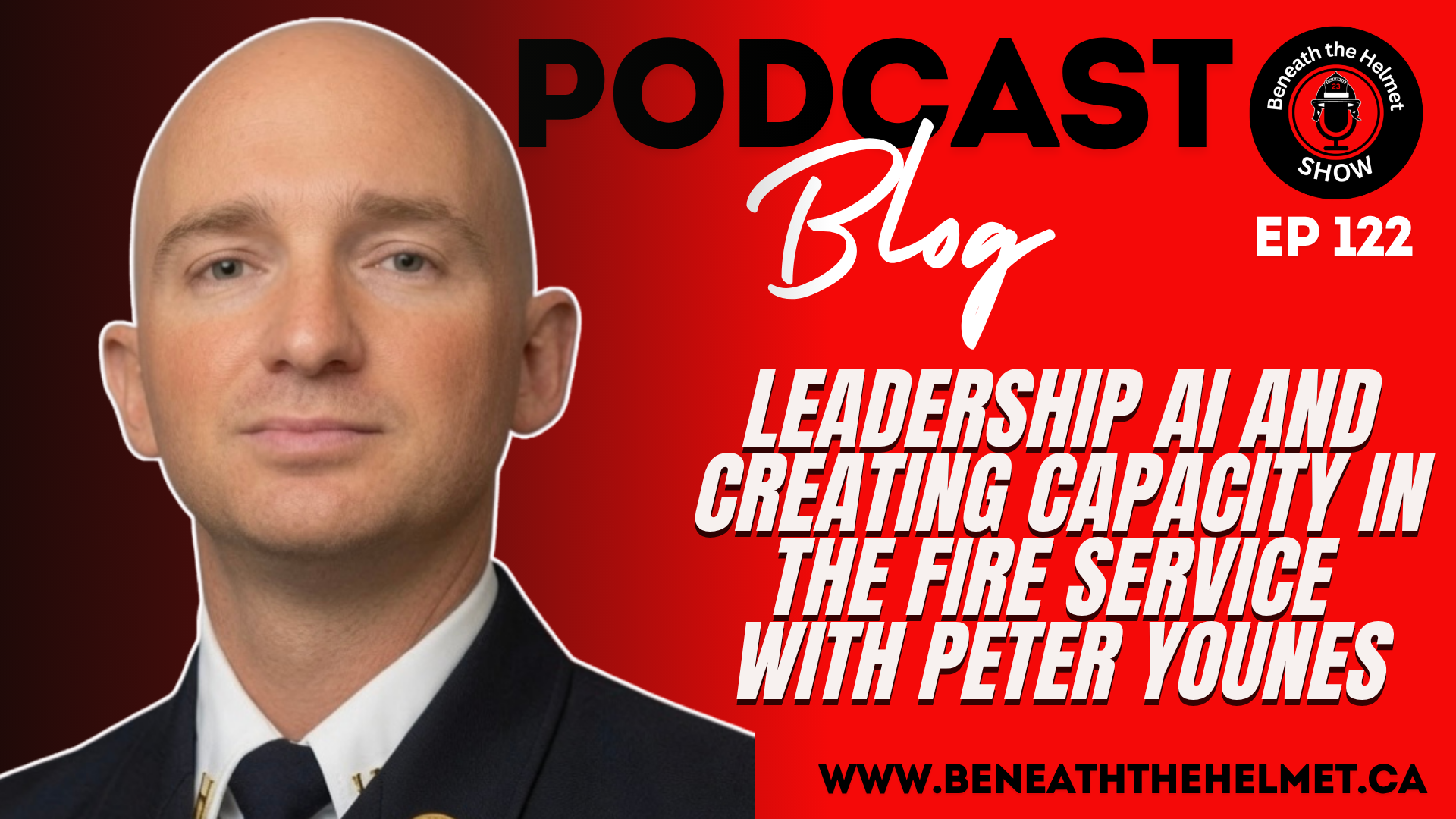
In Episode 122 of Beneath the Helmet, I spoke with Peter Younes, a firefighter, paramedic, author and project management professional, about what this complexity means for the people leading fire departments. The conversation started with project management, moved into artificial intelligence, and repeatedly returned to a more important question: What are we making room for?
The difference between capability and capacity
There is a difference between being able to take on a responsibility and having the capacity to do it well over time. Fire departments have become skilled at adapting. We add training, equipment, technology, specialty roles and administrative expectations. Yet relatively little comes off the list. A department can become more capable on paper while its people have less room to think, learn, recover and connect.
Peter described how officers can be placed in charge of complex, multi-year projects with limited preparation. Incident command experience matters, but a project involving budgets, vendors, policy, training and implementation requires a different set of skills. Project management can help leaders create structure rather than constantly reacting.
Every change asks something of people
One of Peter’s useful ideas is the proficiency tax. When a new process, piece of equipment or assignment is introduced, people need time to become comfortable. During that transition, a task that once felt easy may require extra thought and effort. Leaders should plan for that learning curve rather than assume each change comes at no cost.
This matters especially when an organization is already stretched. Even a worthwhile improvement can add pressure if leaders do not consider the effort required to implement it.
Where AI might genuinely help
Peter sees practical opportunities for AI in administrative work, research, early drafts, project planning and organizing information. He also cautions that the technology makes mistakes and requires human judgment. Sensitive information needs appropriate protection, and leaders should involve their IT and policy teams before connecting tools to organizational systems.
A useful starting point is not asking which AI product to buy. It is asking which work is repetitive, where people lose time, and what problem the organization is trying to solve. Then test whether a tool can help safely and reliably.
What would you do with ten hours back?
For me, the most compelling part of this conversation was what happens when a leader gets time back. If better systems or AI free up several hours in a week, do we immediately fill the calendar with more tasks? Or can we choose to spend some of that time with our people?
Time to visit stations without rushing. Time to mentor someone who is learning to lead. Time to listen to an uncomfortable concern. Time to think about where the organization is headed. And sometimes, time to leave some margin in the day.
Efficiency is not the same thing as sustainable leadership. Technology can reduce the effort required for certain tasks, but it cannot make the human choice about what matters most.
What must not be lost
Peter and I talked about the importance of mentorship, trust, accountability and public service. AI can help draft a document. It cannot replace the senior firefighter who takes time with a newer member, or the chief who builds trust by being present.
That is the opportunity in front of us. We can use useful tools, build stronger systems and still remember the people beneath the uniform.
Listen to Episode 122 of Beneath the Helmet with Peter Younes, and download the free companion guide at https://www.beneaththehelmet.ca/downloads/Peter-guide/
When Showing Up Isn’t the Same as Being Present