Behind the Mask: Firefighter Mental Health With Dr. Marc Wysocki
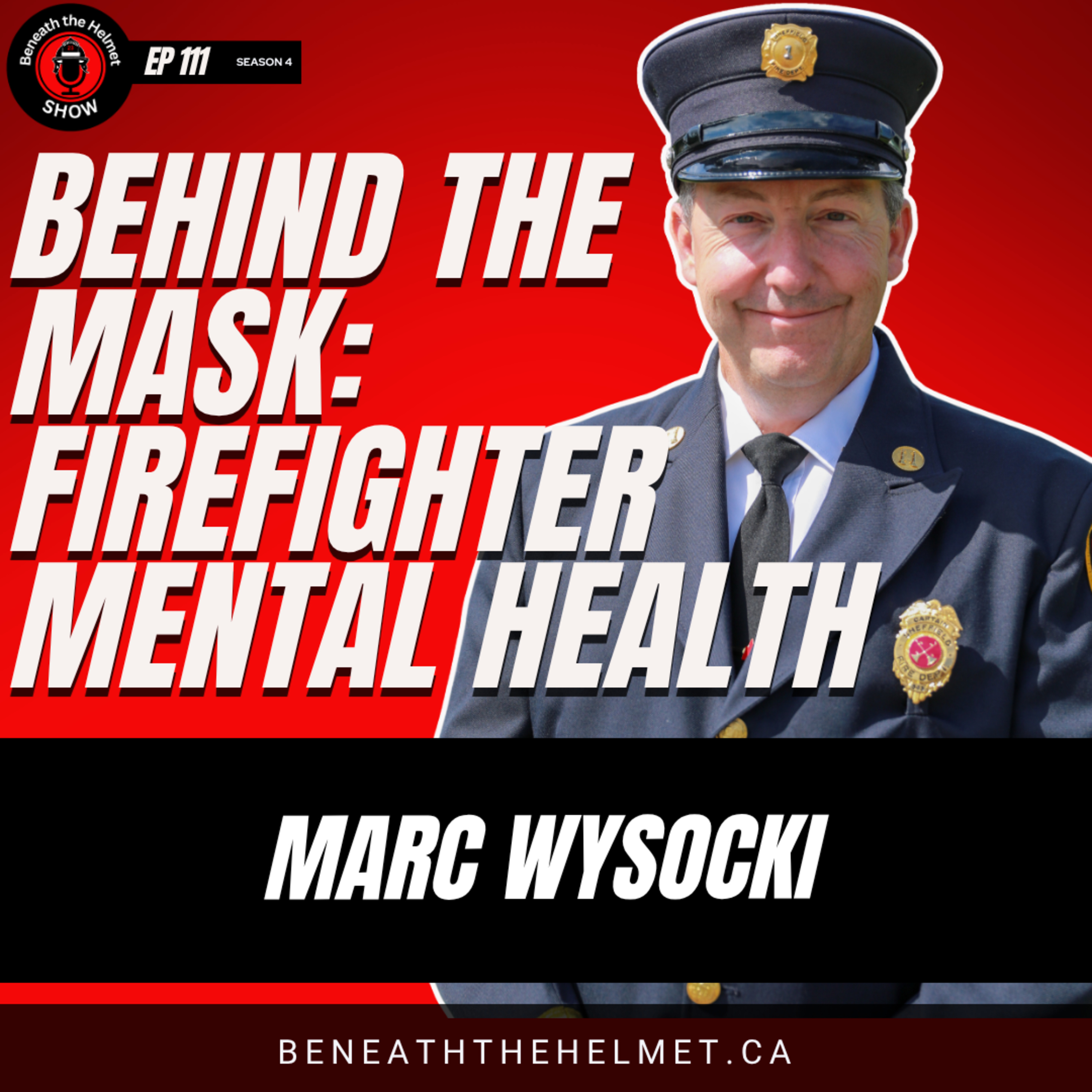
Despite a decade of growing awareness around firefighter mental health, suicide rates in the fire service haven't come down. In some areas, they've climbed. That's the finding that stopped Dr. Marc Wysocki cold when he was writing his 2025 Darley Award-winning essay, "Behind the Mask: Uncovering the Root Causes of Mental Health Challenges in the Fire Service" — and it's the starting point for this conversation.
Marc brings a rare combination to the table: 30 years as a certified athletic trainer, a doctorate in athletic training, 12 years on an ambulance service, and real experience as a volunteer fire captain. He knows the culture from the inside, and he came prepared to talk about what comes after awareness.
In this episode, Marc and Arjuna dig into recovery debt — the physiological load that quietly builds across a shift, even when you feel like you made it through okay. They talk about identity fusion, what happens when the uniform stops being something you wear and starts being the whole of who you are, and why building a life outside the job isn't stepping back from the work you love. Marc shares his sandwich method for culture change, the officer's 360, and why telling your crew "why" is one of the most underused tools in the fire service.
His parting message is simple and still one of the hardest things to practice inside a firehouse: speaking up is not a weakness. It is a strength.
If you work in the fire service, love someone who does, or carry a heavy role in service to others, this one is worth your time.


Behind the Mask: Firefighter Mental Health With Dr. Marc Wysocki | Beneath the Helmet Podcast Ep. 111
What can the fire service learn from sports medicine, athletic recovery, and leadership psychology?
In this episode of Beneath the Helmet, host Arjuna George sits down with Dr. Marc Wysocki, athletic trainer, educator, volunteer firefighter, fire captain, EMT, and winner of the 2025 Darley Essay Competition. Together, they explore firefighter mental health, recovery debt, leadership, identity, psychological safety, trauma exposure, and the importance of speaking up before challenges become crises.
Drawing from his award-winning essay, Behind the Mask: Uncovering the Root Causes of Mental Health Challenges in the Fire Service, Marc shares practical insights that every firefighter, officer, chief officer, and first responder can apply immediately.
✅ Why firefighters should think of themselves as tactical athletes
✅ The importance of recovery, sleep, hydration, and stress management
✅ What "recovery debt" means and how it impacts performance
✅ How officers can better support firefighters after difficult calls
✅ Why identity outside the fire service matters
✅ Building psychologically safe firehouse cultures
✅ Leadership lessons for retention, culture, and generational differences
✅ How to encourage healthy conversations about mental health
✅ Why speaking up is a sign of strength, not weakness
00:00 Welcome and introduction to Dr. Marc Wysocki
01:35 Marc's journey into athletic training and sports medicine
02:40 From EMT to volunteer firefighter and fire captain
03:25 The story behind the award-winning Darley essay
04:30 What the fire service can learn from sports medicine
05:20 Treating firefighters like tactical athletes
06:30 Recovery strategies for firefighters and first responders
08:15 Volunteer versus career firefighter recovery challenges
09:40 Recovery preparedness and operational readiness
10:20 Exploring Behind the Mask and firefighter mental health
11:00 Suicide rates and mental health concerns in the fire service
12:00 Officer check-ins after traumatic incidents
16:20 Trauma, moral injury, and challenges beyond critical incidents
17:15 Identity fusion and life beyond the fire service
19:15 Healthy disagreement and firehouse culture
20:00 Leaving the job at work and transitioning home
22:20 Understanding comparative suffering
23:00 Recovery debt and listening to your body
24:10 Sleep, hydration, and recovery habits
25:20 Hydration strategies and athlete recovery practices
26:35 Processing critical incidents and emotional suppression
31:00 Moving from mental health awareness to action
31:45 Leadership's role in creating healthy cultures
33:20 Strengths younger firefighters bring to the fire service
35:15 Building psychological safety in the firehouse
36:00 Social media and firefighter professionalism
37:00 When leaders unintentionally miss the mark
39:00 Retention, culture, and explaining the "why"
43:00 Building trust through daily 360-degree awareness
45:45 Food, baking, and firehouse culture
48:00 Marc's message to firefighters about speaking up
49:50 What's next for Dr. Marc Wysocki
50:40 Final thoughts and closing remarks
Link to the Darley | NFFF Essay contest 2025
https://www.darley.com/wp-content/uploads/2025/10/2025-Thought-Leadership-Essay-Booklet.pdf
Beneath the Helmet explores the human side of the fire service through conversations about leadership, resilience, wellness, recovery, mental health, and personal growth. Hosted by retired Fire Chief, coach, author, and speaker
If you found value in this conversation, please subscribe, leave a review, and share this episode with a firefighter, officer, chief, or first responder who needs to hear it. Your support helps us bring these important conversations to more people throughout the fire service and beyond.
www.beneaththehelmet.ca
Arjun George - Show Host
Connect with the Host:
Arjuna George – Fire Chief (ret) Owner of Silver Arrow Coaching and Consulting, Beneath the Helmet Show, and Burnt Around the Edges author.
www.silverarrowco.com
www.burntaroundtheedges.com
www.beneaththehelmet.ca
Beneath the Helmet — Episode 111
Behind the Mask: Firefighter Mental Health With Dr. Marc Wysocki
Welcome and Guest Introduction
Arjuna: Welcome back, everyone. This is Beneath the Helmet, Episode 111. I'm your host, Arjuna George, former fire chief turned podcaster, author, and coach to the fire service. Today I had the chance to sit down with a healthcare professional, longtime educator, volunteer firefighter, fire captain, and the winner of the 2025 Darley Essay Competition. His essay is fantastic, and we'll make sure it's linked in the show notes for you to check out. Welcome to the show, Dr. Marc Wysocki.
Marc: Thanks for having me.
Marc's Athletic Training Journey
Arjuna: Tell our listeners a little about who Marc is and what brought you into the world of sports medicine and training — and then what made you join the fire service as a volunteer?
Marc: I've been an athletic trainer for 30 years. For people who don't know, an athletic trainer is a healthcare professional. I evaluate, treat, and rehab injured athletes — similar to a physical therapist, but my education is focused specifically on the athlete. As an athletic trainer, I also have to be ready for emergency procedures: CPR, spine boarding, airway management. So I can handle anything from a simple cut to post-surgical rehab, post-concussion care, and return-to-play decisions.
I tore my ACL my sophomore year of high school. My guidance counselor, who was also my football coach, sent me to an athletic training workshop in Boston, and that lit the fire. I never looked back. I was very lucky to find my calling early.
From EMT to Fire Officer
Marc: Moving forward to the private high school where I work now — I had a principal who was really passionate about community service, about the school going "beyond the bubble" and being present outside the campus. That really got me interested.
So I started by taking an EMT course and joined our local ambulance service. It's a private service — not part of the fire department — and it covers the largest geographical area in the state of Massachusetts: seven towns, with ALS intercept support for another three or four. I was with the ambulance service for 12 years. About four years in, I wanted to push myself further, so I joined the Sheffield Fire Department. I've stayed since, and moved up through the ranks from firefighter to lieutenant to captain.
The Darley Essay Origin Story
Marc: The essay has an interesting origin. I was finishing the last year of my doctorate in athletic training when I saw the Darley competition come up on Instagram. At the time, I was also taking a psychology course focused on the injured athlete, so my research brain was already fired up. I knew how to put a paper together after three years of graduate work.
The research and data side was the easier part. What I really needed to do was bring my own experience as a first responder — as an EMT and a firefighter — into it. It became almost a perfect storm: the academic skills and the personal investment coming together at the right time. I put my thoughts, my beliefs, and my sense of where the fire service needs to go into that essay.
Treating Firefighters Like Athletes
Arjuna: Before we get into the nuts and bolts of the essay, I'd love your thoughts on what the fire service could learn from sports medicine. What are the top two or three things you'd say, "If we could bring this into the fire service, it would change everything"?
Marc: Treat yourself like an athlete. I know the term "tactical athlete" has become more common, and that's the right framing. Nutrition, recovery, and above all, sleep. Sleep has been the monster we've dealt with since day one of answering calls — the cortisol spikes, the dependence on caffeine and energy drinks. People do what they need to do to get through a shift, and I get that.
But the biggest thing is prevention. I work with teenagers, and trying to convince them they're not invincible is its own challenge. They start to hear it around 17 or 18. First responders are the same. When I had to encapsulate it, I'd say: when you're off shift, focus on recovery. Sleep, hydration, muscle soreness — taking care of yourself physically and mentally so you're ready for your next shift or your next call. The recovery phase is huge for long-term health.
Recovery Tips on Days Off
Arjuna: Do you have any tips on what recovery should actually look like? Because for some people, recovery means a couple of hours on the couch watching TV. For others, it means picking up a second job. What does real recovery look like on your days off?
Marc: In a perfect world, there's going to be some couch time — I'm not going to deny that. We all need to unplug for a bit. But unplug without a six-pack in front of you. Your body has been through a lot, even if you don't feel it. Even if you had a quiet night at the station, your cortisol was still elevated. Your body was still on alert.
Getting proper sleep the following night is critical — shutting the phone down earlier, keeping the TV off, giving your body the chance to recover. Even going for a walk, doing some active stretching, rolling out with a foam roller, or using a massage gun to loosen things up — these things make a real difference in the long run. But the first priority is reestablishing a good sleep pattern.
Volunteer vs. Career Recovery
Arjuna: Any thoughts on how recovery looks different for volunteers versus career firefighters?
Marc: For me as a volunteer, recovery took longer — especially when I had a call in the middle of the night and then had to go straight back to my regular job. I'm not going to lie, I've had days running on heavy caffeine because I had to go back to work after a couple hours of sleep.
But I made sure that once my day was done, I took care of myself — active recovery, taking care of sore muscles, getting to bed early, staying hydrated. When I was on the ambulance service, I worked a 6:00 PM to 6:00 AM shift and then went straight to my school job in the morning. That created almost a two-day recovery cycle. As the years went on, I noticed it more and more. I really had to take care of myself better.
Arjuna: I think we're seeing a shift in mindset — not just operational preparedness, but recovery preparedness. We've ignored it for a long time, and now we're slowly starting to recognize that recovery is just as important as being ready to fight a structure fire.
Marc: Absolutely. And for the younger firefighters especially — when you get off shift, think twice before heading straight to the bar. I'm not saying don't go out and have a good time, but be aware: you're already in a recovery deficit when you walk out of the station.
Essay Findings and Suicide Rates
Arjuna: Your essay, "Behind the Mask: Uncovering the Root Causes of Mental Health Challenges in the Fire Service," covers a lot of ground. Were there any surprises when you were researching it? Anything that you weren't expecting to uncover?
Marc: One finding really stood out. COVID helped push mental health conversations to the forefront — not just for first responders, but broadly. But despite that, suicide rates for first responders have not gone down. They've stayed the same or gone up. That took my breath away. It's sad to see it on social media every day — someone you know, or just someone in the fire service — and it hits just as hard every time.
Arjuna: I would agree. It's hard to see.
Officer Check-Ins After Traumatic Calls
Arjuna: Your essay is about sustainable leadership, boundaries, and long-term wellbeing. You talked about assumptions in the fire service that need to be challenged. What are some of those?
Marc: In terms of mental health, I've said this before: a good officer's first 360 when they come into the firehouse is about knowing their crew. Not every detail of their lives, but getting a general read — how are people doing, where are they at, what's going on. People don't leave their lives at the door. Whatever they're carrying, it weighs on them.
I'm not asking an officer to be a full-time psychologist. But knowing your crew is both an asset and a safety issue. If someone is really struggling and a major call comes in, they're not going to be mentally present to do their job. That's a liability.
A few years ago, our department responded to a multi-car, multi-fatality accident. We had a couple of newer firefighters on the call. It was early in the morning, and we were on scene well into the mid-afternoon — state police, the medical examiner, full reconstruction. At a certain point, we were essentially just traffic control and manpower. I could see it on the newer firefighters' faces. It was their first big call like that.
I didn't say anything on the spot because there were too many people around. But I reached out to them afterward. I said, "Hey, that was a rough call. That's not our usual MVA. I'm just checking in on you." Getting it out in the open, saying something — that's the biggest thing. Even if you can't do it right there in the firehouse with everyone around, pull them aside later. Let them know: we're here, we want things to be better, don't bottle this up and let it build into something else.
In our county, when we have a fatality, we have a crisis team available within 24 to 48 hours, and we always do a debrief — a tactical debrief to go over the call, and then the mental health team steps in. People speak if they want to, or they don't, but the team is there. That's a great step forward.
Arjuna: When you have those conversations with firefighters, how do they usually respond?
Marc: I get the "I'm okay, I'm fine." And sometimes, being there long enough, I can tell they actually are. But sometimes I know they're not, and I'll be persistent. I'll check in again the next day, and the day after that. I'll say, "Hey, if there are too many people around right now, you can call or text me or another officer. We don't want you dealing with this alone."
There's still a sense of guarding it. The bravado and the machismo, the heroism — that's always going to be there. And a lot of first responders just haven't been trained to be authentic and vulnerable, to share how they're actually feeling. Hopefully that changes over time.
Beyond Trauma: Identity Fusion and Conflict
Arjuna: In your essay, you write about things beyond trauma exposure that affect firefighters — moral injury, workplace conflict, behavioral issues. What conversations do you think we're not having enough in the fire service?
Marc: One of the big ones I wrote about is identity fusion — when your shift ends but you never mentally hang up the uniform. You keep it on. "That's all I am." I see this same pattern with my student athletes. I tell them: "This sport is a part of you, it's not you." They don't fully get it as teenagers, but they come back and thank me later.
For first responders, it's the same thing. Learning to step away when the shift is over — not to compartmentalize and suppress, but to find healthy outlets. Whether it's a partner, a family member, a community, hobbies, sports, whatever it is — building a full life outside the job matters.
The second thing is having healthy disagreements. We're all different people with different beliefs and backgrounds. When there's downtime and we don't agree on something — even outside of protocols and procedures — learning to listen to each other, having respectful disagreements, is important. Because when the tones drop, we still have to work together.
Leaving the Job at the Door
Arjuna: What strategies do you use yourself to leave the job at work? Because that's one of the hardest things — whether you're volunteer or career, fire is kind of on your mind all the time.
Marc: I've built a good morning routine — exercise and meditation to reset and center myself. But that took years of experience and some bad choices to figure out. You learn by doing things wrong.
After a call, you walk back into the house fired up because it went well, or you're sitting with it because it was hard — and your family wants Marc or Dad, not the firefighter. Learning to make that shift is tough, and it takes time. Each person has to find their own healthy place of release so they can leave it at the door — different hobbies, different groups of people, whatever that looks like for them.
Arjuna: That transition time is so critical. It could be five minutes, ten minutes, half an hour. For me, I stopped driving with the radio on. I drive in silence now, and that 50-minute drive to town has become almost a moving meditation. Something about the quiet just lets me decompress and transition between activities. I started doing it about a year or two ago, and it's genuinely transformed that time.
Marc: Those transition rituals are critical. They really are.
Comparative Suffering
Arjuna: You also write in the essay about a comparative suffering mindset. Can you break that down?
Marc: As first responders, there's a perfectionist in us. We want to do our best and have the best outcomes, and that doesn't always happen. The fire gets out of control. Someone doesn't make it. That can eat at us.
What helped me was learning early — from veterans who were ahead of me — not to let that build up inside. They could see it on my face when I lost my first patient or couldn't save a house. They reminded me: things happen beyond our control. We go out there to do our best. You can't let what you couldn't control consume you. You learn from it, and you pass that learning on to the people behind you.
Recovery Debt and Listening to Your Body
Arjuna: You talked earlier about recovery, but you also specifically write about "recovery debt" in the essay. Can you explain what that means?
Marc: On a 24 or 48-hour shift, you're guaranteed not going through your normal sleep cycles, eating cycles, or hydration. You might feel like you got through it okay, but your body is running on fumes you don't even know are gone. You've been asking a lot of it, and it's delivered. But now it needs that pause — to recover from the dehydration, the elevated cortisol, the time spent in survival mode.
When you head back into the world feeling sluggish and worn down, that's your body saying, "I got you through this. Now it's your turn to help me." Your body kept its end of the deal. Recovery is how you keep yours.
Arjuna: Your body helped you — now it's your turn to repay your body. I love that.
Marc: Exactly. For listening to your body: when you're tired and it's time for bed, put the phone down and keep the blue light away from your face. Let your body start moving toward recovery, even if the pager goes off ten minutes later. At least you're building the habit.
For hydration — the oldest rule still stands: if you're feeling thirsty, you're already well down the dehydration trail. That's your body's last mechanism. Keep steady water and electrolytes close, especially on a long shift.
Hydration for Athletes and First Responders
Arjuna: What do your student athletes use for hydration?
Marc: When they're behaving — Propel and Liquid IV are the two biggest ones. They're water-based mixes, which is better than straight Gatorade with all the added sugar. I'm glad they're using them. The energy drink conversation is a whole different animal.
Arjuna: Teenagers and energy drinks — that's a whole other episode.
Marc: I'm like, "You're 16 and 17. You are full of testosterone and adrenaline. You don't even need it."
Processing Critical Incidents
Arjuna: Your essay addresses operational effectiveness and the temporary emotional suppression that can be necessary during a call. But at some point, those feelings need to be processed. How do you recommend someone navigate that — in the moment operationally, and then afterward personally?
Marc: Going back to that multi-fatality accident — operationally, the team did really well. Everyone stayed on task. Even the newer firefighters stayed focused and did what was asked of them. But at a certain point, when the operational work wound down, I could see the thousand-yard stare settling in on some of them. They were beginning to process what they'd witnessed.
With too many people around for a real conversation, I did what I could in the moment: gave them small tasks to keep them present and grounded. "Hey, once they're done out there, here's what I need you to have ready." Just keeping them here, with me, in the moment. And then afterward, I pulled them aside and had a real conversation.
If you can see someone is overwhelmed on scene and you have the personnel, shift their task. Get them out of the spot that's freezing them and give them something else to focus on. That's the officer's job.
Arjuna: Is it important to compartmentalize the emotional response during an incident, or is it healthier to try to process in the moment?
Marc: In the moment, pack it away — just long enough to complete the task. Then, as soon as you're in a space where it's appropriate, let people have their space to talk about it. Or not talk about it yet — "Let me sit with this and I'll get back to you." As long as you follow through on that. "I'll check in with you" means you actually check in.
The goal is: let's get through this together, and then let's take care of each other.
From Awareness to Action
Arjuna: The fire service has done a solid job over the last decade of raising awareness around mental health. But awareness and action are different things. Where do you think we need to focus the action?
Marc: I call it the sandwich method. From the top down — chiefs, captains, lieutenants, battalion chiefs — stepping forward and saying, "We speak up here." You don't have to announce it in front of everyone, but grab your people. If someone's not doing well, tell us. We want to help. We're all in this together.
And from the bottom up — starting with firefighters coming out of the academy. Set the tone early: speak up, build a healthy environment. You're going to be thrown into a house full of veterans who may not have grown up that way, but you're going to be leading before you know it.
When both ends are moving at the same time, the culture in the middle starts to shift.
Arjuna: I like that. It's not on the chief alone, and it's not on the firefighters alone. It's a group effort.
What Gen Z Brings to the Fire Service
Arjuna: You work with young people all the time. What strengths do you see in the younger generation coming into the fire service?
Marc: Our department is in a good spot with numbers, and I think it comes down to culture — from day one, we want to use whatever background and skills they bring. We have young guys who are plumbers or carpenters. Great — bring your trade knowledge to our training props and drills. Have them buy in from the start.
Their energy is real. They want to be there, they want to do things. As officers, we need to lean into that and show them clearly: we want you here, and we want to keep you. You were brave enough to sign on and go through everything it took to get here. Now we want to keep you.
Arjuna: There's always a challenge with different generations working together. But every generation brings strengths, and we need to embrace that rather than pushing back with "this is how we've always done it."
Marc: Exactly. Whatever town you're from, whatever department you're in — we're all in here together, working toward the same goals. We're going to disagree, and that's fine. That's normal. But we have to find the common values and push forward together.
Psychological Safety and Social Media
Arjuna: Is there anything else critical to building a psychologically safe department that we haven't covered?
Marc: Social media. I tell the younger firefighters: think twice before you post anything. You might be posting about yourself, but if you have our department on your shirt or on your back, you're posting for all of us. They may not realize that. They see a good photo and hit share — but if the background isn't ideal, or the context is off, that reflects on the whole department.
I'm not saying anyone has to be perfect. I'm saying be aware. Social media can be a real liability, but it can also be a powerhouse when used well.
When Leaders Miss the Mark
Arjuna: Can you share examples of leaders who are trying to build psychological safety but are actually making things worse?
Marc: I've seen firehouses where the officers are too busy for it. "I've got captain stuff to do" — and the firefighter with a concern or a question gets left on an island. Nobody has died in those situations that I've seen directly, but people get isolated. They stop trusting the system.
On the volunteer side, retention and culture are always on my mind. It doesn't have to be all handholding and perfect harmony — we're going to argue, and that's healthy growth, that's family. But leaving someone without support? That sticks with people. And the firefighter or probie you leave on an island today might be your officer or your backup tomorrow. You're always teaching the person behind you, even from your very first shift.
Retention Culture and Explaining Why
Arjuna: What do we need to focus on more with newer recruits when it comes to retention and culture?
Marc: Always be ready to explain why. That lesson came from my brother Brian, who served in the US Navy as an aviator for 32 years. When I earned my first bugle, I called him for advice. After a pause, he said, "Tell them why. Why are we going in this direction? Why do we have these goals?" He said from the person cleaning the floor to his executive officer, everyone in his squadron knew why.
This generation asks why more than any before them, and that's a good thing. We have to have answers ready. Not on the fireground — that's not the time. But in practice, in training, at the dinner table — everywhere there's space for it. When you explain why, people approach you more easily. The door to psychological safety opens wider every time you do it.
Arjuna: Same principle as compartmentalizing an emotional response on scene — there's a time for it, and there's a time for the conversation. Both matter.
What Made the Darley Essay a Winner
Arjuna: Looking back at the essay, what do you think made it stand out?
Marc: The research and data side was the easier part — grad school built that muscle. What I think made it different was sitting down and genuinely putting myself into it as a first responder. I've only volunteered — never done a career shift — but I tried to connect as authentically as I could to the men and women doing 24 and 48-hour rotations. I think that personal investment came through.
Building Trust With 360 Awareness
Arjuna: What have you learned about yourself through the fire service that carries over into your day-to-day work at the school?
Marc: The 360. Especially since becoming an officer. As a volunteer, when a call comes in, you zip into the apparatus and immediately start thinking: who do I have, what are they good at, what do we need, where are we going. On practice nights, you get more time for a real 360 — seeing how people are doing, where they're at.
I do the same thing with my student athletes. When the kids roll in, I'm reading the room. Some of them just come in to hang out and decompress — talk about a teacher they're frustrated with, or a class that's stressing them. They get it out and move on. I think that skill — the constant, low-key 360 — is one of the most valuable things I've brought back from the fire service.
Arjuna: Do your firefighters know you're doing that?
Marc: They'll know now if they watch this. But honestly, they probably sense it as just being accessible. It starts with a casual "Hey, how you doing?" and then goes wherever it needs to go. Way more effective than pulling someone aside for something formal where they feel like they're being interviewed. When it becomes natural, that's when you've built real trust. That said, sometimes you do need to pull someone out of a group. Sometimes the conversation has to happen privately, and that's fine too.
Firehouse Food and Identity Outside the Job
Arjuna: What's one question you wished I'd asked that I haven't yet?
Marc: I'm a pretty good baker. My blondies are my go-to, and the department loves my éclair cake. Once a month we have a department dinner and rotate who does the cooking — when it's my turn for dessert, that's my contribution.
Baking is part of how I stay connected to myself outside the job. Hanging with my dogs. These things matter. I was actually working toward a baking certification before I became a firefighter — never finished it, but the love stuck. Post-COVID I started doing sourdough. We have a starter going pretty much every day. Loaves of bread almost daily.
Arjuna: That's a beautiful example of identity outside the uniform. And food around a table does something — people open up. It sets the stage for real conversation.
Marc: Exactly. Food in the firehouse is always a connector.
Parting Message: Speaking Up Is a Strength
Arjuna: What's one parting message you'd like to leave with our firefighters today — something they can take action on right now?
Marc: Speaking up is not a weakness. It is a strength. I know that message has been said in mental health spaces before, but in a firehouse — where the heroism and the bravado are real — it's still one of the hardest things to actually do.
Talk to someone. A partner, a therapist, a peer. Journal. Find a support group outside the department if the firehouse doesn't feel safe for that yet. Build a support system, or build it slowly. Just don't keep it inside and let it grow into something bigger.
Arjuna: This podcast exists to share those stories so that people start hearing others talk openly, and start to think — maybe this is normal, maybe I'm supposed to talk about this. Not bottle it up and become a shell.
Marc: Exactly. Find that support. Whatever it is, find the place that helps you feel like yourself again.
What's Next and Closing
Arjuna: What's next for Marc in the world of mental health, leadership, writing?
Marc: No book right now. I've got my last faculty meeting tomorrow before I can say hello to summer. My brain is very much in wind-down mode. I'm heading to Florida to see my parents next week. I need to shut things off for a little while.
Arjuna: Good for you. That is recovery in action. Thank you for sharing your story, your wisdom, and your experience as both an educator and a firefighter. It's been a great conversation.
Marc: Thank you. And if anyone out there wants to reach out — about this topic or anything else — I'm on Instagram, LinkedIn, and email. I'm here for you.
Arjuna: Fantastic. All right, everyone — that's Episode 111 with Dr. Marc Wysocki. Until next time, stay well.
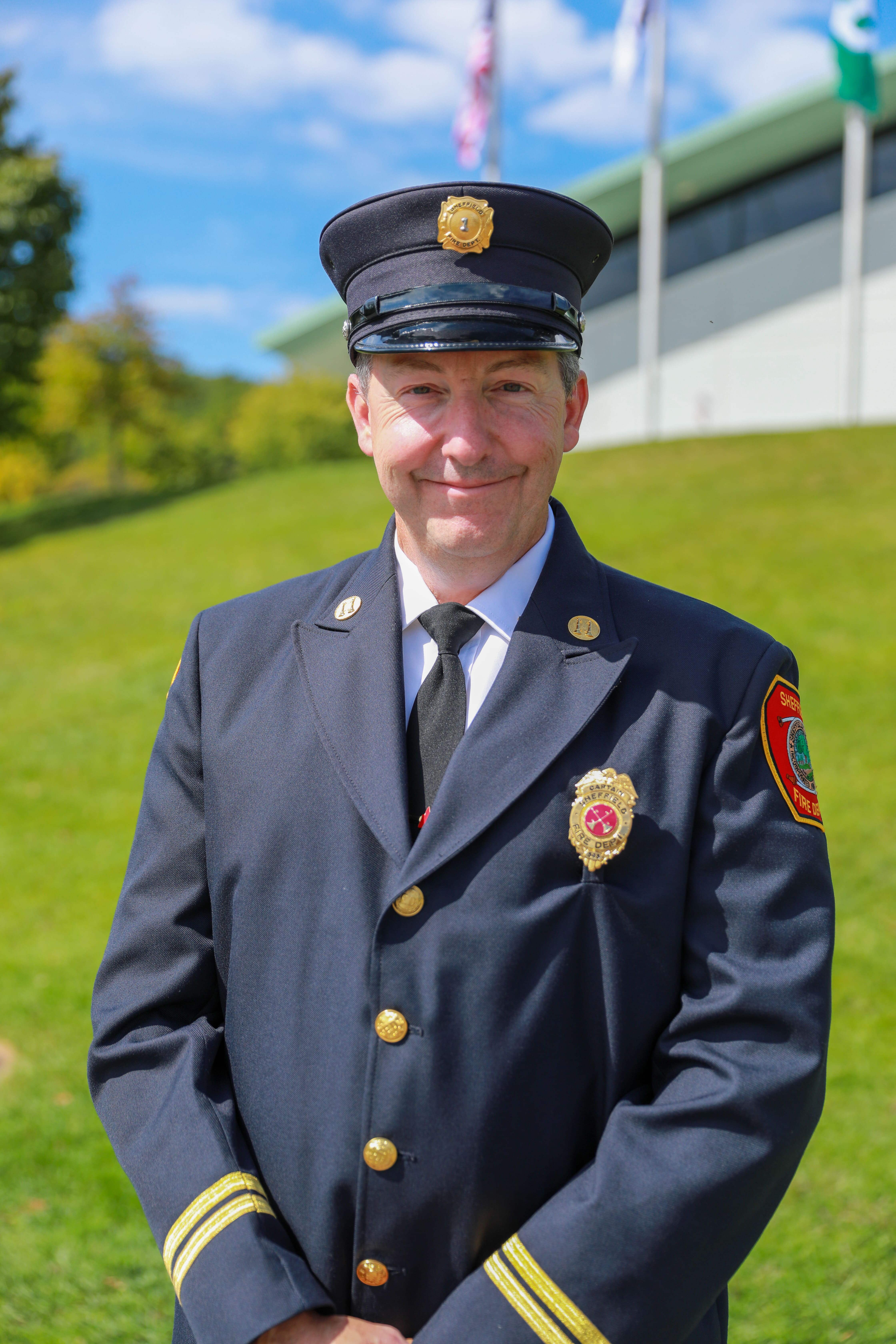
Marc is a healthcare professional, educator, and volunteer fire office
Marc is a healthcare professional, educator, and volunteer fire officer with a passion for leadership, wellness, and the realities of service culture. Drawing from years of experience in emergency response, athletic training, and volunteer firefighting, his work focuses on the intersection of resilience, identity, and mental health in high-responsibility professions. His award-winning essay explored the hidden pressures within the fire service and the importance of sustainable leadership, boundaries, and long-term wellbeing.


