The Firefighter Nervous System: Why Recovery Needs to Be Part of the Job
A firefighter can move from sleep to full operational readiness in minutes. The tones sound, the body mobilizes, and decisions suddenly carry significant consequences. We train for that shift into action. But what about the shift back out?
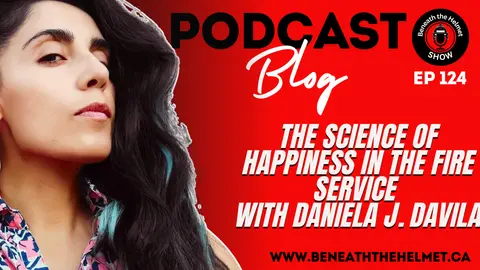
That question sits near the centre of my conversation with Dr. Daniela Jines Davila on Episode 124 of Beneath the Helmet. Daniela is an organizational happiness researcher, Fulbright Scholar, creator of the HAND Model and Co-Founder of Happy Organizations. She has spent more than 20 years studying workplace happiness, stress, leadership and human connection.
Can demanding work also be meaningful work?
For many first responders, service provides genuine purpose and a deep connection with their communities. But pride in the work does not cancel the cost of interrupted sleep, frequent activation, hard calls or difficult workplace conditions. Both experiences can be true at the same time.
We started the conversation with happiness. Daniela challenged us to think beyond constant cheerfulness. Her book, For Those Who Have a Job and Are Not Happy… Yet, also frames happiness at work around dignity, feeling valued, purpose and the chance to remain connected to our humanity.
Training for activation, making room for recovery
A firefighter may move repeatedly between routine work and demands that require immediate focus. It is understandable that some people notice tension, disrupted sleep or difficulty transitioning home. No single sign proves a particular nervous system problem, but these experiences can invite a closer look at work demands and support.
We discussed physical activity, breathing, slower movement, rest and connection. None is a guaranteed fix, and individual needs differ. The useful idea is that recovery can be intentional, not accidental.
Three moments to pay attention to
Before a shift: Notice how you are arriving. How did you sleep? What are you carrying? What would help you begin with steadiness? Daniela describes brief morning rituals as one possible approach.
During a shift: When safe and operationally appropriate, use a short moment between tasks to notice your breathing, muscle tension, and current state. A few seconds of awareness may help guide your next choice.
After a shift: Mark the transition. For some people, that is a walk, a shower, journalling, quiet music or time with someone they trust. There is no single correct ritual. The point is to create a meaningful boundary when possible.
It cannot all rest on the individual
One of the most valuable parts of our conversation is directed at fire chiefs and officers. Daniela's first piece of leadership advice is simple: listen. Ask people what is going well, where they are stretched, and what would improve the conditions in which they work.
Leaders can support respectful communication, connection and reasonable opportunities for recovery. They can also examine the organizational factors that influence well-being: workload, scheduling, trust, recognition and whether people can ask for help without penalty.
An employee cannot regulate their way out of every structural problem. A healthier culture requires leadership action, not just personal practices.
Five Nuggets (takeaways)
1. Meaning and strain can coexist.
2. Recovery belongs in the conversation about operational readiness.
3. Transitions can be a practical opportunity for self-awareness.
4. Human connection and listening are relevant leadership practices.
5. Sustainable service depends on both personal and organizational choices.
Take this with you
Before your next shift, ask: What is my capacity today? At the end, ask: What will help me move from work into the rest of my life? If you lead a team, ask: What can I change in our environment so the people I serve can stay healthy throughout their careers?
Resources
Daniela has generously offered listeners her book For Those Who Have a Job and Are Not Happy… Yet as a free resource. (Download Here). You can also download the Beneath the Helmet companion guide for this episode: (Download Here). Learn more about Daniela's work at https://www.happyorganizations.org
For a deeper exploration of my own experience with burnout and practical strategies for stress awareness and recovery, my book Burnt Around the Edges: A Guide to Mastering Stress and Surviving Burnout is available here: Buy Now
Listen to Episode 124 and explore other conversations at www.beneaththehelmet.ca
If this conversation might help someone on your crew or in your leadership circle, consider sharing it.
These materials are educational, not medical advice.
Fire Chief Burnout: The Hidden Cost of Command