First Responder Moral Injury: Suffering in Silence with Adam Meyers
Police Captain Adam Meyers joins Arjuna George to share his experience of moral injury, years of suffering in silence and the recovery support that changed his direction after a fatal critical incident. A candid conversation on stigma, peer support and why leaders must keep checking in long after someone returns to duty.
Content advisory: This episode includes discussion of a fatal shooting, substance misuse, self-harm and suicidal thoughts.


The event ends. The human impact may not.
Adam Meyers always wanted to be a police officer. In April 2016, a call to remove an unwanted person from a retailer escalated into a fatal confrontation. Although Adam describes the shooting as justified, what followed was not simple. He speaks with remarkable openness about anxiety, shame, his relationship with alcohol and other coping behaviours, and years of feeling that he should be able to sort things out alone.
Arjuna and Adam explore the difference between an incident review and a person’s longer-term recovery. They discuss moral injury, the loneliness Adam felt after the call, the challenge of asking for help, and how returning to work can be mistaken for being fully okay. Adam also shares how therapy, family support and a different workplace environment helped him find a way forward.
Key conversation points
• Why an objectively justified operational decision can still create personal moral conflict.
• How distress may show up in coping habits, relationships and day-to-day decisions.
• Why asking someone to reach out is not the same as checking in with them.
• What sustained private, non-judgmental support can look like.
• Why people need choice about how much of their story they share.
• What Adam’s current captain and new department did to help him feel supported.
A question for leaders
A colleague comes back to work after a traumatic event. What is your plan for checking in after the first week, first month and first anniversary?
Link to Episode: https://www.beneaththehelmet.ca/first-responder-moral-injury-suffering-in-silence-with-adam-meyers/
About the guest: Adam Meyers is a police captain, certified peer specialist, speaker and founder of Stop the Threat, Stop the Stigma. His website: https://stopthethreatstopthestigma.org.
Content advisory: This episode includes discussion of a fatal shooting, substance misuse, self-harm and suicidal thoughts.
Connect with the Host:
Arjuna George – Fire Chief (ret) Owner of Silver Arrow Coaching and Consulting, Beneath the Helmet Show, and Burnt Around the Edges author.
www.silverarrowco.com
www.burntaroundtheedges.com
www.beneaththehelmet.ca
First Responder Moral Injury: Suffering in Silence
Beneath the Helmet | Season 4, Episode 126 | Guest: Adam Meyers
Clean reading transcript • Edited from the supplied transcription for readability. Filler words, stutters and obvious transcription artifacts have been reduced; the full conversation is retained.
Content advisory: This conversation discusses a fatal officer-involved shooting, harmful substance use, self-harm, suicidal thoughts and mental health challenges.
[00:00:00]
Welcome and Guest Intro
Arjuna All right, everyone, welcome back. This is Beneath the Helmet. I'm your host, Arjuna George, former fire chief turned podcaster, author, and coach to the fire service. Today is episode 126, season four. I get a chance to sit down with a police captain, a certified peer specialist, a writer and a speaker, a founder of Stop the Threat, Stop the Stigma, Adam Myers. It's time to ignite your soul and unlock your full potential. Join us on Beneath the Helmet, the podcast exploring firefighters' health and wellness. Hosted by retired fire chief Arjuna George, our podcast is the perfect place to start your journey towards becoming the best version of yourself. So come on, let's join the conversation and find out what sets your soul on fire.
Arjuna [00:01:00] Welcome to the show, Adam.
Adam Thank you. Thanks for this opportunity. I really hope that our conversation helps somebody who might be suffering in silence, somebody who might be struggling or, you know, maybe somebody who wants to reach out and help somebody and doesn't know how to do it. So thank you.
Arjuna Absolutely. That's what the podcast is all about, and that's our mission together, right? Is to share our stories, but also share ways that we can thrive once again in our positions as well as life, right? So
Adam Right...
Meet Adam
Arjuna let's kind of start off, you know, getting to know Adam a little bit better. Who is Adam beneath the helmet? And when I say that, I know you don't wear a helmet every day. But who is Adam behind the helmet? So underneath the cap or the badge, however you want to say it, who is Adam?
Adam Well, I think I'm a, I'm a goofball, a class clown. I was actually a class clown in the police academy, believe it or not, and I still graduated and everything. born and raised in Racine, Wisconsin, which is located between Chicago, Illinois, and Milwaukee, Wisconsin. And all my life, I wanted to be a cop. that's all I ever wanted to do when I was a little boy, ever since I saw the police cars. I saw fire engines, ambulances, thought those were cool, too, but, I always wanted to be a police officer. So, when I was little, I used to call the police cars er cars because of the siren, the er. And, my parents said the first time I saw a police officer get out of an er car, I was just surprised, happy. I said, "I want to be an er car man." So I grew up and did what I thought, you know, what I had to do to be an er car man. I'm a father of two daughters. Payton Elizabeth is 24, Sydney Marie is 28. divorced, kind of a statistic when it comes to that. But, yeah, life is good. Life is a lot better now than it, than it, you know, was years ago. And, I'm just here to try to help people. I'm just a normal guy. I'm... There's really nothing special to me. I go to work every day. went back to college this summer, and, just try to be the better version of myself every day and help other people, so.
Arjuna As we sit here, it's like it's pretty obvious that you've put in the hard work to recover and get back to maybe a better version of Adam or at least the same as prior to this incident we're gonna chat about today. Right.
The Walmart Call
Arjuna So I guess kind of set the stage of what was it back in, I believe it was 2021?
Adam 2016. 2016. Yeah, 2016 actually. I was involved in a critical incident. It was Friday, April 8th, 2016. I was sitting at the police department working on a retail theft report when I was dispatched to our Walmart store, and it wasn't a very emergent call. It was the type of call that we do all the time. we respond to businesses, to restaurants, to people's homes for unwanted people. That's what this initially was. It was an unwanted person, and, two chaperones were out with a woman who was a patient at a mental health, state mental health facility, and it's my understanding that she was out on a good behavior pass. So they went to a restaurant, a fast food restaurant, had something to eat, and then after, they went across the street to Walmart, and they did some shopping. And when it was time to leave, the chaperones asked her to leave, and she refused to leave the store. So they called 911 because this lady had a history of violence and because of, you know, mental health issues. And when I was dispatched, like I said, it wasn't very, it wasn't an emergent call. It was basically, "I'm gonna go there and assist the chaperones with, you know, removing this person from the store." We do that all the time. And so I grabbed my laptop. I walked out of the back of the police department, jumped in my UR car, my squad car, and I started driving to Walmart. It was about a mile and a half away from the police department. regular speed, you know, no lights, no sirens, anything like that. but as I was responding, the call became more and more emergent. And, one of the chaperones stayed on the 911 call with the with the 911 operator and said, "This person is now in the sporting goods section. She's removing a knife from the packaging." She was able to, take possession of a knife, which I later found out was a hatchet, not a knife, and, started walking around the store threatening people with that hatchet. So I activated my emergency lights and sirens. Obviously, it was an emergent call then, and I got to Walmart a lot quicker than I normally would. Now, Walmart is set up pretty much the same way everywhere. you have two entrances. You have a general merchandise entrance. You have a grocery entrance. And then, a lot of Walmarts have an auto center where you can get tires, get your oil changed, stuff like that. And I knew sporting goods was right back near the auto center, so I figured initially I would respond to the auto center, enter through the auto center, and hopefully make contact with her and contain her in the back of the store so she wouldn't move towards the front, and we could kind of, you know, deescalate the situation. While I was responding, dispatch advised me she was walking towards the front of the store, so, my idea of responding through the auto center, you know, completely changed. And I pulled into the parking lot, and I remember, you know, it was a Friday, 5:15 PM, super busy. Nobody would get out of the way. Lights and sirens, and I'm thinking, "Will you please move? I mean, come on, I got a true emergency inside the store." But everybody's kind of like, "Hey, look at that police car. What's going on?" And nobody would get out of the way. So I parked in front of the general merchandise entrance because I knew that she was probably walking up towards that way. And I parked my squad car right in front of the entrance, and I turned my sirens off, but I left my red and blue lights going because I was hoping that by parking there and having my red and blue lights going, anybody that was coming to Walmart would see my squad car there and think, "Yeah, maybe I shouldn't go through those doors." And it worked a little bit, but there were still a lot of people who just continued to wanna see what was going on and... So I exit my squad car.
Confrontation and Shooting
Adam I drew my weapon right away because I knew she was walking towards the front of the store. I had no idea where she was, and I could have, you know, met her right when I walked into the vestibule area. I did not, but I did meet a man and a woman that were there, and I, and I asked them, I said, "Where is she? Where is she?" And they pointed down towards the health and beauty aisle, towards the lawn and garden aisle, which is a main aisle that intersects with another aisle by, like, the paint department, the light bulbs, stuff like that. So I ran down there, and when I first made contact with her back was facing towards me, and I could see she was making some type of hacking or chopping motion, and she was, you know, chopping up bags of weed and feed, some garden supplies on a pallet. So I identified myself, and then when she turned and faced me, I saw that she had a hatchet. I'm thinking, "That's not a knife. That's a hatchet." I gave her multiple verbal commands to stop, to drop the hatchet. She wouldn't comply with my command. She continued to walk towards me, and then I made the decision to shoot. And I pulled the trigger twice. one shot went in and out of one of her legs, and another shot hit her, like, in her sternum right here, and she fell to the ground. Now, I remember pulling the trigger. The gunshots were so loud, they reminded me of a broken speaker. there was a lot of people around, employees and customers that were around there. And I had to make that decision to pull the trigger, and I know that I made the right decision. unfortunately, she did end up dying, hours later. She went into surgery, and they couldn't stop the internal bleeding, and she did end up dying Now, when I compared the gunshots to, like, broken speakers, it just, they were just so loud, and they were just echoing inside a retail store. And I remember, and, and hopefully your listeners can hear this, but I remember things kinda being fuzzy, but then everything came back and was crystal clear, and it kinda sounded like this. It kinda sounded like shh, and then everything was crystal clear. I remember the first thing I saw were these fluorescent, brightly colored beach towels on an end cap to my right, and then I remember hearing one of the chaperones saying to the 911 dispatcher, "It's the cop. He just shot her. He just shot her." And it was almost like she was standing right next to my ear and saying that to me, but she had to have been maybe 50 feet away. I remember after I pulled the trigger, I got on my radio, and I advised dispatch that shots were fired and to send EMS. And then I remember looking around to the customers that were there and said, "Please check yourself, and please check each other," because I wanted to make sure that my shots only hit her and didn't hit anybody else. And while they were doing that, I reached out to, a Walmart employee that was there, and I said, "Will you please get on the intercom and see if there's a doctor or a nurse in the store to come over here and assist until the ambulance arrived?" And there just happened to be a nurse in the light bulb aisle. She was from, Veterans Affairs nurse, and she's like, "I'm a nurse, I'm a nurse," and she assisted until the ambulance arrived. later on she said that, my verbal commands were so loud that she was in the light bulb aisle, and she was holding a box of light bulbs, and when I said, "Drop it, drop it," she dropped the the box of light bulbs thinking I was, you know, ordering her to drop the light bulbs, and then she realized that she was the only one in the aisle.
Aftermath and Trauma
Adam [00:11:00] you know, I know I did the right thing by pulling the trigger, but I also know that when I pulled the trigger, it changed lives. Not only did it take her life, because she did end up dying, but everybody who witnessed the shooting, even people clear across the store that just heard the gunshots, everybody is affected by this. you know, for years I suffered in silence with my mental health. I struggled. Didn't think that was gonna happen, obviously, right away, but I understand the totality of it. And it's not like playing a video game. You just don't pull your gun out, bang, holster your gun again, and go back to work. I mean, it's a... It was a tragedy. Unfortunately, this person did die, and, you know, it's something I think about every single day of my life one way or another and, something that I struggled with for many years after my shooting.
Arjuna Yeah. Wow. That's a powerful story, and I can... I sense my nervous system getting activated just listening to you.
Adam Yeah.
Learning to Talk Again
Arjuna [00:12:00] So I'm very curious, how you're able to share that story now compared to maybe within the first 24 or 48 hours of this happening, 'cause I imagine you probably had to share this early on. Yeah. And now you speak about it often. How... What's changed in your body that you can feel the difference?
Adam well actually right now I just got a chill thinking about all that. But, you know, in the, in, soon after the shooting, my corporal arrived, and he was my field training officer when I first started with that police department, so that was nice that he was there, somebody that knew me, somebody I trusted, somebody I felt comfortable around. And he kind of scooped me up, brought me back to the police department, and I was sitting in the conference room getting ready to talk about it. And I wanted to. I wanted to tell everybody what I did, where I was, what happened. you know, over the years it really took a toll on me, and I think a lot of that had to do was with, because I didn't understand what I was going through. I didn't understand the feeling, the feelings I was having, the stress, anxiety, the depression, the different triggers, that would trigger me. You know, I, I knew that I'd get anxious and I'd get, really triggered, but I didn't understand what it all meant or where it was coming from. And now, year after year after year of suffering in silence with my mental health, both personally and professionally, and finally getting the right kind of help, I learned and I got healthier and I understood what it means. I still get triggered, you know, occasionally now, but I understand, you know, what's happening to me. Even if I don't understand maybe, you know, what triggered me, I still understand, "Okay, something's going on here. It's okay. It'll be fine." but for years after that, I didn't know that, because I would go to therapy and then I wouldn't, and then I would, and then I'm like, "Yeah, I don't need to go. Everything will fall into place. I'll be fine. I, you know, and, I can take care of this myself." And I couldn't. I was wrong. And up until I got the right kind of help in 2022, six years after my critical incident, and finally put myself first and got that right kind of help, that's when I really truly started healing and understanding, what everything meant. So that's why I can talk about it now. after our conversation here today, I'm sure once we say our goodbyes and everything, I'll be a little triggered. I mean, I feel the adrenaline going through me right now because, you know, when I talk, I relive it. And that's okay. it's okay now. before I would talk about it, get triggered, have a lot of adrenaline, and then go, you know, poorly cope by either eating poorly or doing other things to cope. And, it wasn't until I got the right kind of help and started understanding what everything meant and started healing, you know, until I could actually sit down like I am with you right now and putting it all out there and, and sharing and being okay with it.
Returning to Walmart
Arjuna As a first responder, we pass scenes all the time. "Oh, I remember that car crash, I remember that CPR event, I remember that house fire."
Adam Sure.
Arjuna How does it feel going back to this Walmart? Because I assume this is in your community or was in your community. Do you avoid that, or was that part of your healing process to kind of have some exposure to that location again?
Adam I think slowly it was part of my healing process. Now, I was ultimately terminated from that police department, and,... But you know, I was cleared in my shooting. It was a justified shooting, self-defense, and I went back to work probably about 30 days later, and Walmart was very busy. We responded to everything from parking complaints to retail thefts, you name it. And a year after my critical incident, I was promoted to the police department's very first detective, so I was always at Walmart investigating things. It did take some time, because it was triggering for me, and I think just over time I got better with handling the, those emotions and those triggers. almost every Walmart is set up the same. where I'm a police officer now, we have a Walmart, and I go in there and, yeah, it's a, it's a constant reminder. I mean, I don't, I don't get triggered like I used to. And, you know, every year we do something called Shop With a Cop. It's a volunteer activity where we shop with kids. And, I remember the very first time my new chief set it up, and he just, he wanted to make sure that I was okay. He's like, "Are you gonna be okay? If you need anything, let me know." And I'm like, wow, that's, that's support right there. That's great support. I didn't bring anything up to him. He just recognized it. And, I promised him, I said, "If I'm triggered, if anything upsets me, anything like that, I will let you know right away and we'll address it." And, but yeah, it's a constant reminder, 'cause I do a lot of shopping at Walmart, and all the Walmarts are set up the same. I mean, and even though the Walmart where my shooting happened was three and a half hours up north in Wisconsin, every time I walk through a Walmart it's a, it's a constant reminder, so.
Spiraling Coping Habits
Arjuna I'm curious, did you see yourself kind of struggling or being challenged, or did other people see it in you first?
Adam I saw it. I recognized it. I was just looking for the quick fixes. you know, what I mean by that is I'm wearing an exterior vest here, and these are removable patches. And the way that I coped was through alcohol, casual sex, and drugs. And, I truly find it hard to believe that for the almost six years that I was suffering in silence and poorly coping with, you know, alcohol, casual sex, drugs, self-harm, drinking and driving, and, that nobody knew. I believe, although I can't prove it, that people knew, and they they probably just didn't know how to reach out or how to talk to me about it, so they chose not to get involved. And, I started suffering in silence and poorly coping fairly quickly. Before my shooting, I would, I would drink wine. I collected wine. But, you know, after my shooting, I went through wine fairly quickly, and then I went to alcohol. And what I mean by alcohol is I have a 750-milliliter bottle of vodka right here, and I would drink this in 30 minutes or less, just black out, black out drunk, fall asleep on the couch, sleep the day away. there were other times that when I would go out to any kind of social event, even grocery shopping or even going to pick up my kids sometimes, I would stop by the local gas station, which was probably a couple minutes away, less than a mile away, and I would pick up, you know, two or three of these, Fireball Cinnamon Whiskey. There's, like, two or three shots in these, and I would sit in my car right in the parking lot, and I would drink them right in my car, and then I would either throw them in the back seat of my car, or while I was driving to wherever I was going, I'd throw them out the window. And I would justify to myself, which is ridiculous, that it would take about 30 minutes for the alcohol to kick in, and then by the time it did, I would be wherever I was, I was going. And I did. I easily drank and drove a dozen times. there was one time that I knocked off the side mirror of my car when I hit a mailbox. There was one time I backed out of my driveway at home, and I had a, a brush guard or a push bumper on my car, and I hit a fire hydrant that was right next to my driveway. And, you know, when I talk about poorly coping with casual sex is I would meet women online strictly to have casual sex. It was mutually agreed upon, and we would, we would meet and have sex, sometimes 30 minutes or less, you know, almost like the alcohol. And, whenever I knew a woman was coming over to my house, I kind of had a routine. What I would do is I'd... I have an energy drink here. I would drink an energy drink, and then what I would do is I would drink two of these vodkas because the energy drink would give me that energy. The vodka would kind of take away my inhibitions and relax me even more. And I even went to the extent of buying special condoms that, extended pleasure, that desensitized the sexual feeling so it would last longer, and it was all about sex. It wasn't making love. We weren't in a relationship or anything like that. And I... But I remember one time laying in bed with a woman after we got done having sex, and I thought to myself, "Adam, you have to stop this." I didn't, I didn't like myself. I stopped. I started not liking myself, and Even with that, it wasn't enough to stop. initially I slowed down and stopped when I met women that I had a committed relationship with, but, you know, it was a quick fix. It, it just caused me more harm than good. It caused me more stress, more anxiety, more depression, more worry. I was always worried, "What if I get a woman pregnant? What if I catch an STD?" But even with that, it wasn't enough for me to stop. And then when I talk about drugs, I tried marijuana for the first time in my life. I always prided myself in never doing any kind of drugs, but I just didn't care. you know, after my shooting, I was looking for the next quick fix to numb the pain, to make things go away, and, that's what I did. I smoked marijuana, and I tried some marijuana gummies, and I usually did that when I was so intoxicated that I don't even remember being high. And, then the other part of drugs is over-the-counter medication, abusing over-the-counter medication or prescription drugs. I have some allergy medicine right here, and I got these at the dollar store. And you gotta get the pink kind, because if you, if you take too many, you get that high feeling, and that's what I'm looking for. I'm looking for that high feeling. And then I would also, you know, I have a simulated wine glass here, and I would pour wine into, you know, a glass, and then I would use, you know, some allergy medicine or sleep medicine and, just make my own cocktail. And there was one time I even reached into the medicine cabinet and took my daughter's prescribed cough medicine, 'cause she had a cold, and it had codeine in it, and it makes you feel all warm and fuzzy and really good. And, I just didn't care. I mean, and that's self-harm, too. I very well could have consumed too much alcohol. I very well could have overdosed and died, never woke up, blacked out, never woke up. but at the time, I, I just didn't care. I was looking for the next thing to make me feel good, even if it was only for a couple minutes.
The Cost of Numbing
Arjuna I'm curious, what did those bad behaviors and routines cost you?
Adam it messed me up pretty good. Mm. It, it went against everything that I I was taught when I was growing up from my parents. you know, when you talk about the casual sex, that's something that you share with and I was raised, and I believe that that's something that you share with somebody that you're committed to, that you love, that you're, that you're married to, in a relationship. And all I was doing was looking for the next person to have sex with. and when that stopped, it's, there's still times even now that I kind of get that urge. I, 'cause I'm used to that. For so many years, I was doing that, looking for that dopamine, that feelgood, that quick fix. And, although the women that I've dated and been in committed relationships, I've never stepped out and cheated on them or anything, but I'd be lying if I, if I said I didn't get the urge every now and then, because, you know, that behavior for years is still a part of me. And, it's getting better now, because I understand it and got healthier. with alcohol, I could have a couple shots of alcohol now, because I still drink occasionally. I do in front of... You know, I drink with people. I don't drink by myself, and I don't go overboard like I used to. but even a shot or two can get me going, can trigger me, because I did that for so long. Even eating a pizza. I was a fast food junkie when I was drinking and ordering food, and pizza was, like, the main dish. So even if I have, even if I order a pizza, I'm eating the whole fricking pizza, because it's triggering, and it takes me back. So a lot of that stuff triggers me now, even though I'm not doing that behavior, but it does. It triggers me, and now I recognize it, because I don't cross that line. But it, it changed me. It really changed me, and it's ruined relationships. It's ruined friendships. you know, I remember one time I was at a wedding reception, I was struggling. I had a whole bunch of Long Island iced teas, and I was so intoxicated I couldn't even stand up anymore. So I was sitting in a, in the men's bathroom in a stall on the toilet. Wasn't going to the bathroom, but was sitting there with my cell phone having a pity party. And my pastor at the time, reached out to me because I was posting everything on social media. "My life sucks. Nobody understands." I wish I would have called in sick that day. And he reached out to support me, and I told him to F off. My pastor. And I didn't realize it until the next day, and I'm reading these messages, and I'm like, "Oh my gosh." So it did take a toll. I'm very lucky that I wasn't arrested for drinking and driving. I'm very lucky I didn't crash my vehicle. I'm very lucky I didn't die by suicide. because I just didn't care. I just didn't care, and I was lying to friends. I was lying to my police chief at the time when I could have easily came to him and said, "I can't be at work. I need help," or, "I don't know what's going on. I'm off, but I can't be here today." Because he genuinely supported me, but I felt like I had to lie because I was running out of excuses and it just changed me. I, I was a totally different person. It went against everything that, you know, I was taught by my parents, born and raised, and I was just a completely different person
Guilt, Shame and Moral Injury
Arjuna I don't wanna assume, but I but I gotta say, I feel there's probably the essence of some shame there, especially being in law enforcement. Yeah.
Adam Yeah.
Arjuna Pretty much everything you just listed there is kind of against the law in some aspect.
Adam Yeah.
Arjuna Was that a revolving, kind of spinning door of shame?
Adam Yeah. I still feel guilt and shame now even sharing this with you because it's, you know, I always say it's not who I am. Well, it was who I was at the time. and a lot of people say, "Well, you were just surviving," and okay, whatever excuse you wanna add to that. But yeah, you know, I mean, I was, I was born and raised to do the right thing, to help people, and police officers don't do that. You don't do that. You're... I'm a cop. I don't do that. You know, I obey the law. I don't lie. I don't hurt people. I, and that's what I was doing. I think it has a lot to do with, like, moral injury, and for years I had no idea what that meant, and a lot of people asked me, you know, "Have you forgiven yourself?" And I'm like, "Yeah, yeah, I have," and I really didn't know what they meant up until probably last year. And I'm like, yeah, that's what all that was. That was all that guilt and shame and, you know, when I, when I share what I went through, I still feel shame. I still feel guilty because all those things you just don't do when you're a police officer, and I was raised not to do it regardless of what kind of job that I have. So yeah, it's a lot of guilt and shame is still, is still there.
Arjuna [00:29:00] And I think guilt and shame is one of those most powerful emotions that we experience, and a lot of first responders struggling- Yeah... that is one of the key underliners that I've noticed anyways. I'm not a psychiatrist or a doctor, but just from what I've witnessed, firsthand. Yeah. So you mentioned moral injury, and it's something that was new to me only a few years as well. Like, it was kind of a new topic, new new idea.
Adam Yep.
Arjuna I truly resonated with it. I believe part of my burnout journey was moral injury. Yeah. but I'm curious what your experience was, how you kind of felt through that experience of identifying that and labeling it for one. Was that good? Was that bad? And then what did you notice the difference from, between moral injury and just, you know, PTSD, what we're kind of familiar with?
Adam I think it was good. I think it was eye-opening for me. I see a therapist now. I take medication now, and once I realized and understood what moral injury was, I'm thinking, "That's what I was feeling for years." I didn't, I didn't get it. I didn't understand what I was feeling, what somebody meant when they said, "Have you forgiven yourself yet?" I'm kind of like, "Yeah, I have." You know, just that quick answer and I am religious, born and raised Lutheran and, I'm like, "Yep, I've..." 'Cause I felt like that was just what you, what you tell people when they ask you that question, but I really didn't understand what they were asking. And then when I understood moral injury, I'm thinking, "I totally get it." You know, I was raised to do the right thing. I was raised to help people. I was raised to not lie, to protect people, to be a good man, to be a good human, and for years, I just didn't care about any of that. And I was internally fighting that because- You know, as a police officer, it's, there's a chance that you could shoot somebody. There's a chance that you could use force on somebody. it probably won't happen, but there's a chance. We train for it. But that probably was my reality now. I actually shot somebody and killed them. and I know I did the right thing, but internally I was still struggling with that. And not only was I struggling with that, but I, you know, I... When I talk about going to therapy, I also use EMDR. And for years, internally, while I was struggling with moral injury, I was also struggling with, "I'm not good enough." And I didn't, I didn't understand that until doing EMDR and realizing that. But for years, I always compared myself, my shooting, where I shot and killed somebody, to all the other incidents throughout my career where I didn't have to use force. I had, I still have never pepper sprayed anybody. I've never used my baton on anybody. I've tased, you know, a few people. But I'm thinking internally, "I'm not good enough because I had to shoot this person." Well, no, I am good enough because I was able to do that. This critical incident wasn't like anything else that I was involved in throughout my career, and I've been a cop for 24 years. And, but I was struggling internally, not only with moral injury, but I'm not good enough. And until I started to get into therapy, EMDR, psychotherapy, and other modalities, I started realizing this is what this all meant. This is what I had been struggling with for years, and it was an eye-opener for me. And that's one of the reasons why, how I was able to get healthier because I started understanding what I had been going through for years and not wanting to admit, figuring, "Eh, I'll just take care of it myself. I'm good."
Defining Moral Injury
Arjuna [00:33:00] For the listener right now, how would Adam describe moral injury? 'Cause it is a new term, I think, for a lot of people. It's becoming more and more mainstream, Yeah... how would you describe it?
Adam I would describe it, you know, here's an example. I was born and raised to do the right thing, to help people. And, you know, you don't kill people, you don't steal, you don't, intentionally hurt people, hurt their feelings. And, I was raised, my parents instilled good morals and good work ethics in me, and on April 8th, 2016, I shot and killed somebody, which goes against what I was raised to do. You don't do that. But as a police officer, you might have to, and I did, and I know I did the right thing, but that was that was that struggle. you know, I understand that everybody has different ethics, different morals. Everybody's raised differently. and I think that when you have those morals and then you do something opposite of that, those conflict. And if you don't understand that those are conflicting, that can be the struggle, and that's what I struggled with for years. Even though I did the right thing, no question, I've never doubted myself, but internally I still struggled with that.
Arjuna And that's a very hard thing to process alone, right? That requires- Yeah... support for sure, right?
Adam Yep.
Arjuna Thank you for that.
The First 24 Hours
Arjuna I kinda wanna go back to the first 24 hours after the incident. What do you wish somebody said to you in that 24 hours that never happened, and you really wish somebody told you something in the first 24 hours? You know, some support, some wise words, anything. what would Adam love to have heard in that first 24 hours?
Adam It'll be okay.
Arjuna Mm.
Adam [00:35:00] I'm thinking that people told me that, but I didn't... It just didn't register. Mm. I remember being at the police department and sitting in the conference room getting ready to talk to different people, like the police department's attorney and a lot of other people as to what happened and what the next steps were. And I was still in uniform. They had taken my duty weapon, which is common protocol. They do that. And once everything was said and done in that conference room, I was told, "Okay, you can go home. investigation isn't gonna start until Monday." And this was Friday. So I walked out the back of the police department just like I did right before my shooting happened. I jumped in my squad car and I started driving home, in uniform, by myself, without a gun. Before I did that, I reached up to my visor and I grabbed my cellphone and I reached out to my mom and dad. I wanted to let them know what happened because they live three and a half hours away. I wanted them to hear from me right away before they heard it on social media or the news. And then I went home. I'm divorced.
Alone After the Shooting
Adam [00:36:00] I was divorced at the time. My two daughters were with my ex-wife, and I don't remember the drive home. I could tell you probably the way I, the way I drove home, but I don't remember it. I do remember pulling in the driveway, parking my squad car, walking into the living room, and the first thing I did was I knelt down next to my love seat and I prayed to God that she wouldn't die. I really didn't think she was gonna die. she was a larger woman. and the last time I saw her she was on the floor at Walmart talking to paramedics, so it just didn't... It really didn't cross my mind that she was going to die. And, then I took all my gear off. I felt really heavy even with all my gear off. I remember sitting at the foot of my bed and, you know, with my vest off, my uniform off, all my gear off, and I'm like... I just felt heavy. And then I ordered pizza and turned on the news. I wanted to see what was going on and then I went to bed, and I slept great. I slept like a rock. I'm pretty sure it was because of that adrenaline dump, but I was alone.
Learning She Had Died
Adam [00:37:00] I... And I think I was fine, The next day when I woke up, I told myself, "I'm gonna try to do something normal," if that's even possible after you shoot somebody, because I didn't know that she had died already. but I figure I'm gonna get my hair cut, go pick up my daughters from my ex-wife's house, and walk out to my car, jump in my car, and the chief called. And basically, you know, just typical conversation, "Hey, how you doing? I'm good." And he asked, "When can I come in and see him?" And I said, "Well, I'm gonna go get my hair cut, pick up my kids, and I'll come see you." And he said, "Adam, I didn't wanna tell you this over the phone, but she died." And I respect him for making that decision and telling me over the phone, because just like me telling my mom and dad on the phone, he wanted me to find out right away. And, I remember getting off the phone and just sitting there in my car thinking, "What now? I actually killed somebody. Somebody's dead now. This changes everything. It's just not a shooting." later on I did go meet with the chief and, after meeting with him, I went home, and the whole weekend was a blur. I don't remember the weekend at all. And, I was home alone. my ex-wife kept my, our two daughters for the weekend. And, I don't know what happened. The whole weekend was a blur.
Investigation and Isolation
Adam And Monday, I remember driving to the sheriff's office because that's who was going to investigate the shooting, and I was just really nervous that, what if what I remember, what I thought happened is not what happened. but then once we got there and started watching video and listening to the 911 call, it was exactly how I remember it. But I do wish that I would have had somebody there for me more. and I don't know who that person would be because I live three and a half hours away from family and true friends and stuff like that, so I don't know. But just to be reassured that everything's gonna be okay, everything's gonna be fine, I think that would have helped. Even though deep down I know I did the right thing, and I never worried about not being cleared for the shooting. I, I knew it was justified. But you know, that being off on administrative leave for a month and then being cleared and going back to work, the feeling I got when I went back to work was, "All right. Everything's good. Adam's okay. Adam's back to work. If he needs anything, he'll let us know." and then I just went back to work. And I think it really would have been helpful if somebody was there and just said, "It'll be okay. I'm here for you. I support you. If you need anything, let me know." And, just to know that somebody was there for me, because I was alone. I was alone that weekend. I don't remember the weekend at all. It was like it didn't exist. And even in therapy now, we talk about it, and I still, I don't remember it. I don't It's like it didn't even happen.
Why Check-Ins Matter
Arjuna So I'm curious over that kind of six years of navigating through this, the, you know, the years and years of, you know, therapy and self-reflection and all the modalities you were doing.
Adam Yep.
Arjuna What was it that was still preventing you from feeling like yourself? What was what was holding you back? What was still the support that you wish, kind of looking back at, that now maybe we can listen to and go, "All right, let's improve this for the future." What kind of support can we give somebody going through something like this for months on end?
Adam [00:41:00] You really need to check in with them. You really need to check in with them. I know it's uncomfortable. It can be uncomfortable. It can be awkward. You might not know what to say. But just something as simple as, "Hey, Adam, how you doing?" You know, doing it in private. you know, if you have somebody that, you know, somebody who truly cared about me to say, "Hey, Adam, I love you, man. I care about you. I want you to be okay. Are you doing okay? And don't give me this bullshit, 'Yeah, I'm fine.' You know? Are you okay? I'm here for you if you need anything." text message, email, phone call. You know, technology is great. and I did. I got text messages now and then from people, and I would read it and think, "Yeah, whatever." I think I was my biggest and worst enemy, because I wouldn't acknowledge, even though deep down I knew I was struggling with my poor coping with drugs, alcohol, sex, - I needed to wanna get the help, and I figured if I just keep going, everything will fall into place. Everything always works out in the end. Everything will be fine. And no, I needed, I needed somebody to check in on me. Even if it's a weekly check, you know, "Hey, every Thursday at 9:00, we're gonna sit down and just talk. You okay?" "I'm okay." "You need anything?" "No." "Okay. This is what we're gonna do." That wasn't the case. And, you know, I had my own debriefing, but there was a separate debriefing with other officers that were involved and stuff like that I wasn't, I wasn't able to attend, and I wanted to. And I was told, "Well, no, you're going through something yourself, and they are going, and they might be talking about something that triggers you." And, I think that would've been helpful. But I think that constant check-in is very important. Because when I went back to work, I felt like everybody just figured everything was okay, and if I needed something, I'd reach out. And I wasn't gonna reach out. There was just no way. I was gonna try to handle it myself, and you see how well that worked for many years. It didn't. It just caused more harm than good
Rebuilding After Termination
Arjuna Curious, after all this you went through, essentially being, you know, let go from the police service that you were operating in, to having, you know, cease and desist orders for speaking about this in public, to all sorts of things, how did you know it was the right move to go back to policing in a different town? Like, what was, what was telling you that this was the right and healthy move for you?
Adam You know, when I was terminated that day, I I never thought I was gonna be a cop again. I remember walking out the back of the police department and hopping in my Jeep and driving out of the police department thinking, "That's it." I had been there for 14 years and that's it. Nobody's ever gonna hire me again. Once they do a background, they're gonna say that, "This guy's a nut job. He's a liability." I didn't know what I was gonna do and I went home that day and I,... My my sister called me and said, "Adam, what are you gonna do?" And I'm like, "Amy, I have no idea." And she goes, "Why don't you move down here by Mom and Dad and me?" And I'm thinking, "I hardly have any money." And she told me, "All you have to do is get down here and we'll take care of the rest." And get down here is, you know, three and a half hours into southeastern Wisconsin. And I chose to do that. And I moved into my sister's basement, and we always joked that, well, at least it wasn't Mom and Dad's basement. and I was still struggling, 'cause I wasn't seeing a therapist, I wasn't on medication, and and my priority was to find a job. And my sister saw her big brother struggling and behind my back she was looking for a therapist for me, and she found one. And I do see a therapist. It's the same one that she found for me. I remember her calling me up out of the basement and said, "Hey, Ad, can you come up here? I wanna talk to you." And I went up and, was talking to her in her home office and she goes, "I don't want you to be angry, but I wanna tell you something. I've been looking for a therapist for you and I found one." And I remember giving her a big old hug, and I wasn't angry. I wasn't upset. I knew that I needed to get back into therapy. I knew I needed help. but like I said, my priority was to find a job so I wouldn't continue living in my sister's basement. So I went back to therapy, I got back on medication. I still take medication. 20 milligrams of Lexapro right here. I wake up in the morning, go to the bathroom, pop a pill. It's great and works for me. And that combination of medication and talk therapy helps.
Back in Uniform With Support
Adam And after about a year I was like, "You know what? I still wanna be a cop. This is something I've always wanted to do all my life." I didn't wanna do anything else. I want to be a cop again. And at the time, I had a girlfriend. We're not together any longer, but I had a girlfriend who was a nurse practitioner, and she told me, "Do you still wanna be a cop?" And I said, "Yeah." And she goes, "Well, you should apply at different police departments." And I said, "Nobody's gonna hire me. They're gonna see, me as some, you know, nut job, mental case, liability. Nobody's gonna hire me." And,... 'Cause she saw how I would light up when I would, you know, talk about stuff I did as a police officer. And I, and, she made me promise. She made me promise that I would apply for 50 police departments in the area. And I did. I applied for 50 police departments in the area, and there was a, two-week period where three police departments offered me conditional offers of employment, and I picked one, and that's where I work now. And I've been there for a little more than three years. And once I finally put myself first, 'cause as first responders, we tend to put everybody else first, don't take care of ourself the way we should. Put myself first, got healthy, got better. I'm like, "You know, I wanna, I wanna be a cop again." This is all I know. This is what I love to do. I'm good at it. I have a lot of training and experience that most police officers don't, especially when it comes to, you know, killing somebody in the line of duty. And, I just knew I had some left in the tank and, you know, my former girlfriend made me promise her, and here I am today. I mean, it's great because I got hired and shortly after I got promoted to captain, which I never thought I would be a captain ever. And, the support I have at the police department is great. My chief, Sean McGee, he supports me 100%, one of the reasons why you and I are talking right now. we have a lake patrol. We also have a therapy dog, and Chief and I were on the boat, and he's like, "Adam, I know you speak publicly about your mental health. I support that. Keep doing it if you want, and you can even wear your uniform if you want." And I'm like, "Wow, this is great." And I do. I continue to share my experience and, be as transparent as I'm comfortable with in hopes that it helps people. But once I got healthy and, - I knew I still wanted to be a cop. I tried and I got hired again. So, I'm blessed. It, I look back and all of this was a blessing in disguise. It's what I was supposed to do. Like I said before, I'm religious and, I I believe this is my purpose. I believe this is a journey that God put me on, even though I prayed for Him not to wake me up, many times, and He's kind of like, "Yeah, I got something else for you. Yeah, you're waking up, 'cause I got another plan for you." And, I'm grateful because I love what I'm doing. I'm a cop again, and, I'm helping other first responders by sharing my experience, and I got better and I got healthier. And, I'm very blessed.
Arjuna Beautiful. Yeah, I think that's the power of it, right? When you can go through such a challenging period of your life, put in the hard work and show people there's hope. Yeah. There's hope for recovery, hope for change, hope for improvement. Right. There's hope for a good life after- Yeah... a negative experience, right?
Adam Even if you don't see it. Kudos. Even if you don't see it, 'cause I didn't see it. Yeah. I, I remember praying, "God, please don't let me wake up, or hit that fast-forward button so I don't have to deal with all this crap." And, no, I had to. I had to go through that. that was part of my journey. That's my purpose. So, and if I have to give up my badge tomorrow or my captain bars tomorrow and not be a cop anymore, okay. I'll be okay with that, 'cause I'm gonna continue to do this, 'cause it's important.
Arjuna [00:50:00] A shout-out and kudos to your chief for being such a, progressive leader Yeah... the police organization, right? taking- Yeah... mental health seriously and taking care of his people. So shout-out to your chief, for sure.
Adam Yeah, he's
Arjuna great. Yeah.
Leading With Compassion
Arjuna So as a captain, an officer comes to you and goes through this same experience. What would you do differently now, and how would you support that officer going through this as a captain in your organization right now? So just how would you how would you envision supporting somebody like that from now on?
Adam I would tell them right off the bat, "I'm here for you. If you need anything, let me know." you know, there is that stigma in law enforcement. There is that stigma with first responders that you don't talk about your mental health. - But I think with me and the officers I work with, they see me speaking openly like this. they, they know that I went through it. They know my struggles because I share my struggles with them. And, I'll just do everything I can to reassure them that it'll be okay. And even if you don't understand what you're going through, I'm here to listen. I'm not here to judge. I'll meet you where you're at. And 'cause I've been through a lot, and even though I might not know exactly what you're going through, I still get it. And, I want you to be okay. Call me at any time, 2:00 in the morning, 2:00 in the afternoon, I don't care. And when it comes right down to it, yeah, I'm a captain, but I'm Adam. I'm Adam. I struggled. I suffered with my mental health. I understand. I will help you however I can. I'll be right there next to you. whatever you need, just let me know. We can talk about it. We'll get through this. It'll be okay. And I think the biggest thing is I would hope that if I would tell them, they would believe me, because they know what I went through, and they know that I struggled, and I'm not just BS-ing them, because I went through it. So, support means everything to somebody. Even if they don't... Even if they're not responsive to your text message or your email or your voicemail, they still know that somebody's there. They still know that somebody cares for them, and that they can reach out if they, if they want to
Arjuna In all essence, support, kind words, checking in
Arjuna They're all free. They're easy to do.
Adam Right.
Arjuna It's, it's one of the simplest steps we can, you know, move forward supporting- Right... our fellow first responders, right? It's one of the best moves for sure.
Stopping the Stigma
Arjuna So you brought up the stigma, and you're, you're the founder of the Stop the Threat, Stop the, Stigma. So I'm curious, what would be your thoughts on how we're gonna stop the stigma?
Adam [00:53:00] Well, I know that every police department, you know, fire station, EMS hall, every culture is different. even though we have different jobs, we still go to the same calls. We still respond to the same domestics or crashes or fires. We might have different responsibilities there. I think the biggest thing is to talk about it, and to have an environment where first responders feel comfortable talking about it and knowing that it's okay and that they're not alone. technology is great. I put this out here all the time, that if you don't know what you're going through, you can Google it. If you're worried about other people knowing, they have virtual therapists now that you can hop online like we're doing right now and reach out to somebody five states away if they, if they can provide those services to you, and you do it in the privacy of your own home. Nobody at your police department, your fire station, your EMS hall is gonna know. but I think you have to create that environment within your organization. Well, I know you have to create that environment with your within your organization where, first responders feel comfortable. They feel safe. They know that when they share something, it's not gonna be used against them, that they're not gonna lose their livelihood, their husband, their wife, their kids, their boat, their house, everything they worked so hard for because they did their job and they're struggling. It's okay. This is, this is a normal thing. It's not normal to talk about it. I think it's getting better, but depending on your culture and your organization, you need to find a way where first responders feel comfortable sharing and wanting to get help, and not just say, you know, "Hey, if you need something, we'll help you out." I mean, truly mean it. Be genuine because they know if you're you're BS-ing them. they just, they just know, and then they're absolutely gonna lock it up and shut down and not ask for help and try to deal with it themselves, so.
Arjuna [00:55:00] Psychologically safe organizations, that's the goal, right? And I think if Yeah... hit that mark, we we'll see the stigma kind of smashed, right? We will see that. Yeah. For sure, yeah.
Adam And it is. It's getting better. I mean, it's not where it should be right now, and I think stigma's always gonna be there one way or another. But it is getting better. Just you and I talking about this stuff, it's getting better. Yeah. more and more people are doing that, and that's important. You know, and you don't have to share your struggles with the world. You know, you see cops sitting side by side in their squad cars. If you have a buddy, you could talk there. You can vent there. You can talk about that call. It's somebody you trust, somebody that you know, that you can speak to in confidence, in privacy, and you know, find that one person or, I'm not sure exactly what firefighters do, but I'm sure they can get, you know, one on one, start talking and do that. You know, you don't have to put your business all out there and let the world know what you're going through. But if you have that one person that you trust that you can confide in and that you can, you can tell them that you're struggling or, "Hey, this is bothering me," you know, I think that's real helpful. Agree more.
Ghosted by Colleagues
Arjuna So Adam, is there a question that you wish I asked you that I haven't asked you yet?
Adam No, nothing I can think about. no. You know, we, we did talk about communication. you know, reaching out to somebody who's struggling or suffering in silence, and that that can be uncomfortable, that can be awkward, and a lot of people just choose not to get involved. one of the things that I struggled with when I'm, when I finally decided to get the right kind of help and took a 90-day leave of absence at the police department, one of the things I struggled with was the lack of communication and being ghosted. I do have a patch to support that because this is something that I think about now, even four years after being terminated, because I worked with these men and women for 14 years. We went on life and death calls, and it felt like almost immediately when I went on a leave of absence, I was ghosted. No text messages, no calls, no emails. After I was terminated, it's been four years, and I still haven't heard from anybody, and that hurts because I'm thinking, "Were they just my colleagues?" And if that's the case, that's fine. I can deal with that, but I felt like there was more there. I, I thought I established friendships. And, you know, when you're struggling, when you're going through a very challenging part of your life, especially when it comes to mental health, could be anything really, but with mental health, that just makes you feel even more alone. And, you know, these people knew me. They knew my family. They knew my kids. They helped me move. It just really hurts because I go on a leave of absence, I get terminated, and I'm just completely ghosted. And it just makes me question, were those true friendships or, you know, why? And so please, if you, if you know somebody who's struggling, reach out to them. Text, email, call. Just a simple, "Hey buddy, I'm thinking about you. If you need something, let me know." it really means a lot. And like I said, four years and I still haven't heard from anybody. And it's very easy to get ahold of people nowadays with technology, and I was just ghosted, and it hurts
Arjuna And I think from my own personal experience, I experienced some of that as well. But I also reflect back on it, kind of reframe it as like, I bet you they didn't know how to reach out to me. Right. What words to say, what to, what to express. But now, kind of in hindsight, I'm kind of thinking that, you know, just being there. Yeah... when you're connecting with somebody, just be human. Just be human- Yeah... and say, "I care about you. I'm here for you if you need me." Boom, simple. Right. You don't have to get into all, you know, you don't have to dissect it. You don't have to get into too much detail.
Adam Right.
Arjuna I find just be human Yeah... make that connection, right? So.
Adam Right.
Arjuna Yeah.
How to Reach Adam
Arjuna So how can people learn more about you? How can they connect with you? How can they check out, Stop the Threat, Stop the Stigma? maybe your speaking engagements, maybe share a little bit about, Adam's journey and sharing your message.
Adam Yeah, I established Stop the Threat, Stop the Stigma to promote law enforcement and even just first responder wellness, in hopes that, you know, sharing my experience, it'll inspire others to talk about their mental health, to seek help if they need it, to support other people if they're struggling. You can always go to stopthethreatstopthestigma.org and contact me there either through email. my cellphone number is there, my real cellphone number, not a business number. If you text or call that number, you'll get me. And, I also have resources on that page. And, yeah, reach out and say hi. I do public speaking. I travel around, the United States and speak in hopes that I can just help one more person and let people know that if they're struggling, they're not alone, that it's okay to talk about your mental health, and you don't have to suffer in silence. I know in, as a first responder, specifically a police officer, you know, you're kind of egotistical and manly man and everything, but you can still be a badass, you know, and still talk about your feelings, and still help other people, and still be supportive. Listen. So, you know, go to the website and look at some of the resources. Send me a message, send me a text message. but yeah, I'm here to listen, and if you reach out, I'll try to find resources for you. I'll try to be there for you the best I can. If I can't, I'll find somebody else that can. that's what it's all about. It's just about sharing experiences, 'cause like I said earlier, police, fire, EMS, we all go to the same calls. We might have different responsibilities, but we're still seeing the same stuff. And, you know, other people may not struggle as much as I did, and some may, but you're not alone and you don't have to suffer in silence. We can all work together to be okay and be healthy and keep doing our job, 'cause we all love being cops and firefighters and paramedics. It's a, it's a great job. It's fun. So it's like, and in order to keep doing it, you gotta be healthy mentally and physically. So it's okay to talk about it and get help if you need it.
Arjuna Yeah.
Resilience and Closing Thoughts
Arjuna [01:02:00] My own personal view is the strongest first responders I know are the ones who can be that brawn, that strength during an incident, but also have that human side and they can share what they're going through in real life, right? And I think that is the... To me, that's the strongest first responder you could create or foster. Yeah. I'm,
Adam I'm so much better now. I'm a better person. I'm a better, father. I'm a better cop. I'm a better leader, because of what I went through. And going through it, to put it lightly, it sucked. It was horrible. I, I hope nobody has to go through that, because that, there was no light at the end of the tunnel at first, up until I finally said, "I need to get the right kind of help." And, you know, when you reach out and you wanna help somebody and support them, if they're not willing to get that help, there's not much you can do, but you can still be there and show them that you care and support them. But, I'm better because of everything I went through, and, finally got the right kind of help. And now I just hope sharing my message and what I went through helps others.
Arjuna Oh, true, and that's kind of the definition of resilience, right, is the peaks and valleys. There's good days and there's gonna be tough days, but those tough Yeah... will make us stronger in the end, right? So.
Adam Yep. Definitely. Yep.
Arjuna [01:03:00] Beautiful. Thanks, Adam, for sharing your story. Thank you. very powerful story and kind of, you know, a very sensitive topic, something that's probably, you know, still a challenge to listen or experience yourself. But I wanna thank you 'cause I'm sure it's helping a lot of first responders when they hear your story. And if it happens to them, they have some knowledge behind that, and if it doesn't, they have some understanding about mental health and what other people are going through at the same time, right? So thanks for sharing that. Sure. Appreciate it. Thanks for putting that out in the world. Sure. And all the best to you in the future.
Adam Thank you. I appreciate that.
Arjuna All right, everyone. Hopefully you enjoy this great episode of Beneath the Helmet. let's start stopping that stigma. Let's put an end to this and have more honest conversations around the kitchen table. Let's watch out for each other, and let's reach out when somebody's suffering in silence. Until next time, stay well. All right. That's a wrap.
Adam All right.
Narration [01:04:00] Thank you for tuning in to Beneath the Helmet. We hope that this podcast has provided you with valuable insights into the world of firefighters' health and wellness. Remember, caring for your physical, mental, and spiritual well-being is crucial to achieving optimal performance. Join us next time on Beneath the Helmet for more inspiring conversations. Until then, stay well.
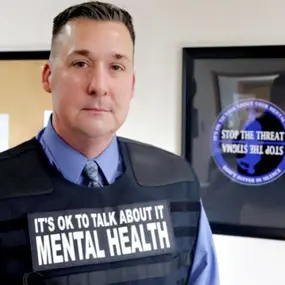
Captain of Police and Founder
Adam A. Meyers is a Police Captain with the Hartford Township Police Department and Certified Peer Specialist in the state of Wisconsin. Adam began his Law Enforcement career in 2001 after five years as an active-duty United States Army Military Policeman. Adam has been a Police Chief, Detective, Arson Investigator, Evidence Technician, Field Training Officer, Dispatcher/9-1-1 Operator and is an Instructor in Firearms, Professional Communication Skills, Scenarios, and Officer Wellness.
In April 2016, Adam was involved in a critical incident that changed his life forever when he used deadly force on someone who armed themselves with a hatchet inside a busy department. This person died.
Adam has faced many personal and professional mental health challenges after his critical incident, and it has taken him many years to get back on track. Adam says he would not have been successful with his mental health without the unwavering support of his Family, Friends, Colleagues, Counselors, and even complete Strangers.
Prior to and during Adam's Law Enforcement career, he spent about 10 years working with Behavioral Health Services in Southeastern and Northwestern Wisconsin and for hospitals with Behavioral Health Units.
As a Mental Health Advocate Adam takes every opportunity to speak about his personal and professional challenges with mental health after his 2016 on-duty deadly shooting. Adam's mental health experience has been published in national and international podcasts. magazines, newspapers, and other publications. Adam was quo… Read More