Behind the Mask: When Awareness Isn't Enough
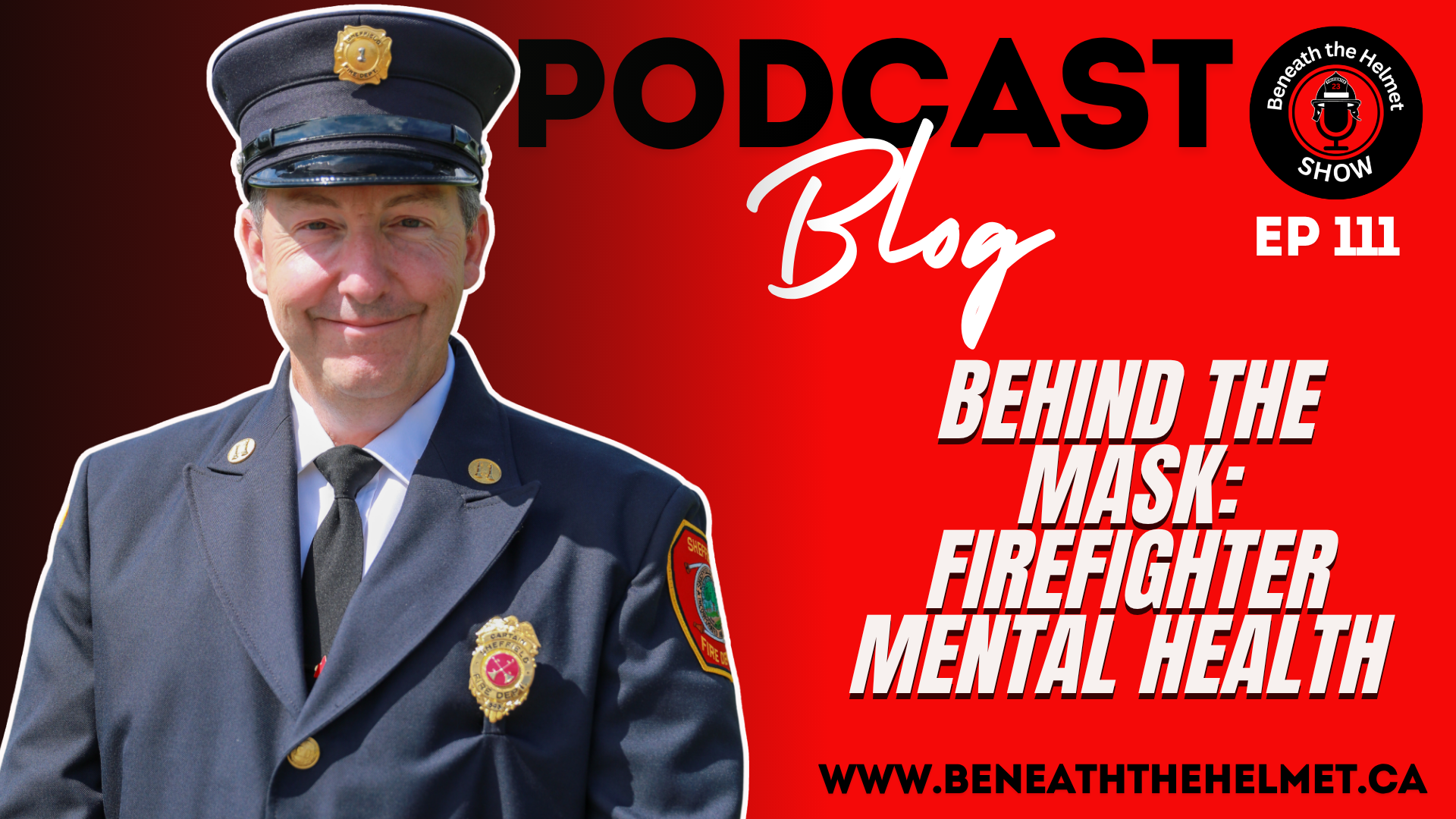
There's a finding in Dr. Marc Wysocki's award-winning essay that landed like a punch when he said it out loud on the podcast.
Suicide rates in the fire service haven't come down. Despite years of campaigns, conversations, and resources, the numbers have held or climbed. Marc isn't writing about this from the outside. He's a volunteer fire captain, a former EMT, a healthcare professional with 30 years in athletic training, and a freshly minted doctoral graduate. He knows the culture. He knows the bravado. And he's done the research to say plainly: awareness alone isn't moving the needle.
Episode 111 of Beneath the Helmet is for anyone in the fire service — or loving someone who is — who senses that something still isn't right, even after all the progress that's been made.
The Body Keeps Score, Even When You Don't
Marc's first reframe is one every firefighter needs to hear: you are a tactical athlete, and athletes have to recover like one.
He calls it recovery debt — the physiological load that accumulates across a 24 or 48-hour shift. Cortisol elevated. Sleep cycles fractured. Hydration in deficit. Nervous system locked on alert, even during a quiet night in the station. When the shift ends, you might feel like you got through it. Your body is already telling a different story.
"Your body got you through this," Marc said. "Now it's your turn to repay your body."
For volunteers, the recovery math gets harder. You respond to a 2:00 AM call and walk straight into your day job a few hours later, running on caffeine and adrenaline, carrying whatever that call brought with it. Marc is honest that this was his own reality for years. Learning to actually recover — sleep, hydration, stillness, movement — came slowly, through experience and enough wrong turns to know the cost of ignoring it.
Identity Fusion: When the Uniform Doesn't Come Off
The concept Marc calls identity fusion is where this conversation gets personal fast. It's what happens when the job stops being something you do and becomes the whole of who you are. The uniform comes off at the end of the shift, but the firefighter stays on, walking through the door at home still carrying the weight of the role.
Marc has this same conversation with his teenage athletes.
"This sport is a part of you," he tells them. "It's not you."
Most of them don't fully grasp it at sixteen. Most first responders don't fully grasp it until something forces the question — a bad call, a medical leave, a retirement that arrives before they were ready.
The answer isn't disconnecting from work you're proud of. It's building a self wide enough to hold more than one thing.
What a Real Check-In Looks Like
Marc shared a story about a multi-fatality accident his department responded to — a long, difficult scene with newer firefighters on the call. He could see the thousand-yard stare settling in on them. He didn't make a scene of it. He gave them small tasks to keep them anchored. And then, after the scene was cleared, he pulled them aside.
"Hey, that was shitty. That's not our usual call. I'm just checking in on you."
He went back the next day. Then the day after that. "I'll be a pain in the ass about it," he said, and he meant it as a point of pride. That's what it looks like when an officer understands that one check-in isn't enough, that "I'm fine" isn't always true, and that trust between a crew member and an officer gets built in exactly these moments.
He calls this a 360 — a continuous, low-key awareness of where your people are at. Not a formal interview. Not a structured meeting. A habit. A posture. A way of showing up that communicates, without announcement, that you're paying attention.
The Sandwich Method and Explaining Why
Marc's framework for culture change is practical enough to start tomorrow. He calls it the sandwich method: pressure from both ends meeting in the middle. New firefighters leave the academy already normalized to speaking up. Senior officers name psychological safety out loud, repeatedly, in the small moments where it actually counts. The culture in the middle shifts when both are happening at the same time.
He also talked about the power of explaining why — a lesson his brother, a Navy aviator with 32 years of service, passed on when Marc earned his first bugle. "Tell them why. Why are we going in this direction? Why are we running this drill?" This generation of firefighters asks why more than any before them. That's not resistance. That's an opening. Answer it honestly and the door to psychological safety gets a little wider every time.
Five Takeaways From This Conversation
- Recovery debt accumulates before you feel it. Cortisol stays elevated, sleep cycles break down, and hydration drops across a shift even during a quiet night. Recovery isn't downtime — it's preparation for the next call.
- Identity fusion is a slow, quiet risk. When the job becomes the whole self, any disruption — a bad call, an injury, a retirement — can feel like losing everything. Building a life outside the uniform isn't stepping back from the work. It's protecting your capacity to keep doing it.
- The officer's 360 is a practice, not a program. Checking in on your crew doesn't require a system. It requires attention, consistency, and the willingness to come back a second and third time when someone says "I'm fine" and doesn't quite mean it.
- Culture change needs both ends of the sandwich. New members arriving with psychological safety already normalized. Senior officers naming it out loud, repeatedly. The middle takes care of itself when both are moving.
- Speaking up is a strength. Marc's closing message, and the one that carries the most weight in a culture built on holding it together. A support system — a partner, a peer, a therapist, a journal — isn't evidence that you can't handle the job. It's how you stay able to.
Listen, Share, and Subscribe
This is the kind of conversation Beneath the Helmet exists for. Real people, inside the fire service, talking honestly about what the work does to a person over time — and what it takes to stay whole inside it.
Subscribe at www.beneaththehelmet.ca, and if this episode resonated, share it with someone in the fire service who needs to hear it. The conversations that actually move things forward start with one person deciding to have them.
Arjuna George - Podcast Host
Beneath the Helmet Show
When Showing Up Isn’t the Same as Being Present