Building a Firefighter Recovery Room: Why the Fire Service Can No Longer Ignore Recovery
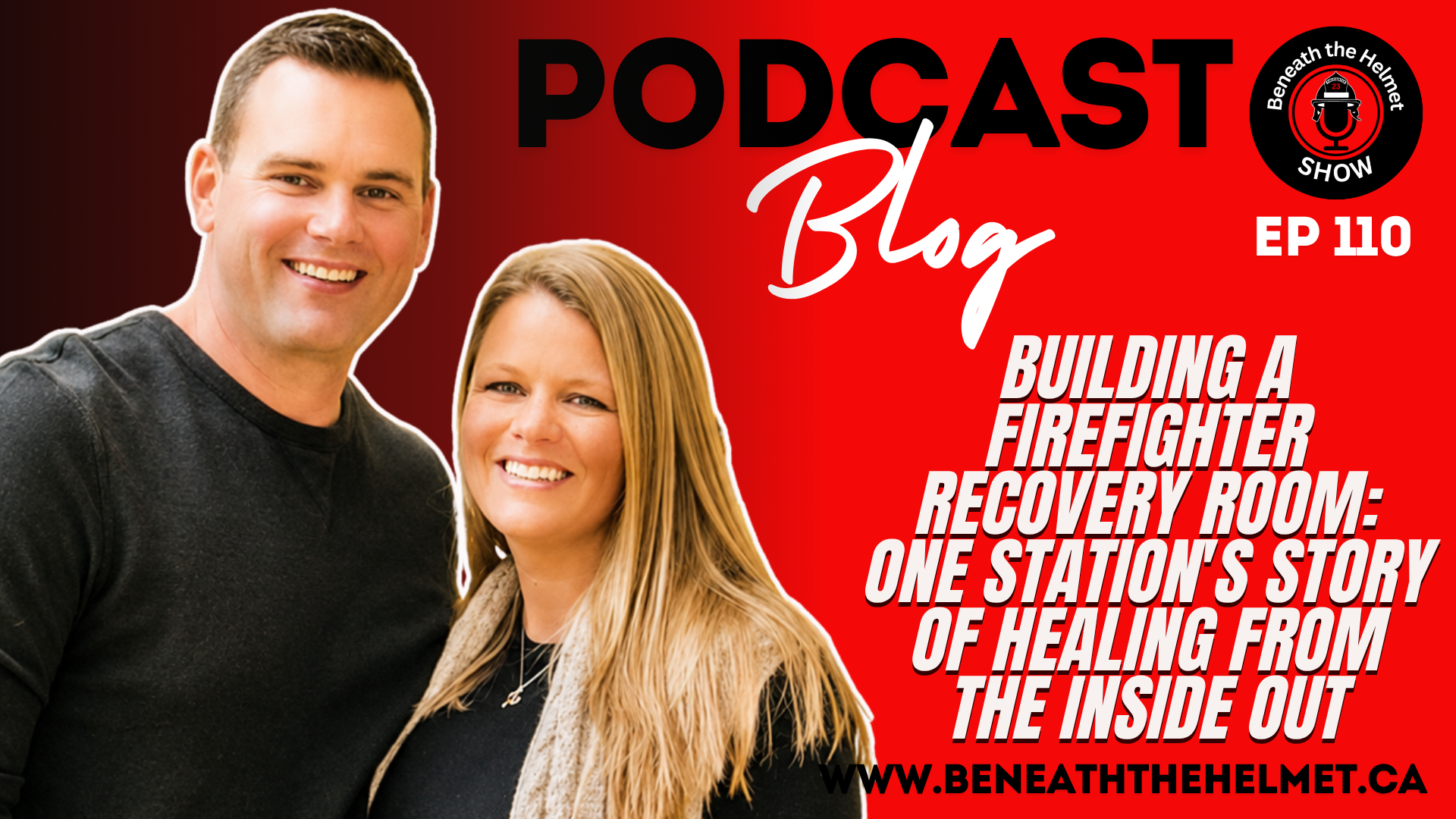
Building a Firefighter Recovery Room: Why the Fire Service Can No Longer Ignore Recovery
The fire service has always been built on toughness.
Push through the calls.
Push through the fatigue.
Push through the nightmares.
Push through the burnout.
For generations, firefighters have been trained to run toward chaos while quietly carrying the emotional weight that follows them home. The challenge is that the nervous system keeps score, whether we acknowledge it or not.
In this episode of Beneath the Helmet, I sit down with firefighter mental health advocate and co-founder of 2 In 2 Out Idaho, Chris Johnson, to talk about something that is beginning to reshape conversations around firefighter wellness across North America: firefighter recovery rooms.
🎧Listen to this conversation now
This conversation talks about nervous system recovery. It is about creating environments inside fire stations where firefighters can decompress, regulate, reconnect, and heal.
And perhaps most importantly, it is about changing the culture for the better.
The Fire Service Has a Recovery Problem
Firefighters are highly trained in response and suppression.
We are far less trained in recovery.
Chris Johnson shares a deeply personal story about his father, a firefighter who medically retired after 30 years of service and struggled significantly with his mental health afterward. Chris openly discusses how unresolved trauma and lack of support shaped his mission to help other first responders avoid the same path.
That experience eventually led to the creation of 2 In 2 Out Wellness in Idaho, a nonprofit focused on firefighter wellness and recovery.
Their solution?
Building dedicated wellness and recovery rooms directly inside fire stations.
Not as a luxury.
Not as a trend.
As a tool
The conversation highlights something many firefighters already know deep down: operational stress accumulates over time. Long shifts, interrupted sleep, traumatic calls, hypervigilance, and emotional suppression slowly wear down the nervous system.
Eventually, the body starts sounding alarms.
Burnout.
Emotional numbness.
Anger.
Withdrawal.
Sleep disruption.
Relationship strain.
Operational stress injury.
The problem is many firefighters normalize these symptoms until they become overwhelming.
What Is a Firefighter Recovery Room?
A firefighter recovery room is a dedicated, wellness-focused space inside the station designed to help firefighters manage stress, recover physically and mentally, and improve long-term well-being.
Chris and his team discuss incorporating tools and practices such as:
- Sauna therapy
- Cold plunge therapy
- Red light therapy
- Quiet decompression spaces
- Nervous system recovery practices
- Peer connection and conversation
- Education around mental health and recovery
What makes this conversation powerful is that the room itself is only part of the story.
The deeper shift is cultural.
The message becomes:
“It’s okay to recover.”
That sentence alone challenges decades of conditioning within the fire service.
For many firefighters, slowing down feels uncomfortable. Recovery can even feel undeserved. There is often an unspoken belief that toughness means enduring without pause.
The reality is that even elite athletes build recovery into performance.
Firefighters should too.
The Nervous System Is Always Listening
One of the strongest themes in this episode is understanding that firefighters cannot continue operating at high alert forever without consequence.
The body was never designed for constant activation.
Chris shares how Deer Hollow became part of his own healing journey and helped him regain balance in his life. The conversation reinforces something many first responders are beginning to recognize:
Healing does not always begin with talking.
Sometimes it begins with feeling safe enough for the body to finally exhale.
That distinction matters.
Many firefighters intellectually understand stress. They can explain trauma. They can teach resilience. Yet their nervous system still remains stuck in survival mode.
Recovery spaces help create moments where the body can begin shifting out of fight-or-flight and into restoration.
Why Recovery Rooms Could Change the Future of the Fire Service
What if every fire station had a dedicated recovery space?
Imagine a future where firefighter wellness is treated with the same importance as physical training and operational readiness.
A future where:
- Firefighters are encouraged to decompress after difficult calls
- Crews openly discuss stress without stigma
- Wellness becomes preventative rather than reactive
- Departments invest in recovery before crisis occurs
- Families see healthier transitions between work and home
- Leaders model recovery instead of glorifying exhaustion
Chris also speaks about wanting the movement to grow beyond Idaho.
Not simply “2 In 2 Out Idaho.”
But a model that could expand across the fire service and eventually worldwide.
Because the reality is this:
Burnout is not isolated to one department.
Operational stress injuries are not isolated to one country.
The need for recovery is universal.
The fire service has spent decades mastering response systems.
Now it may be time to master recovery systems too.
The Human Cost of Ignoring Recovery
One of the most important undercurrents in this conversation is the emotional toll carried silently by many firefighters.
The culture is changing, but many still struggle privately.
Some fear judgment.
Some fear appearing weak.
Some simply do not know how to slow down anymore.
Chris’s story reminds listeners that unprocessed pain does not disappear because it is ignored.
It often resurfaces later through:
- Emotional withdrawal
- Chronic stress
- Relationship breakdown
- Substance use
- Isolation
- Physical illness
- Suicidal thoughts
- Burnout
This is why conversations like this matter.
They create language and language creates connection.
When firefighters begin hearing other firefighters openly talk about recovery, healing, and mental health, something important happens:
Permission is created.
Top 5 Nuggets From This Episode
1. Recovery Is Not Weakness
Firefighters have normalized exhaustion for too long. Recovery is part of operational readiness, not the opposite of it.
2. The Body Carries Stress Long After the Call Ends
Operational stress accumulates in the nervous system over time. Without intentional recovery, the effects eventually surface physically, emotionally, and relationally.
3. Fire Stations Need Recovery Spaces
Recovery rooms create an environment where firefighters can decompress, regulate stress, and reconnect with themselves and their crews.
4. Culture Change Starts With Conversation
When firefighters openly discuss wellness and mental health, stigma begins to loosen its grip.
5. Prevention Matters More Than Crisis Response
The best time to support firefighter wellness is before someone reaches a breaking point.
Start the Conversation in Your Own Department
This episode is more than a discussion about wellness tools.
It is a challenge to rethink what firefighter health truly means.
The fire service has always excelled at taking care of communities. The next evolution may be learning how to better take care of ourselves and each other in the process.
If your department has never discussed recovery rooms, firefighter wellness spaces, or nervous system recovery, maybe this episode becomes the spark that starts that conversation.
Because behind every uniform is still a human being.
And humans were never designed to carry endless stress without recovery.
If you enjoyed this episode of Beneath the Helmet, be sure to subscribe, share this episode with your crew, and continue helping move the conversation around firefighter wellness, burnout prevention, and operational stress injury forward.
Stay well.
Arjuna George - Podcast Host

Yoga for Firefighters That Fits the Shift