When the Hardest Skills Have Nothing to Do With Tactics
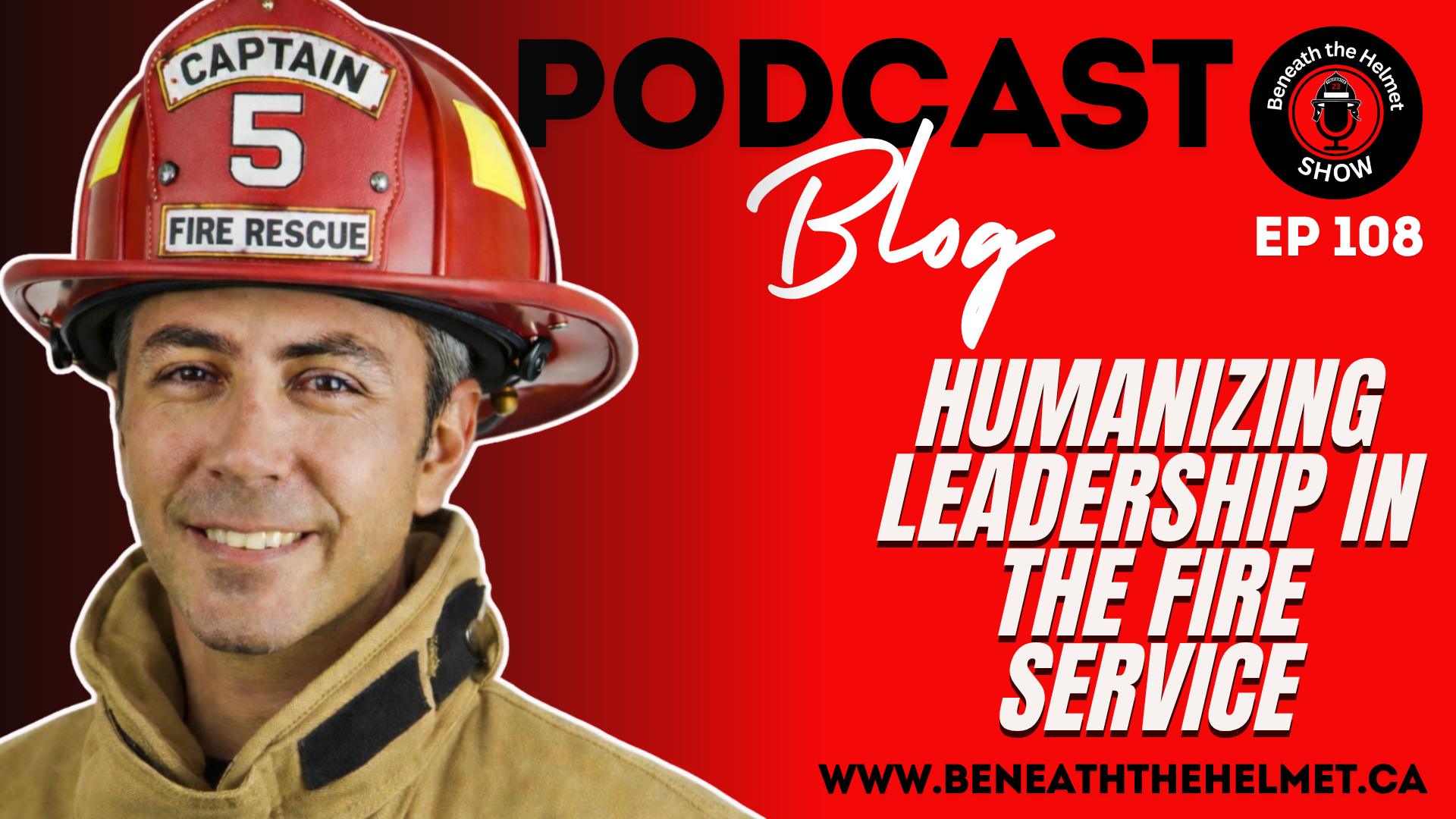
What does it actually take to lead in the fire service right now?
Not in theory. Not in a promotional testing process. Right now, in a fire station where firefighter suicide outpaces line-of-duty deaths, where burnout is rising, where hiring interest is falling, and where the people you rely on most are often the ones struggling the most silently.
That question is at the heart of this conversation with Fire Captain Jared Vermeulen — a 10-plus year captain from South Florida, peer support coordinator, and author of The Modern Fire Officer and its follow-up, The Modern Fire Officer: Building Legacy That Endures. Jared joined Arjuna on Beneath the Helmet for a conversation about what it really means to humanize leadership in the fire service. And what came through clearly is this: the systems are part of the problem, but leaders with emotional intelligence and the courage to show up differently are a significant part of the solution.
The System Isn't Holding the Firefighter Up
Jared's second book grew out of a recognition he couldn't ignore. After his first book on the qualities of a modern officer, the data kept pointing in the same direction: burnout rising, retention falling, hiring interest declining. Behind those numbers were people who didn't feel safe, not physically, but relationally and organisationally.
"If you just look at firefighter suicide alone," Jared said, "it takes more lives than line-of-duty deaths. That should stop everyone cold." He made the comparison plainly: if a piece of equipment was killing people, it would be off every truck in the country by the next day. But mental health and systemic failure are harder to see, harder to point to, and so the urgency doesn't match the scale of the problem.
His argument is simple and structural: the fire service has added more services, more EMS protocols, more expectations — but hasn't built the support systems to carry that weight. You can't keep adding load without reinforcing what's underneath. As Arjuna put it during the conversation, it's like building a billion-dollar NASCAR without a trained pit crew. The car runs until the wheels fall off.
Emotional IQ Is the Hard Work
One of the most honest moments in the conversation came when Arjuna named something that rubs a lot of experienced officers the wrong way: the term "soft skills." Jared agreed and offered a reframe. What we call soft skills — the emotional, relational, human side of leadership — are actually the hardest skills there are. The tactics are the easy part. You can show someone how to force a door. You cannot show them how to reach a firefighter who is quietly falling apart.
Jared's preferred term: emotional intelligence. And like any intelligence, it has to be learned. It takes study, practice, discomfort, and consistency. "Most people would rather work 10 house fires in a row than approach someone they think has a mental health issue," he said. That's not a weakness. That's how hard this terrain actually is.
The courage to walk into that discomfort is the mark of a modern leader.
Five Nuggets From This Conversation
1. Self-care is a leadership strategy, not a luxury. Jared describes attending a sleep course during light duty — and discovering how profoundly rest, routine, and reduced stimulation affected his capacity to lead. When you're running on empty, the qualities of good leadership — humility, self-control, patience — become nearly impossible to sustain. Rest isn't soft. It's infrastructure.
2. Validation is one of the most powerful tools a leader has. Between his two books, one of Jared's biggest shifts was understanding that validation isn't just a tool for handling attitude issues or discipline conversations. It's something people need all the time. When firefighters know their place on the crew is secure, they're more likely to open up, take risks, engage honestly, and bring their best. Psychological safety doesn't happen by accident — it's built through daily, intentional affirmation.
3. Leadership gets less visible as you promote, not easier. The tactical wins of a junior firefighter are easy to see. The relational work of a senior officer is largely invisible — the hundred quiet one-on-one conversations, the observation of body language at roll call, the attaboy given to a probationer who needs to hear they're going to be okay. Jared's recommendation: make that invisible work visible through mentorship. Let junior members spend time in each rank above them. Show them what leadership actually looks like from the inside.
4. Discipline is most powerful when it redirects rather than punishes. Most discipline issues, in Jared's experience, stem from bad policy, inadequate training, or circumstances — not bad character. Treating a first offence the same way you'd treat a pattern of behaviour doesn't produce growth. It produces resentment. Where possible, leaders can reframe discipline as an opportunity: let the person who made the error become the expert on it by designing a training session for the crew. That's buy-in. That's ownership. That's growth.
5. Concepts endure. Rules expire. A rule tells you to change the spark plug. A concept helps you understand how the engine actually works — so when the spark plug doesn't fix it, you know where to look next. Human behaviour is not black-and-white, and no rule set will ever be comprehensive enough to capture its nuance. Leaders who understand the concept behind a policy can apply judgment, empathy, and creativity to the situation at hand. That's what separates a manager from a leader.
The Work Worth Doing
This conversation doesn't pretend the work is easy. Building a healthy firehouse culture, holding people accountable with compassion, leading yourself well enough to lead others — all of it takes time, courage, and willingness to be uncomfortable. But Jared puts it simply: the juice is worth the squeeze. When firefighters drive into work knowing what to expect and trusting that their leader sees them, the whole environment shifts. And when that environment shifts, what happens on the street gets better, too.
Consistency, validation, emotional intelligence, and the courage to humanize a profession that has sometimes resisted it — that's the legacy worth building.
If this conversation resonated with you, subscribe to Beneath the Helmet at www.beneaththehelmet.ca/follow and share this episode with a leader in your department who's ready to do the work differently. Every share helps this conversation reach the people who need it most.
Arjuna George - Podast Host
When Showing Up Isn’t the Same as Being Present