Unlocking the Vagus Nerve: Engineering Self-Healing for Trauma and Stress
What if anxiety, post-traumatic stress, chronic pain, digestive problems, sleepless nights, and emotional overwhelm weren’t separate problems at all?
What if the common denominator was a compromised central nervous system?
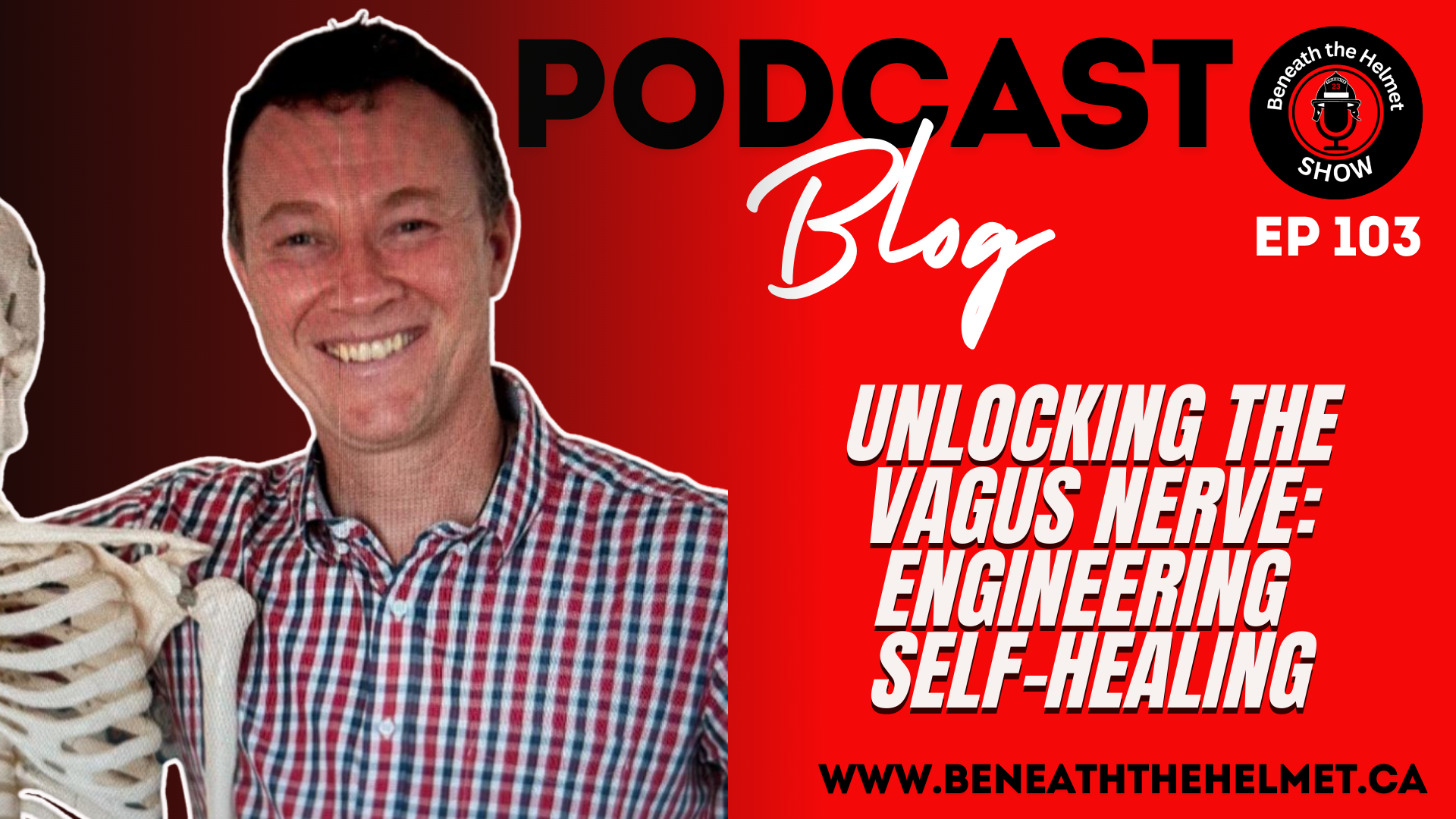
In Episode 103 of Beneath the Helmet, I sat down with Chris Duquemin, a mechanical engineer-turned bodyworker, founder of New Vision Therapy, and author of The Body Engineer. His journey began not in a clinic, but in a workshop full of refrigeration systems.
For ten years, Chris lived with chronic shoulder pain. He went through scans, x-rays, physiotherapy, chiropractic work, osteopathy, and medical consultations. Nothing showed up. Eventually, he was told the pain was “in his mind.”
It wasn’t.
What he discovered would shift his career, his identity, and his understanding of trauma, stress, and healing forever.
The Engineer Who Couldn’t Be Fixed
Chris approached his pain like a broken machine. Something was wrong. The symptom was clear. The root cause was not.
He rejected exploratory surgery and repeated cortisone injections. As he put it, pain was a flashing red warning light on the dashboard. Turning the light off without understanding the problem made no sense.
The breakthrough came through bodywork focused on the central nervous system. A past rib injury from a martial arts tournament had never fully resolved. The trauma shortened and twisted fascial patterns in the body, subtly pulling on the spinal cord and compressing a nerve in his neck.
Within weeks of one treatment, he was 90 percent pain-free.
After ten years.
That experience launched his mission to understand how unresolved trauma — physical or emotional — becomes stored in the body and how restoring mechanical balance can unlock self-healing.
The Central Nervous System as the Fuse Board
Chris explains that the brain and spinal cord are the body’s fuse box. Everything runs through it.
When the central nervous system is balanced, the body operates in self-healing mode:
- Digestion functions properly
- The immune system works efficiently
- Sleep restores
- Stress resolves
When it is compromised, the body shifts into fight-or-flight.
And here is where this becomes critical for firefighters, veterans, police, military, and first responders.
Repeated exposure to high stress events — especially on top of earlier unresolved trauma — can lock the nervous system into a permanent state of threat.
Even when the environment becomes safe again, the body cannot return to balance.
Fascia: Where Trauma Lives
Chris uses the analogy of a spider’s web.
Fascia is a connective tissue network running through the entire body. If one part twists or tightens due to injury or trauma, the ripple effect spreads throughout the system.
Unresolved trauma becomes a twist in that web.
And according to his experience, emotional trauma can become trapped in the same way. If the fascia never fully restores to its pre-trauma state, the emotional charge remains stored in the body.
This is why some people cannot “talk” their way out of trauma. If the underlying mechanical imbalance remains, the nervous system continues to perceive threat.
The Three Levels of Stress Response
Chris outlines three levels:
Level One – Balance
The body is in self-healing mode.
Level Two – Fight or Flight
The body perceives threat and mobilizes to survive.
Level Three – Breakdown
The nervous system becomes locked. Digestion, immunity, mood, and sleep begin to collapse. Anxiety and post-traumatic stress symptoms intensify.
The problem is not fight-or-flight itself. That response is necessary for survival.
The problem is getting stuck there.
What If Healing Was About Restoring, Not Fixing?
Chris emphasizes that his work is not about “fixing” people.
The body already knows how to heal.
The goal is restoring mechanical balance so the autonomic nervous system can return to a self-healing state.
When the vagus nerve — a key regulator of the autonomic nervous system — is under compression, symptoms escalate. When pressure is relieved, breathing deepens, blood pressure stabilizes, and the body shifts.
The switch flips.
That shift, he explains, is often visible within a single session.
Practical Nervous System Checks
Chris shared several simple assessments that can indicate whether the nervous system is compromised:
Heart rate variability check – Heart rate should increase on the inhale and decrease on the exhale. If it does not change, the system may be locked.
Deviated uvula test – Using a light to observe whether the uvula lifts symmetrically when saying “ah.” Deviation can indicate mechanical compromise.
Elevated shoulder imbalance – Chronic tightening on one side may signal nerve compression at the base of the skull.
These quick checks can provide insight before symptoms escalate further.
Simple Daily Tools
He also shared accessible tools anyone can begin immediately:
Two to three minutes of consistent daily stretching
A simple eye exercise to relieve pressure at the base of the skull
Grounding — standing barefoot on natural earth
None of these are complex. None require expensive equipment.
Consistency matters more than intensity.
My Top Five Takeaways
After this conversation, here are the five insights that stood out most clearly:
1. Trauma Is Often Mechanical Before It Is Emotional
Unresolved physical trauma can trap emotional stress in the body.
2. A Compromised Nervous System Changes Everything
Digestion, immunity, mood, sleep, and stress resilience are all downstream of central nervous system balance.
3. Fight-or-Flight Is Not the Enemy
Getting stuck in it is.
4. Self-Healing Is the Goal
The work is not about fixing people. It is about restoring the body’s capacity to heal itself.
5. Prevention Matters
If every firehouse had one person trained to check for early nervous system compromise, intervention could happen before breakdown.
If you work in the fire service, military, law enforcement, EMS, or any high-stress profession, this episode may shift how you understand trauma, stress, and resilience.
If this conversation sparked something for you:
✅Subscribe to the channel.
✅Share this episode with someone who needs it.
Start paying attention to your nervous system before it demands your attention.
Healing may not always be about adding more.
Sometimes it is about restoring what was always designed to work.
Stay well.
Arjuna George
Psychedelics and First Responder Mental Health: A Fire Chief’s Journey