Psychedelics and First Responder Mental Health: A Fire Chief’s Journey
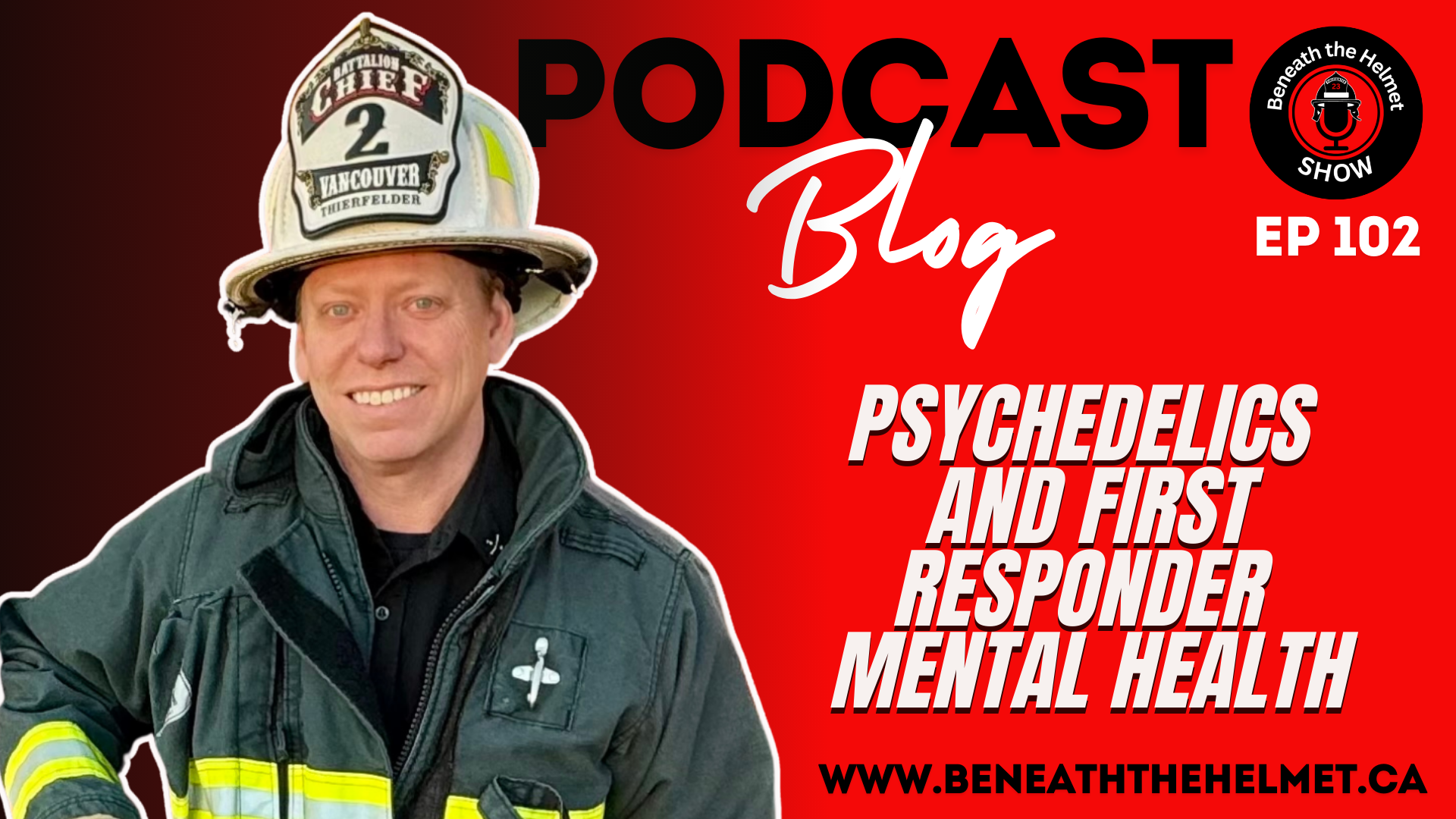
Psychedelics and First Responder Mental Health: A Fire Chief’s Journey
Beneath the Helmet – Episode 102 with Matt Thierfelder
What happens when a firefighter who has “done it all” quietly realizes he is no longer okay?
After more than 30 years in the fire service, Matt Thierfelder had built a career many would admire. Firefighter. Captain. Battalion Chief. Busy stations. Downtown truck companies. Total immersion in the job. He loved the city he served. He loved the people. He lived just down the street from the station.
And yet, behind the rank and experience, something was not working..
Sleep deprivation that never caught up.
Hypervigilance that would not shut off.
A growing sense of burnout.
And an identity crisis waiting at retirement.
In this episode of Beneath the Helmet, Matt shares his deeply personal journey through burnout, mental health struggles, and ultimately exploring psilocybin, ketamine-assisted therapy, stellate ganglion block (SGB), and ibogaine.
A Career Immersed in the Fire Service
Matt did not grow up wanting to be a firefighter. But once he stepped into the profession, he caught the bug.
He worked through the intense hiring process of the early 1990s, where thousands applied for every job. He drove an ambulance. Volunteered. Worked in the maintenance shop. Managed programs. Earned his EMT certification.
Eventually, he was hired and built a 30-year career.
He spent about 10 years as a firefighter. Nearly two decades as a captain. His final two years were as a battalion chief. He worked at busy stations. Burned entire blocks of houses for training. Lived in the same neighbourhood as the station.
The fire service was not just a job. It was identity.
But over time, something shifted.
The Slow Creep of Hypervigilance
Years of interrupted sleep.
Middle-of-the-night calls.
Constant readiness.
Matt described being unable to relax, even off duty. A motorcycle passing him on the freeway would instantly trigger a mental scenario of a crash, a response, and delivering bad news to a family. Every time.
He was drinking to calm down.
He was tired.
He was not happy.
Traditional treatments did not bring resolution. He tried talk therapy. SSRIs. Adderall for exhaustion. Xanax for sleep. Nothing truly addressed the core issue.
When he reached retirement age at 53, he expected clarity.
Instead, he felt lost.
He did not want hobbies. He did not want fishing or hunting. He wanted to be left alone until it was time to go back to work. The excitement from big fires had faded. The moments that once rang his bell were getting smaller and smaller.
He found himself asking:
What is the point of all this?
Discovering Psychedelics as a Path Forward
Matt had been following research on psilocybin for years. He was fascinated by studies suggesting a profound psychological impact. When Oregon legalized psilocybin-assisted therapy in regulated service centers, he became curious.
He trained as a psilocybin facilitator while still working as a battalion chief.
What he found surprised him.
He entered a community outside the fire service. A community open about mental health. A space where vulnerability was not mocked.
And when he participated in psilocybin-assisted therapy himself, the experience was profound. Not because it “fixed” him. But because it shifted perspective. It brought long-held negative thought loops into awareness. It opened new ways of seeing.
He describes psilocybin not as a magic pill, but as a powerful tool. The real work happens in the integration afterward.
Ketamine and Nervous System Reset
Matt later pursued IV ketamine-assisted therapy. Six sessions over a short period.
He described experiencing deep calm and relief, unlike anything he had felt in years. Two of the sessions were among the best days of his life. For the first time in a long time, everything felt okay.
Ketamine helped quiet the rigid patterns of thought. It turned down the constant mental noise.
Stellate Ganglion Block (SGB)
Still searching for relief from chronic hypervigilance and insomnia, Matt chose to undergo a stellate ganglion block.
The result?
His anxiety dial, once stuck at 11, dropped to a 2 or 3. He began sleeping five to six hours in a row for the first time in 15 to 20 years.
It did not solve everything. But it changed the baseline.
Ibogaine: A Structured, Supervised Experience
Matt eventually travelled to Mexico through a highly organized program serving veterans and first responders.
Before treatment, he underwent cardiac screening, bloodwork, and evaluation. The ibogaine experience itself was medically supervised with IV access and heart monitoring.
It lasted many hours.
He did not experience chaos or fear. Instead, it was structured, controlled, and deeply reflective. Another layer in the journey. Another tool.
My Top Five Nuggets from This Conversation
1. Hypervigilance Is Not the Same as Strength
Living in constant fight-or-flight feels normal in the fire service. But when it never shuts off, it takes a toll.
2. Retirement Is an Emotional Event
The tap-out. The final shift. Sitting in the parking lot before driving away. Leaving the fire family is one of the hardest parts of retirement.
3. Healing Is Layered
Talk therapy alone was not enough. Medication alone was not enough. Psilocybin, ketamine, SGB, ibogaine, and community each played a role.
There was no single switch that fixed everything.
4. Integration Is Where the Work Happens
Whether psilocybin or ketamine, the medicine session is only part of the process. The real transformation comes afterward, through reflection and application.
5. Permission Matters in the Fire Service
Matt repeatedly looked for other firefighters who had done this work. Permission matters. Seeing someone else step forward makes it safer for others to explore their own healing.
This episode is not about telling anyone what to do.
It is about honesty and sharing a story and a topic that is seldom discussed: "Psychedelics."
It is about acknowledging burnout, sleep deprivation, hypervigilance, and the identity shift that comes with retirement.
If you are a firefighter, veteran, paramedic, or first responder struggling quietly, you are not alone.
Listen to the full conversation.
Share it with someone in your crew.
Start the conversation inside your department.
And if you value honest discussions about firefighter health and leadership, make sure to subscribe to Beneath the Helmet and share this episode.
Because sometimes renewal begins with a single decision:
To look beneath the helmet.
If you’re interested in deeper conversations similar to this episode, you might also enjoy
Episode 41 Myke Cole's Path from Warrior to Firefighter
Episode 52 Psychedelic Therapy First Responder with PTSD with Jeff Morley
Episode 94 Firefighter Recovery: The Truth About CBD and First Responder Wellness
Arjuna George - Show Host
www.beneaththehelmet.ca
The Rescuer Mentality: Why First Responders Stay Always On and How It Impacts Their Lives